Fiber Laser Cutting Machines
Glass Laser Cutting Machine
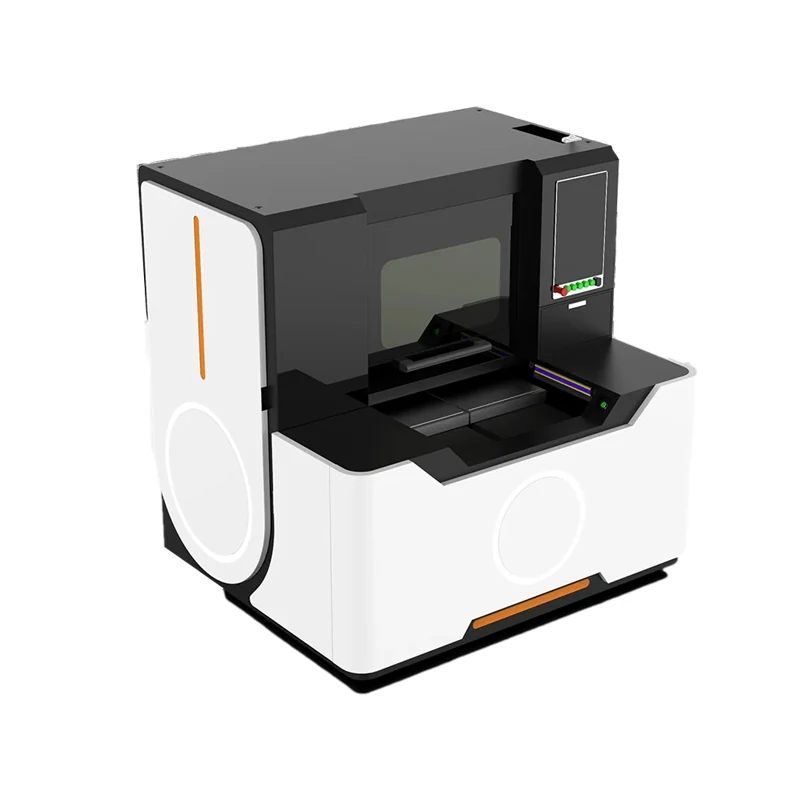
The Glass Laser Cutting Machine uses a Wuhan Huaray picosecond laser source at 30w, 50w or 70w to cut glass on a 500 x 400 mm marble work table.
Published 2019-06-22 by the Weihua Laser engineering desk.
The marking frequency defines the number of pulses emitted per unit of time. When you set a higher frequency, the laser spots become denser on the material surface. Conversely, a lower frequency results in looser spots. This relationship dictates how the mark appears under magnification and affects the final texture of the engraving.
To the naked eye, a mark may appear as a continuous line. However, under an electron microscope, this line is revealed to be a series of many individual points. The density of these points determines the smoothness of the marking. A high frequency creates a tight cluster of pulses that visually blends into a solid, smooth line.
The higher the marking frequency, the denser the laser spot distribution. This density directly correlates to the smoothness of the final mark. For applications requiring fine detail or a polished appearance, adjusting the frequency to increase spot density is the primary method. Understanding this pulse-to-density relationship helps in setting parameters for specific material finishes.
Fiber Laser Cutting Machines
The Glass Laser Cutting Machine uses a Wuhan Huaray picosecond laser source at 30w, 50w or 70w to cut glass on a 500 x 400 mm marble work table.
Fiber Laser Cutting Machines
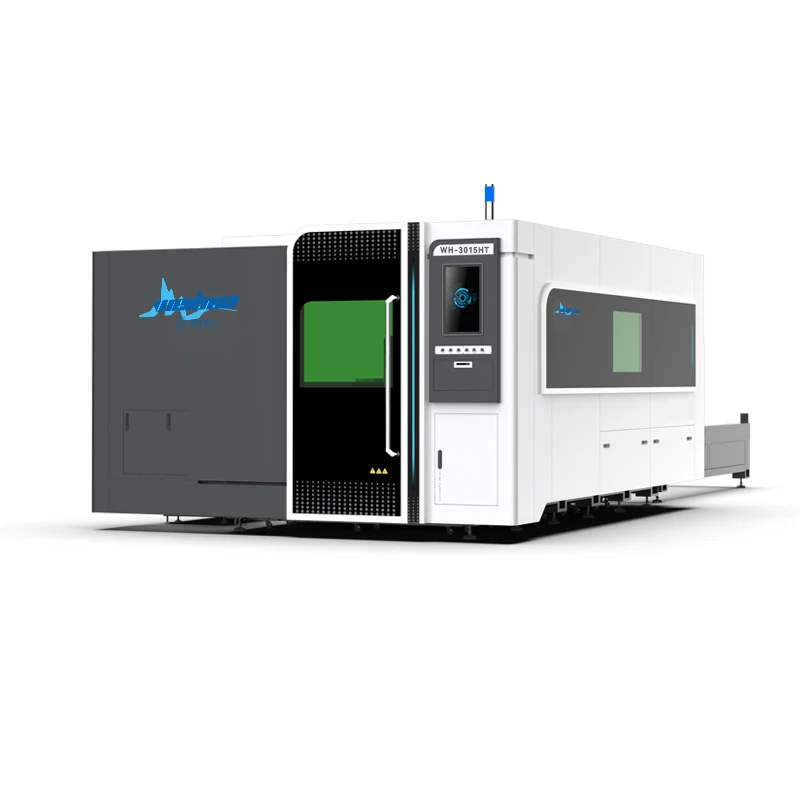
The HT Series is a fully enclosed fiber laser cutter designed to process both metal sheet and pipe on a single machine.
Fiber Laser Cutting Machines
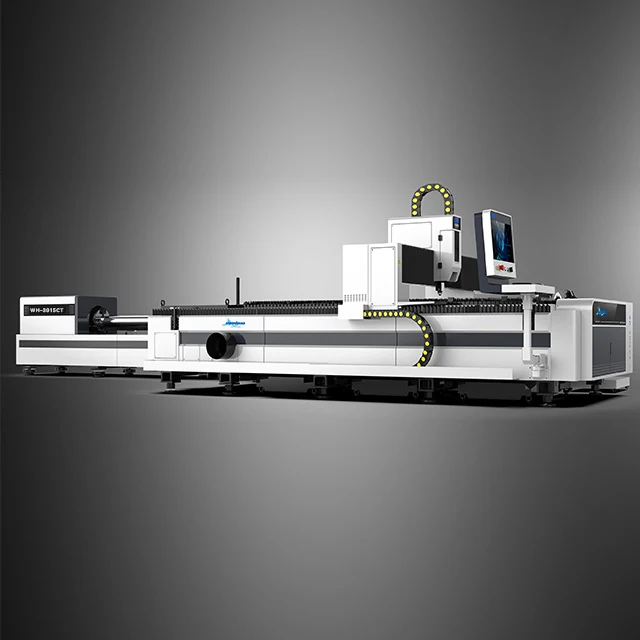
The ET series is a fiber laser cutter for metal sheet and tube in one machine, offered as WH-3015ET, WH-4020ET and WH-6020ET.
Send the material and the thickness. We answer with a model and the settings that go with it, not a catalogue.