Fiber Laser Cutting Machines
Glass Laser Cutting Machine
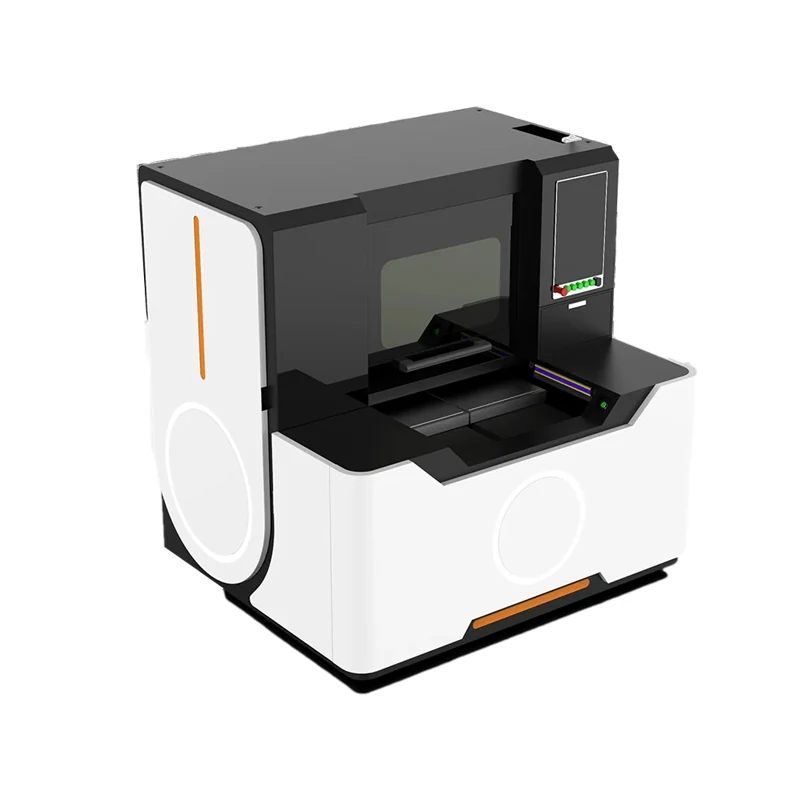
The Glass Laser Cutting Machine uses a Wuhan Huaray picosecond laser source at 30w, 50w or 70w to cut glass on a 500 x 400 mm marble work table.
Published 2025-03-26 by the Weihua Laser engineering desk.
A fiber laser engraver generates the beam inside a fiber optic cable and directs it through a lens onto the material surface. This setup allows for intricate patterns and text without physical contact. The process is fast and precise, making it suitable for marking metals, plastics, ceramics, and glass.
Fiber lasers create permanent markings that resist wear, environmental exposure, and chemical damage. This makes them ideal for serial numbers, logos, and QR codes on industrial parts. Unlike ink, the mark cannot be rubbed off, ensuring traceability throughout the product lifecycle.
MOPA fiber laser engravers allow adjustment of pulse duration and peak power. This control enables color marking on stainless steel and titanium by altering the surface oxidation layer. It also improves contrast on dark plastics and provides better control over engraving depth on metals.
Fiber laser engravers require minimal maintenance compared to older CO2 or solid-state systems. The solid-state design has no mirrors to align and no gas to refill. Daily tasks are limited to keeping the lens clean and checking the cooling system if equipped.
Select the machine based on your primary material and required speed. Standard fiber lasers handle general marking well, while MOPA units are necessary for color effects or precise depth control on specific alloys. Verify the work area size matches your typical part dimensions.
Fiber Laser Cutting Machines
The Glass Laser Cutting Machine uses a Wuhan Huaray picosecond laser source at 30w, 50w or 70w to cut glass on a 500 x 400 mm marble work table.
Fiber Laser Cutting Machines
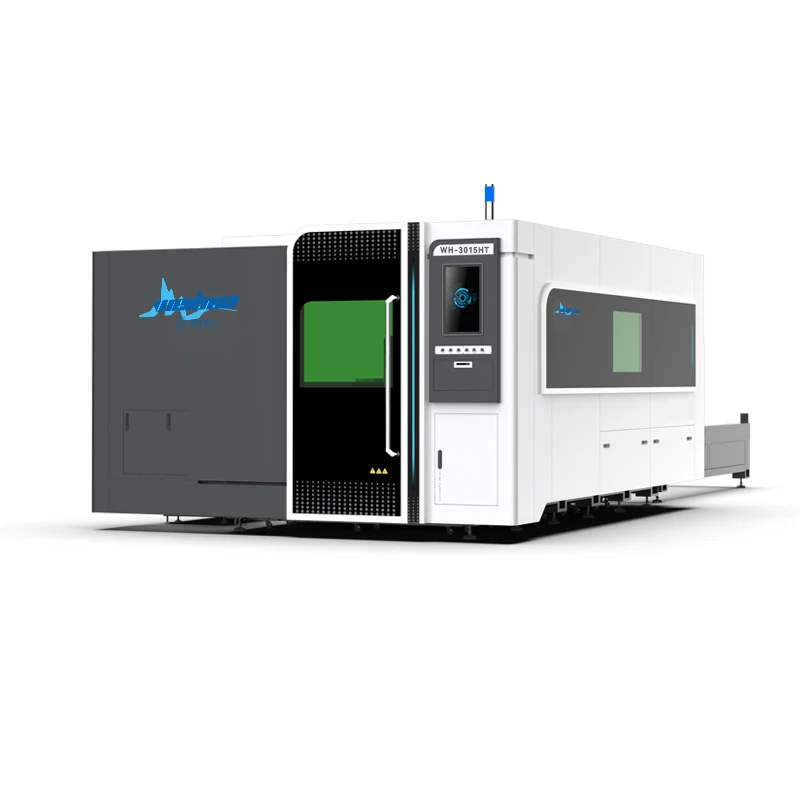
The HT Series is a fully enclosed fiber laser cutter designed to process both metal sheet and pipe on a single machine.
Fiber Laser Cutting Machines
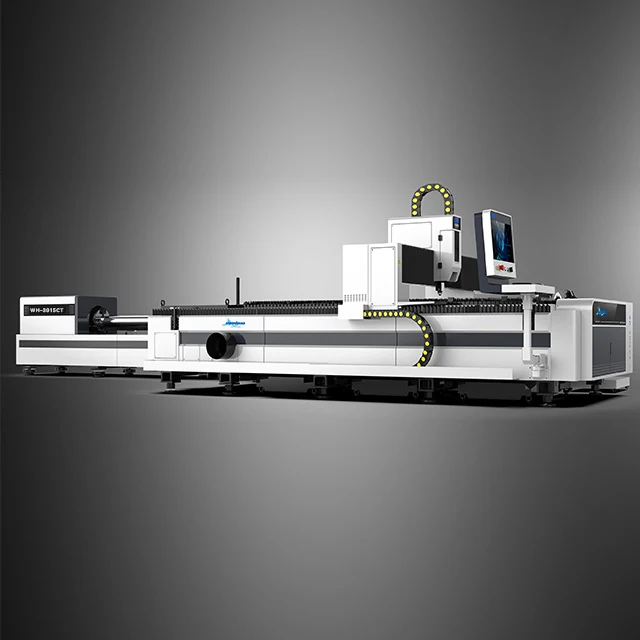
The ET series is a fiber laser cutter for metal sheet and tube in one machine, offered as WH-3015ET, WH-4020ET and WH-6020ET.
Send the material and the thickness. We answer with a model and the settings that go with it, not a catalogue.