Nonmetal CO2 Engraving and Cutting Machines
Contour Laser Cutter For Fabric with Vision CCD Camera
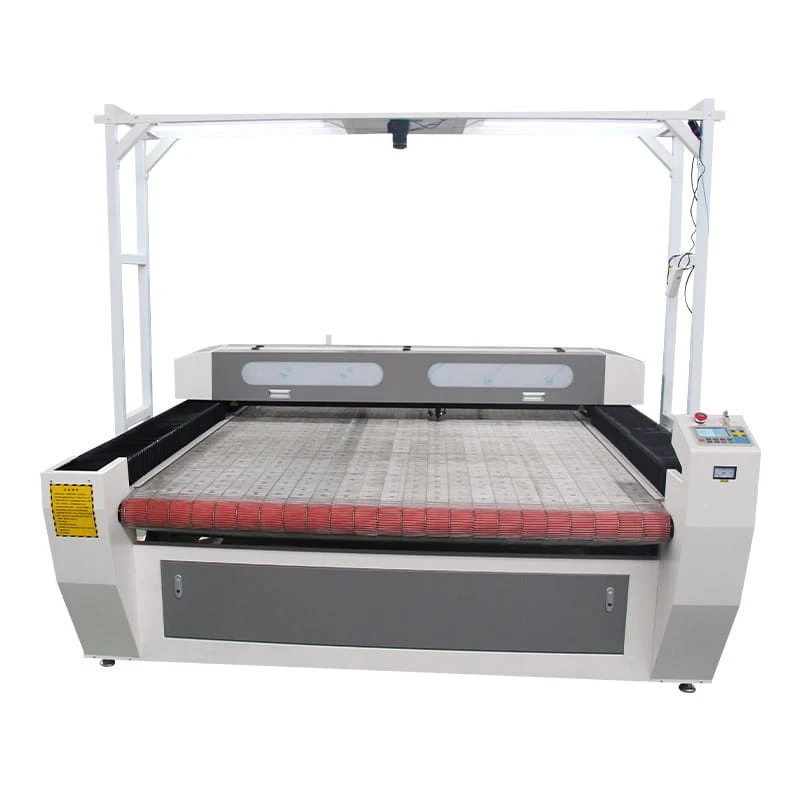
The WH-1325 is a CO2 laser contour cutter equipped with a Canon vision system for automated fabric processing.
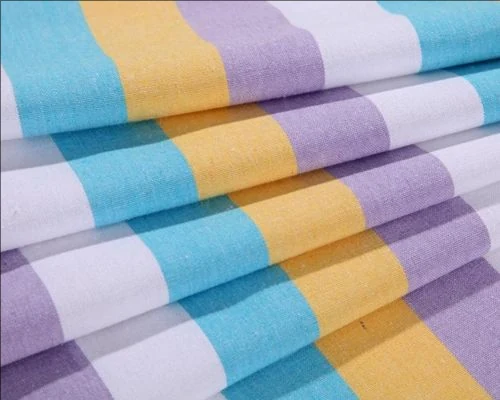
Manual cutting or die cutting cannot follow the irregular edges of a printed pattern without significant setup time for each new design.
A typical buyer for this application is a garment or textile workshop producing printed fabrics, embroidery, or automotive mats. The material arrives as rolls with a repeating pattern, and the cut line must follow the printed contour exactly to avoid trimming away part of the design.
Manual cutting or die cutting cannot follow the irregular edges of a printed pattern without significant setup time for each new design. When the fabric shifts during feeding, the cut misses the contour, ruining the printed graphic and wasting material on every roll change.
The WH-1325, WH-1626, or WH2030 Contour Laser Cutter integrates a Canon industrial camera with a Trocen control system to scan the printed pattern. The automatic feeding correction function adjusts the material position in real time, ensuring the 80w to 180w CO2 laser follows the contour exactly without manual intervention.
The machine is specified based on the required working area, from 1300x2500 mm to 2000x3000 mm, or a custom 2000x5000 mm bed. Delivery is by sea, air or international express, with English user manuals and video guidance included for the Trocen control system.
The Taiwan CSK linear guide rails and belt transmission are checked for smooth movement before the machine leaves the workshop. The Canon camera and Trocen control system are tested together to ensure the automatic feeding correction function aligns the cut with the printed contour accurately.
The printed contour is cut exactly as scanned, with no manual tracing or die tooling required. The automatic feeding correction function prevents fabric shifting from ruining the cut, reducing material waste on synthetic fabrics and embroidery. New designs go straight from the file to the cutting bed without setup.
Short runs of new printed fabrics become profitable, because the cost of a design change is zero tooling and zero setup time. The labour previously spent on manual tracing or die fitting is removed from the production line, and the cut edges require no finishing.
Nonmetal CO2 Engraving and Cutting Machines
The WH-1325 is a CO2 laser contour cutter equipped with a Canon vision system for automated fabric processing.
Nonmetal CO2 Engraving and Cutting Machines
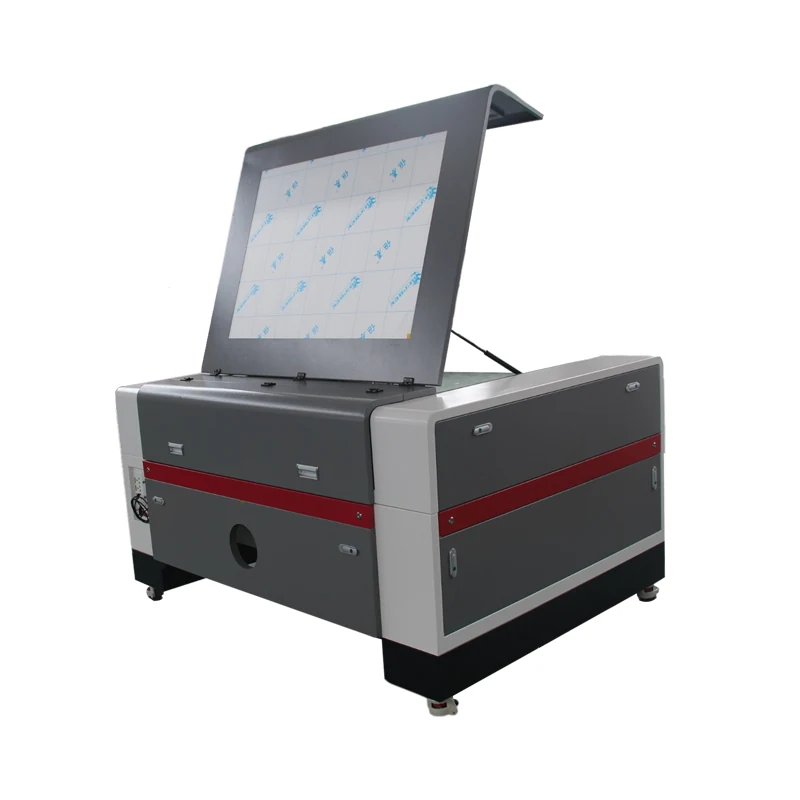
The WH1290 CCD Camera Laser Cutting Machine is a CO2 laser cutter with a 1200 x 900 mm work area and an integrated high-definition industrial vision...
Nonmetal CO2 Engraving and Cutting Machines
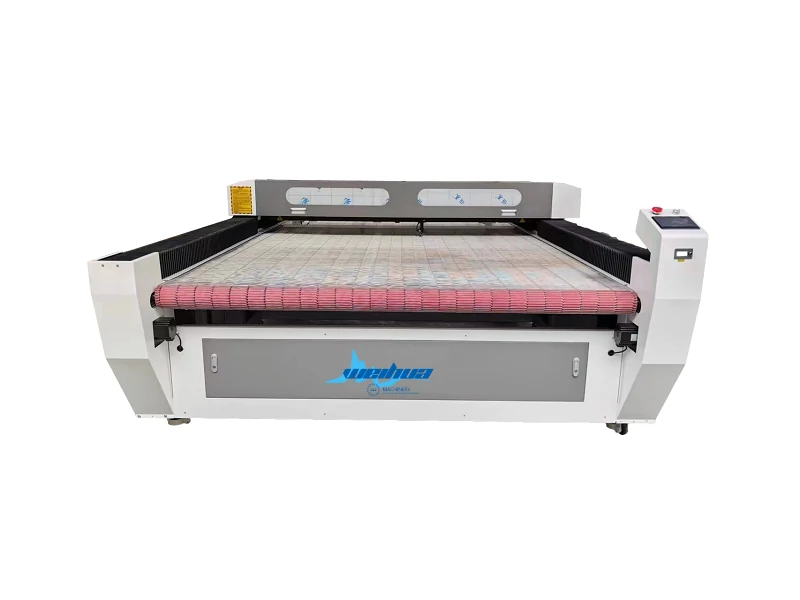
The WH-1630T is a CO2 laser cutting machine with automatic feeding, designed for textile and leather processing.
Send a photo or drawing of the part. We will tell you which machine handles it, what it will not do, and what the crate will weigh.