
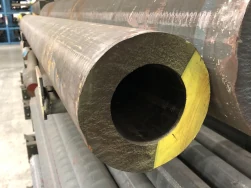
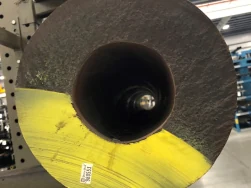
Ductile Cast Iron Pipe
Ductile cast iron pipe is produced by inoculating molten iron with magnesium or cerium, which transforms graphite from flakes into spheroids. This structure resists crack propagation and allows the pipe to carry higher internal pressure and withstand ground movement without fracturing. Jialu supplies ductile iron pipe across multiple international standards—GB, JIS, KS, AWS and UNS—on one stock list, so a project req
- Spheroidal graphite structure resists crack propagation, enabling higher pressure and ground movement tolerance
- Multiple international standards (GB, JIS, KS, AWS, UNS) available on one stock list and one contract
- Custom diameters and lengths reduce field cutting and fitting costs
- No need to split one project across multiple mills, reducing inspection visits and shipment dates
Mill certificates issued against the ordered grade and standard. Third-party inspection available on request.
What This Material Is For
Ductile cast iron pipe is produced by inoculating molten iron with magnesium or cerium, which transforms graphite from flakes into spheroids. This structure resists crack propagation and allows the pipe to carry higher internal pressure and withstand ground movement without fracturing. Jialu supplies ductile iron pipe across multiple international standards—GB, JIS, KS, AWS and UNS—on one stock list, so a project requiring GB QT500-7 for municipal water, JIS FCD600-3 for industrial pressure, and AWS 80-55-06 for high-stress zones does not need to be split across three mills or three inspection cycles. Custom diameters and lengths are available to match site-specific layouts.
Why Buyers Choose It
- Spheroidal graphite structure resists crack propagation, enabling higher pressure and ground movement tolerance
- Multiple international standards (GB, JIS, KS, AWS, UNS) available on one stock list and one contract
- Custom diameters and lengths reduce field cutting and fitting costs
- No need to split one project across multiple mills, reducing inspection visits and shipment dates
- Third-party inspection can be arranged before shipment to align with project schedules
Where It Is Used
- Municipal water distribution systems using GB QT400-15 and QT500-7 for moderate pressure and long service life
- Industrial process piping in chemical plants requiring JIS FCD600-3 and FCD700-2 for elevated pressure and fatigue resistance
- High-stress infrastructure such as bridges and tunnels using AWS 80-55-06 and 100-70-03 for impact and tensile strength
- Oil and gas field applications with UNS F34800 and F36200 for corrosion resistance in aggressive environments
- Urban drainage and stormwater systems using KS GCD500 and GCD600 for durability under dynamic loading
- Custom-sized pipe for retrofit projects where standard sizes do not match existing fittings or trench dimensions
Who It Is For
- Municipal utilities sourcing pipe for water and sewer networks with mixed grade requirements
- Industrial plant engineers needing pressure-rated ductile iron pipe across multiple standards
- Infrastructure contractors managing projects with tight schedules who avoid multiple mill orders
- Engineering firms specifying pipe to different national standards within one system design
- Project managers requiring custom pipe dimensions without incurring high fabrication costs
Problems It Solves
- Splitting one pipe scope across multiple mills due to grade or standard mismatch
- Delays caused by waiting for different mills to produce varying grades on separate schedules
- Inspection bottlenecks when multiple mills require separate third-party visits
- Inconsistent material performance when sourcing from mills with limited grade coverage
- Custom size availability issues when standard pipe does not match site layout or connection points
Technical Features
- Production via magnesium or cerium inoculation to achieve spheroidal graphite structure
- Grade coverage spans GB, JIS, KS, AWS and UNS standards with tensile strength from 400 MPa to 900 MPa
- Available in diameters and lengths to customer specification, with no minimum order size
- Surface finish suitable for direct burial or coating application, with clean bore for flow efficiency
- Mechanical properties meet or exceed standard requirements for impact, elongation and hardness
Grades Standards And Size Range
Values below come from the published product data. Anything not listed is confirmed per enquiry.
| GB Standards | QT400-18, QT400-15, QT450-10, QT500-7, QT600-3, QT700-2, QT800-2, QT900-2 |
|---|---|
| JIS Standards | FCD350-22, FCD400-18, FCD400-15, FCD450-10, FCD500-7, FCD600-3, FCD700-2, FCD800-2 |
| KS Standards | GCD370, GCD400, GCD450, GCD500, GCD600, GCD700, GCD800 |
| AWS Standards | 60-40-18, 65-45-12, 80-55-06, 100-70-03, 120-90-02 |
| UNS Standards | F32800, F33100, F33800, F34800, F36200 |
| Diameter and Length | Customized to customer specification |
| Production Method | Inoculated with magnesium or cerium to form spheroidal graphite |
| Surface Finish | Clean bore, suitable for direct burial or coating |
| Mechanical Properties | Tensile strength from 400 MPa to 900 MPa, elongation and impact resistance per standard |
Materials
- Ductile cast iron with spheroidal graphite structure for improved toughness and ductility
- GB-grade iron for use in Chinese municipal and infrastructure projects
- JIS-grade iron for industrial and high-stress applications in Japan and Korea
- AWS-grade iron for high-tensile and impact-resistant service in North America
- UNS-grade iron for corrosion-resistant applications in aggressive environments
Manufacturing Route
Quality Control
- Chemical composition verified against the ordered standard before casting
- Mechanical testing including tensile, elongation and impact tests performed in-house
- In-house laboratory with CNAS certification conducts routine material verification
- Third-party inspection available on request, bookable at order stage
- Mill certificates issued per the ordered grade and standard, with traceable batch numbers
Customisation Options
- Custom diameters and lengths available to match site-specific layouts
- End types (bell and spigot, flanged, threaded) selected at order stage
- Coating or lining options available upon request for corrosion protection
- OEM service accepted with customer branding or marking
- Packing and labeling arranged to suit destination port, inspection regime and transport method
How It Compares With The Alternatives
| Gray cast iron pipe | Ductile iron has higher tensile strength and elongation; gray iron is brittle and not suitable for high-pressure or dynamic loading |
|---|---|
| Welded steel pipe | Ductile iron resists ground movement better and has no weld seam; steel pipe is cheaper but more prone to corrosion and fatigue at joints |
| PVC or HDPE pipe | Ductile iron handles higher pressure and temperature; plastic pipe is lighter but not suitable for high-load or high-temperature environments |
Others Buy These On The Same Order
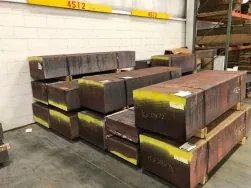 Ductile and Gray Cast Iron ProductsDuctile Cast Iron Plate
View specifications →
Ductile and Gray Cast Iron ProductsDuctile Cast Iron Plate
View specifications →
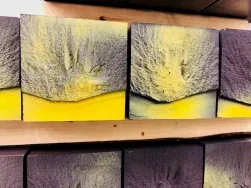 Ductile and Gray Cast Iron ProductsDuctile Cast Iron Square Bar
View specifications →
Ductile and Gray Cast Iron ProductsDuctile Cast Iron Square Bar
View specifications →
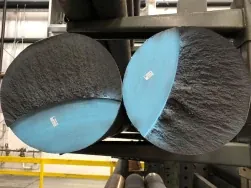 Ductile and Gray Cast Iron ProductsDuctile Cast Iron Round Bar
View specifications →
Ductile and Gray Cast Iron ProductsDuctile Cast Iron Round Bar
View specifications →
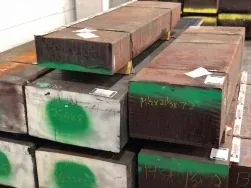 Ductile and Gray Cast Iron ProductsGray Cast Iron Plate
View specifications →
Ductile and Gray Cast Iron ProductsGray Cast Iron Plate
View specifications →Industries Solutions And Guides
Get Ductile Cast Iron Pipe Quoted
Send the grade, size and quantity. Availability, price and lead time come back per line item.