
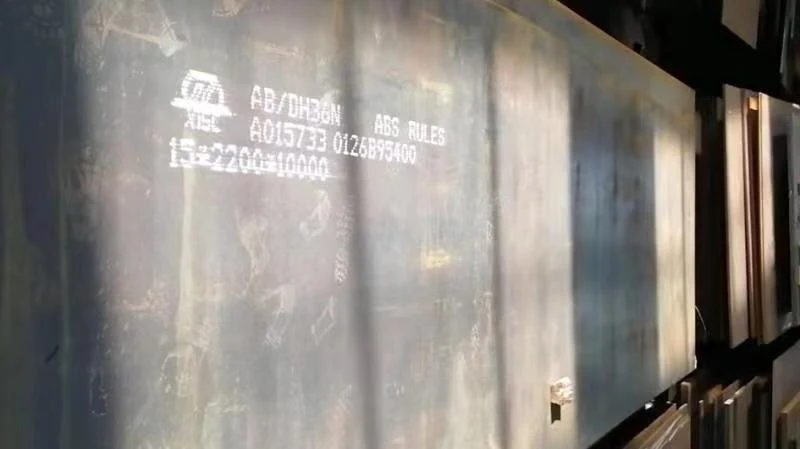
AH36 DH36 and EH36 Shipbuilding Steel Plate
Written for buyers and engineers who have to specify this material and defend the choice at inspection.
What The Grade Designation Actually Tells You
AH36, DH36 and EH36 are high-strength shipbuilding steel grades with increasing yield strength and low-temperature impact performance. The first letter indicates the strength level, the number is the minimum yield strength in megapascals, and the suffix defines the impact test temperature.
AH36 has a minimum yield strength of 360 MPa and is tested at -20 degrees C. DH36 is 360 MPa at -40 degrees C. EH36 is 360 MPa at -60 degrees C. The higher the suffix, the lower the temperature the steel must withstand without brittle fracture.
- A - yield strength 340 MPa, impact at +20 C
- B - yield strength 340 MPa, impact at 0 C
- D - yield strength 340 MPa, impact at -20 C
- E - yield strength 340 MPa, impact at -40 C
- AH36 - 360 MPa yield, impact at -20 C
- DH36 - 360 MPa yield, impact at -40 C
- EH36 - 360 MPa yield, impact at -60 C
Supply Condition Codes You Will See On The Certificate
The same grade can arrive in different conditions based on the rolling and heat treatment process. The condition code determines the mechanical properties and weldability. Using the wrong condition can cause failure during welding or in service.
For AH36, DH36 and EH36, the standard condition is normalized or thermomechanically rolled. The code after the grade indicates the processing method and whether the steel has been preheated or tempered.
- +N - normalized
- +M - thermomechanically rolled
- +Q - quenched and tempered
- +QL - quenched and tempered to lower temperature
- No suffix - as rolled
How To Choose Between AH36 DH36 And EH36
Start from the lowest expected service temperature of the structure, not the ambient temperature at fabrication. A deck plate in a cold climate must be EH36 if it will be exposed to -60 degrees C.
If the drawing specifies EH36, do not substitute DH36 or AH36 without engineering approval. The impact test temperature is a design requirement, not a material preference.
What We Supply Against This Standard
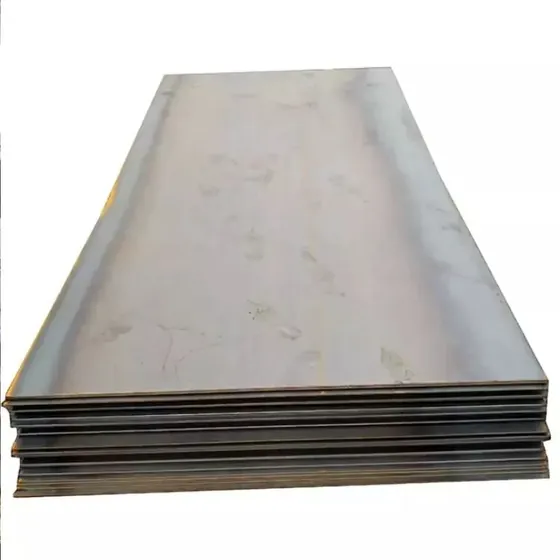
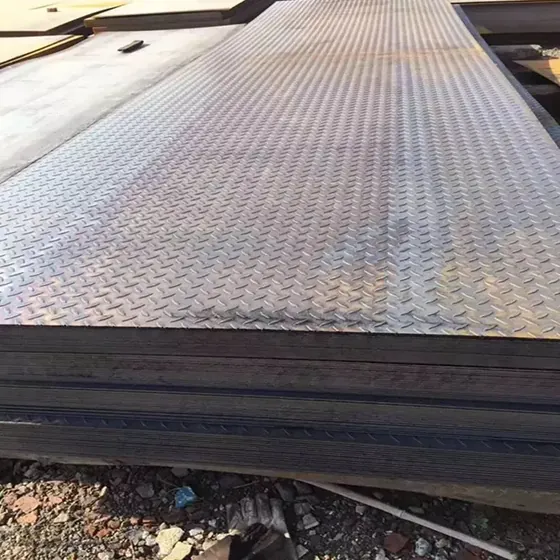
Carbon and alloy steel plate for shipbuilding in AH36, DH36 and EH36 grades, suitable for hulls, bulkheads, decks and hatch covers in tankers, bulk carriers, container ships and LNG carriers.
Supplied in thicknesses from 5 mm to 150 mm, widths from 1500 mm to 3900 mm, and lengths of 6 m, 12 m or in coils. Surface treated with anti-rust paint.
- Thickness 5 to 150 mm
- Width 1500 to 3900 mm
- Length 6 m, 12 m, or coils
- Surface anti-rust painted
- Weldable with high heat input and low temperature
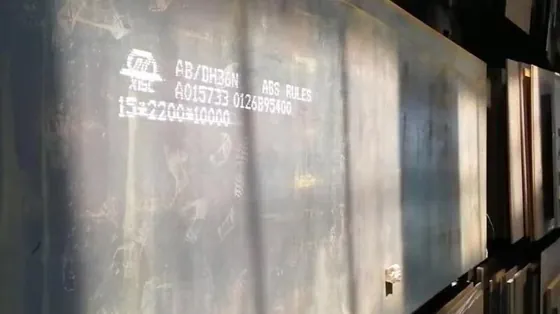
- Available under ABS, BV, CCS, DNV, GL, HR, KR, LR, NK, RINA, RS standards
What We Supply Against It
Questions About AH36 DH36 and EH36 Shipbuilding Steel Plate
Is EH36 stronger than DH36?
Same yield strength of 360 MPa. The difference is impact toughness: EH36 is tested at -60 degrees C, DH36 at -40 degrees C.
Can AH36 be substituted for EH36?
Not without engineering approval. EH36 is required for structures exposed to -60 degrees C. AH36 is only qualified to -20 degrees C.
What thickness range can you supply?
5 mm to 150 mm, with widths from 1500 mm to 3900 mm and lengths of 6 m, 12 m or in coils.
Do you provide certification?
Yes. Mill certificates include chemical analysis, mechanical testing, and ultrasonic test results, issued under ABS, BV, CCS, DNV, GL, HR, KR, LR, NK, RINA, RS standards.
What are the welding preheat requirements?
For plates over 30 mm thickness, preheat to 120–150 °C before welding. For ≤30 mm, preheat to 75 °C if ambient is below 5 °C, or 75–100 °C if below 0 °C.
Is anti-rust paint applied?
Yes. All plates are treated with anti-rust paint before packing for sea freight.
Can you cut or process the plate before shipping?
Yes. Cutting, drilling, and forming services are available on request. Contact us for lead time and cost details.
Need This Grade Quoted
Send the size table and quantity. Availability and price come back per line item with mill certificates against the ordered standard.