
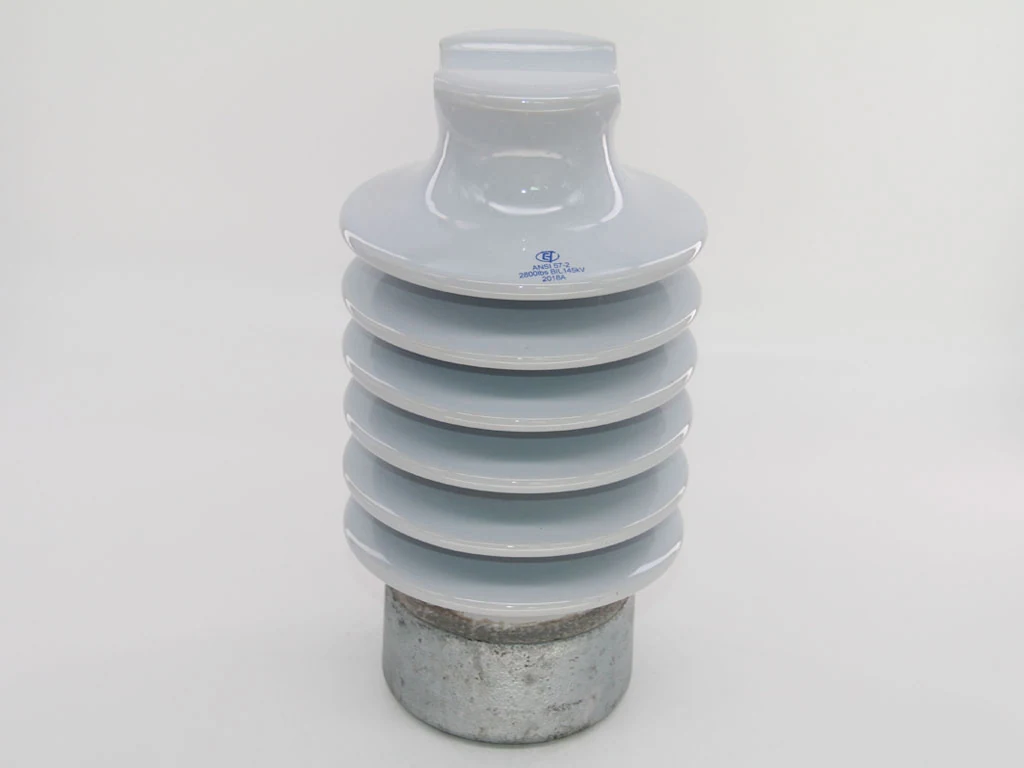
Line Post Insulators ANSI 57-2
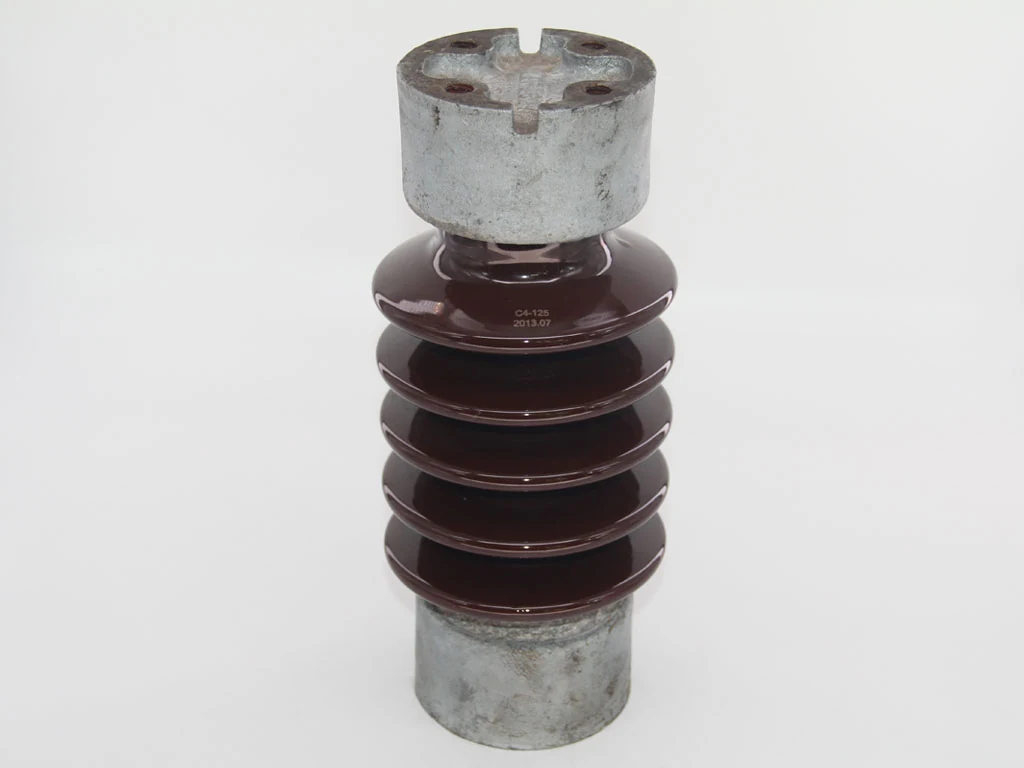
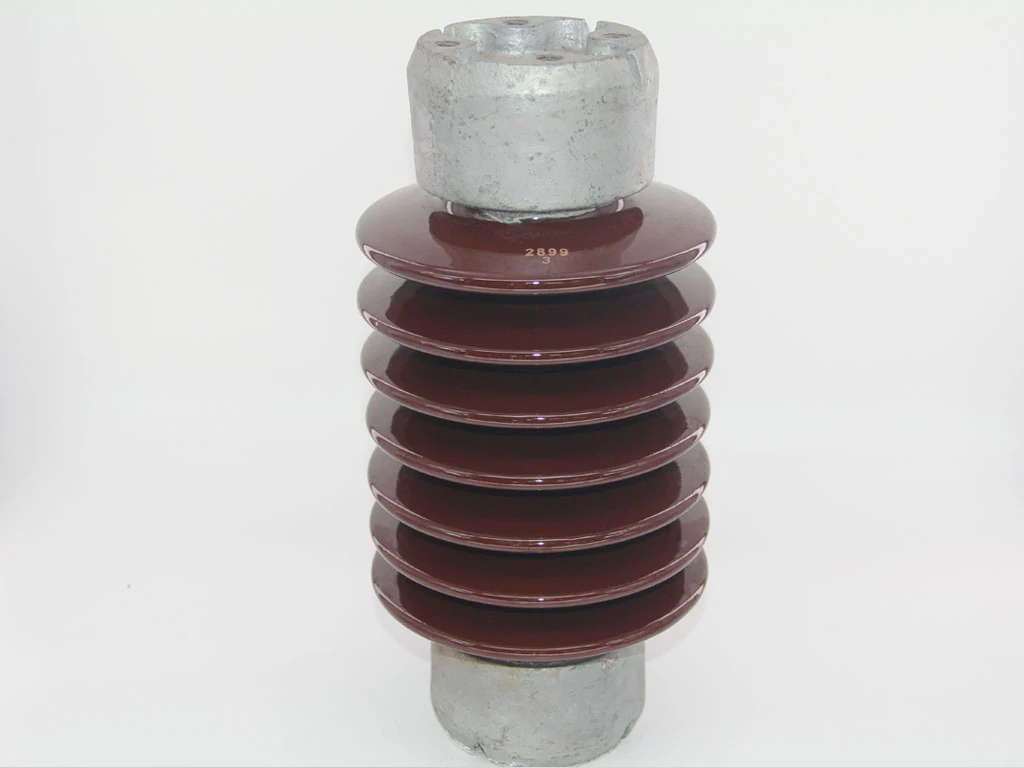
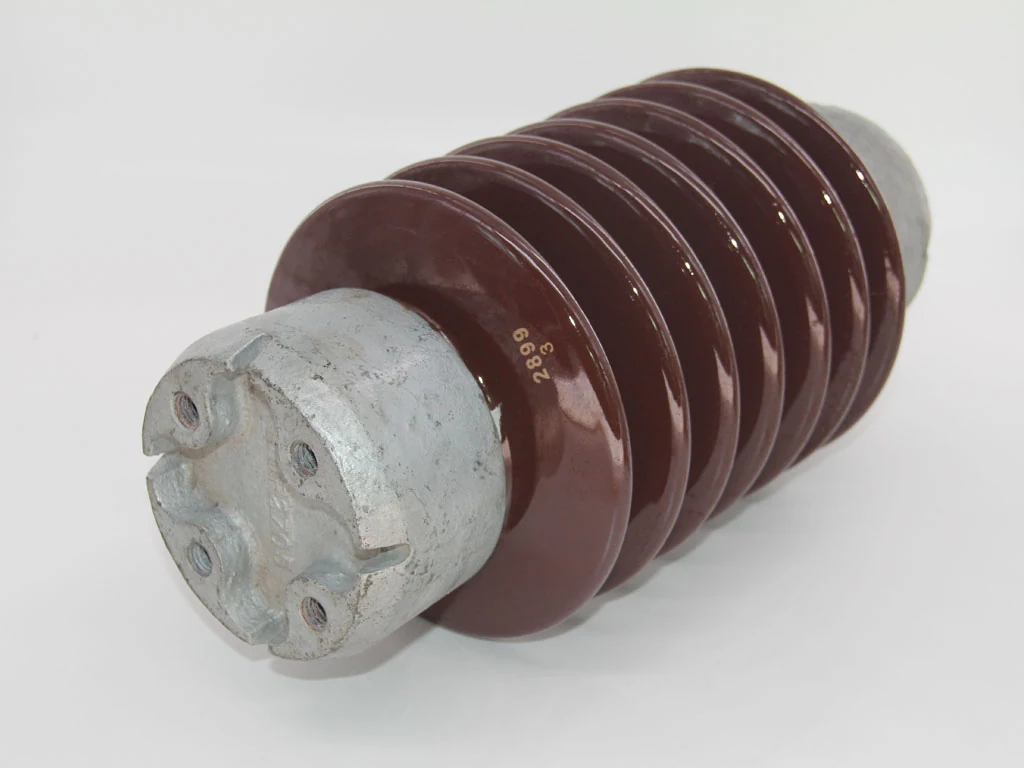
A porcelain line post insulator to ANSI 57-2 with a straight mounting design, used on overhead distribution lines and in substations to support conductors at fixed positions. The insulator provides mechanical support and electrical insulation for systems up to 35kV AC. Its design supports both dry and wet flashover performance and is suitable for urban and industrial environments with moderate pollution levels.
Key Benefits
- Straight mounting design allows rigid conductor positioning at poles and substations
- Cantilever strength of 2,800 pounds (12.5kN) supports conductor weight and wind loading
- 22 inches (559mm) leakage distance resists tracking in polluted and coastal environments
- Dry arcing distance of 9 1/2 inches (241mm) sets flashover performance for system voltage
- Routine proof test at 1,000 pounds (5kN) verifies mechanical integrity before shipment
- Radio influence voltage of 100 microvolts at 1000 kHz meets low EMI standards for urban areas
Technical Features
- Straight mounting design with ANSI class 57-2 dimensions
- 152mm disc diameter with 305mm height for compact pole mounting
- 559mm leakage distance per unit supports pollution-resistant string design
- 241mm dry arcing distance sets flashover behaviour under power frequency voltage
- Cantilever strength of 2,800 pounds (12.5kN) for conductor support under load
- Routine proof test at 1,000 pounds (5kN) ensures mechanical integrity before shipment
- Low frequency dry flashover voltage of 110kV meets system insulation requirements
- Low frequency wet flashover voltage of 85kV ensures performance under wet conditions
- Critical impulse flashover voltage positive of 180kV and negative of 205kV for surge protection
- Maximum RIV at 1000 kHz of 100 microvolts measured at 22kV RMS to ground
- ANSI 57 2
- LINE POST INSULATORS
- HIGH VOLTAGE INSULATORS
Specifications
| ANSI Class | 57-2 |
|---|---|
| Diameter (D) | 6 inches (152mm) |
| Height (H) | 12 inches (305mm) |
| Leakage Distance | 22 inches (559mm) |
| Dry Arcing Distance | 9 1/2 inches (241mm) |
| Cantilever Strength | 2,800 pounds (12.5kN) |
| Cantilever Strength Routine Test | 1,000 pounds (5kN) |
| Type Application Voltage | 35kV |
| Low Frequency Dry Flashover Voltage | 110kV |
| Low Frequency Wet Flashover Voltage | 85kV |
| Critical Impulse Flashover Voltage Positive | 180kV |
| Critical Impulse Flashover Voltage Negative | 205kV |
| Test Voltage RMS to Ground | 22kV |
| Maximum RIV at 1000 kHz | 100 microvolts |
Figures are the published design values for this class. Imperial and metric are the same part. Download this table as a PDF datasheet.
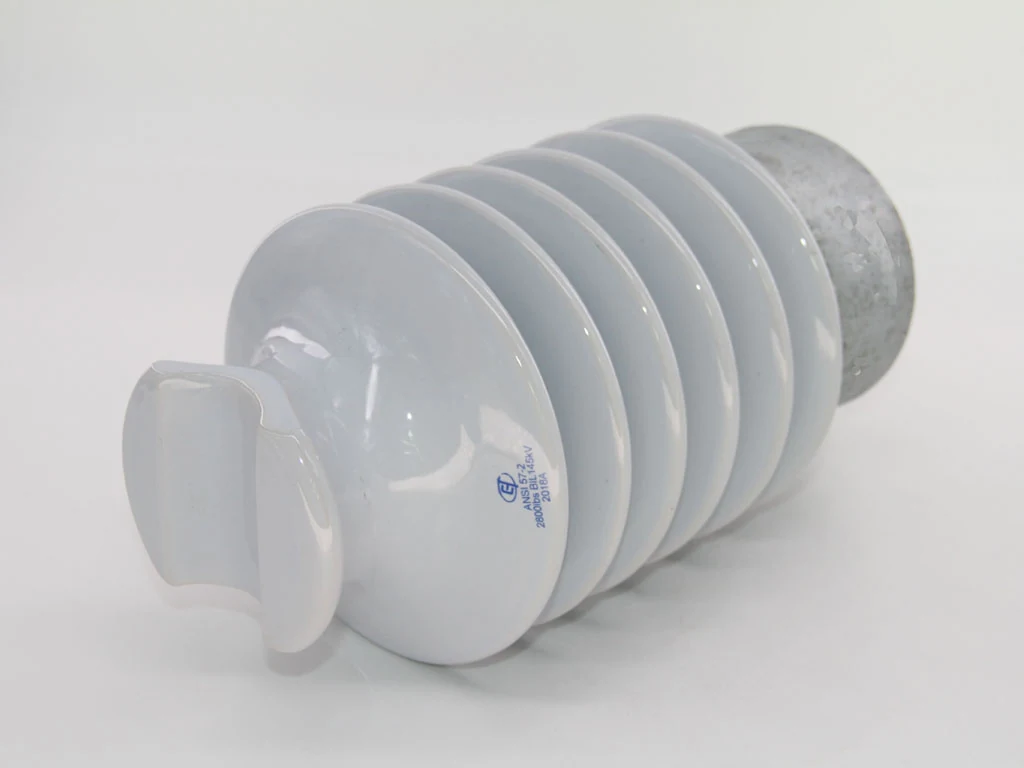
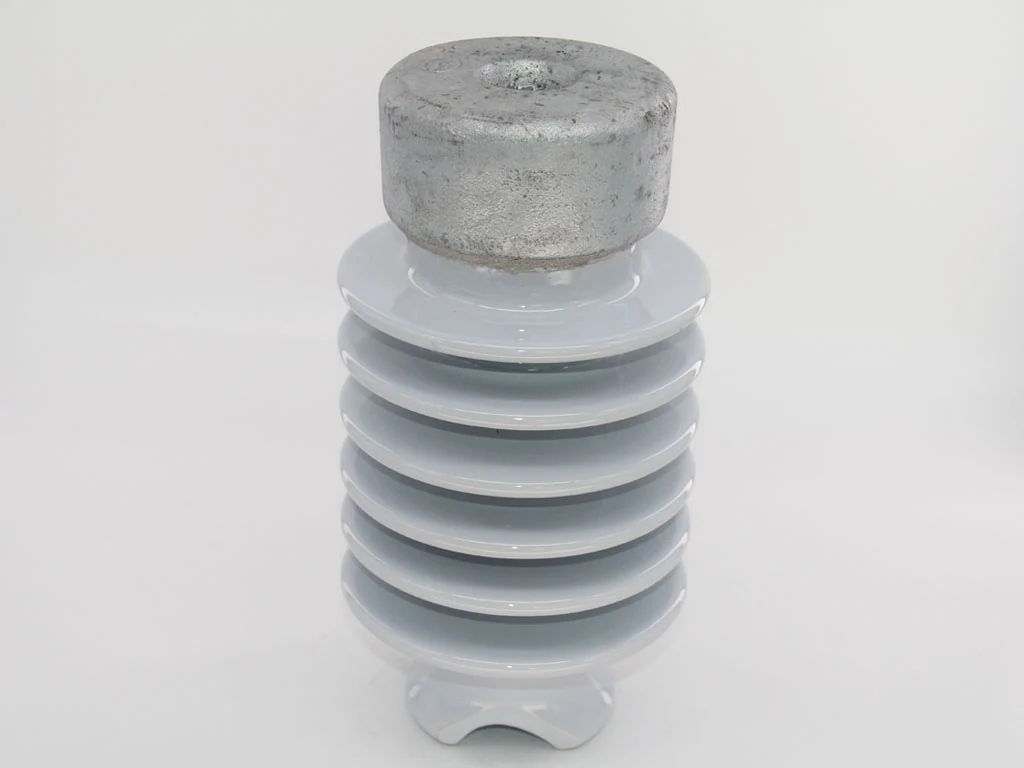
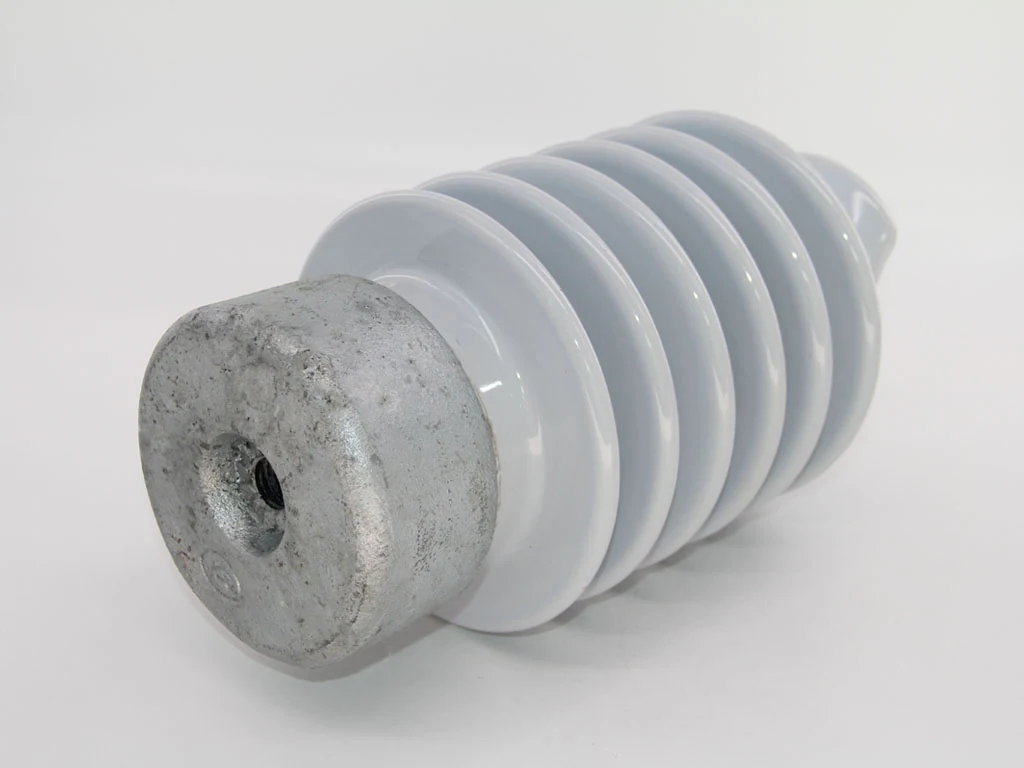
More Views of This Product
Who It Is For and What It Solves
Who It Is For
- Utility procurement engineers specifying insulators for distribution line upgrades
- EPC contractors installing distribution poles and substation hardware
- Transmission and distribution line contractors sourcing standardized insulators
- Substation builders requiring rigid conductor support with predictable electrical performance
- Electrical wholesalers supplying ANSI standard components to regional contractors
Problems It Solves
- Flexible insulators cannot maintain conductor alignment at fixed points on poles or in substations
- Insufficient leakage distance leads to flashover in polluted or coastal areas
- Lack of routine mechanical testing increases risk of field failure under wind or ice load
- High radio influence voltage causes interference in nearby communication systems
- Mismatched mounting dimensions prevent fitment on existing pole hardware
Application Scenarios
- Distribution line poles where conductors must be fixed at a rigid offset from the pole
- Substation busbar supports where conductor alignment and clearance are critical
- Urban feeders with moderate pollution levels requiring extended leakage distance
- Industrial zones with dust and moisture where tracking resistance is essential
- Replacements for existing ANSI 57-2 insulators in distribution systems
Materials and Manufacture
Materials
- Glazed electrical porcelain dielectric body
- Galvanized malleable iron or forged steel mounting cap and base fittings
- Portland cement bonding the metal fittings to the porcelain
Manufacturing Steps
Body preparation and forming of the porcelain shell
Glazing and high temperature firing
Cementing of the mounting cap and base metal fittings
Routine proof load test at 1,000 pounds (5kN) on every unit
Electrical routine testing before packing
Quality Control
- Every unit is routine proof load tested at 1,000 pounds (5kN)
- Sample dry and wet power frequency flashover testing against 110kV and 85kV ratings
- Radio influence voltage measured at 22kV RMS to ground against the 100 microvolt limit
- Manufactured under an ISO 9001:2008 certified quality system
- Dimensions verified against ANSI class 57-2 specifications
Certification held: ISO 9001:2008. No other certification is claimed.
Customization Options
- Glaze colour to match utility or project specification
- Alternative mounting configurations where the base or cap differs
- Higher leakage variants for areas with heavy pollution or coastal exposure
- Non-standard designs developed with our engineers for a specific application
No Published Class Fits
We design insulators for specific non-standard applications. Send the mounting interface, the mechanical duty and the system voltage and our engineers will work through it with you.
Compared With the Alternatives
| Suspension insulators | Line post insulators provide rigid support while suspension insulators allow conductor swing; use line post where alignment is critical |
|---|---|
| Polymer insulators | Porcelain is heavier but does not age in UV and can be visually inspected for damage; polymer may degrade in high UV and is harder to inspect |
| Pin type insulators | Line post insulators have higher mechanical strength and better leakage distance; pin type is simpler but less suitable for higher voltages or polluted areas |
Use Guide
Verify the mounting base and cap dimensions match your pole or busbar hardware before ordering
Use the 559mm leakage distance to assess performance in polluted or coastal zones
Ensure the maximum working load does not exceed the 2,800 pound (12.5kN) cantilever strength including wind and ice
Handle by the metal fittings and store on the pallet supplied to protect the porcelain body
Inspect for glaze damage or cement cracks before installation
Line Post Insulators ANSI 57-2 FAQ
What is the mechanical strength of an ANSI 57-2 line post insulator
The cantilever strength is 2,800 pounds (12.5kN). Every unit is routine proof tested at 1,000 pounds (5kN).
What is the system voltage this insulator is rated for
The type application voltage is 35kV AC. This insulator is designed for use in systems up to that voltage.
Can you supply a different glaze colour
Yes. Glaze colour can be matched to your utility or project specification. Contact us with your preferred colour.
What certification do you hold
Our manufacturing facilities are certified to ISO 9001:2008. We do not claim any other certification on this page.
What is your minimum order quantity
MOQ depends on the ANSI class and glaze colour. Email us the class and the quantity you need and we will confirm.
Can you make a non-standard design
Yes. We design insulators for specific non-standard applications and our engineers are available to help develop an insulator for your particular application.
Which markets do you supply
Customers in more than 40 countries use our insulators, including America, Canada, Australia, Brazil, Ecuador, Russia, Greece, Cyprus, India, Viet Nam, Sri Lanka, Pakistan, Tanzania and Kenya.


Guides That Cover This Product
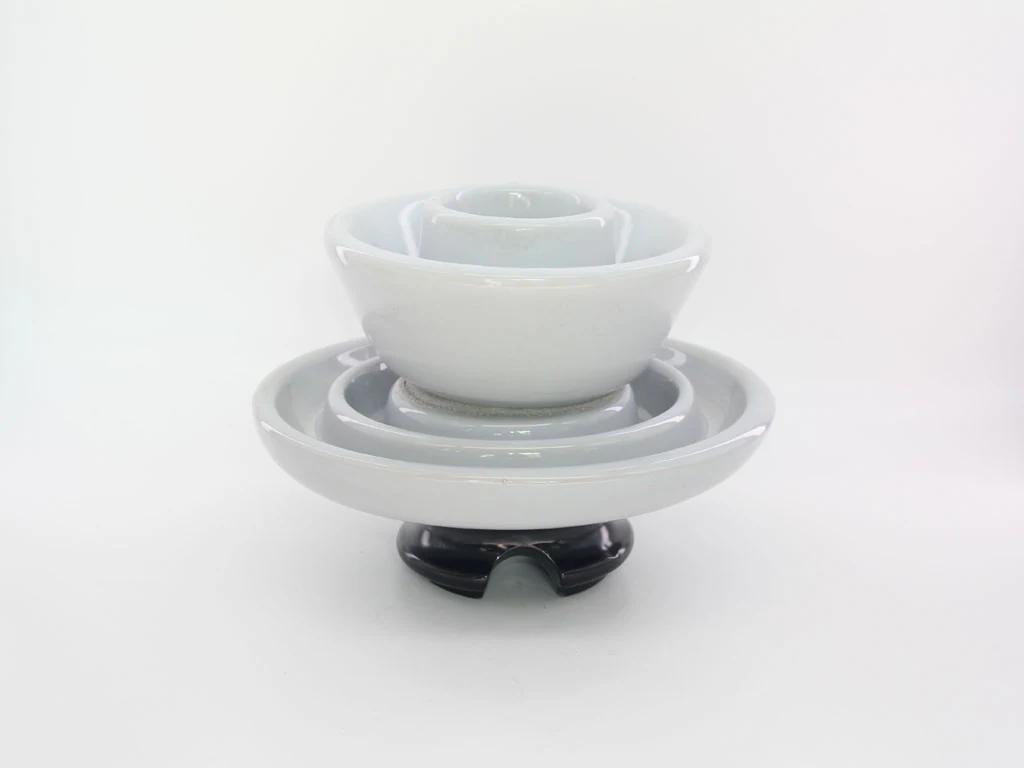
How to Read ANSI Insulator Class Numbers
Learn how ANSI class numbers like 52-4, 56-3 and 57-2 identify porcelain insulators, and how they differ from IEC design
Creepage Distance and Pollution Performance
Creepage distance values for IEC C4-125 (500mm), ANSI TR-208 (610mm), ANSI 57-2 (559mm), and ANSI 56-3 (533mm) insulator
Flashover Voltage Explained Dry Wet and Impulse
Understanding dry flashover, wet flashover, impulse flashover, puncture voltage, and impulse withstand voltage in porcel
Quote Line Post Insulators ANSI 57-2
Send the quantity, the coupling type and the destination and we will quote against the published figures on this page. The datasheet PDF has the same table.