
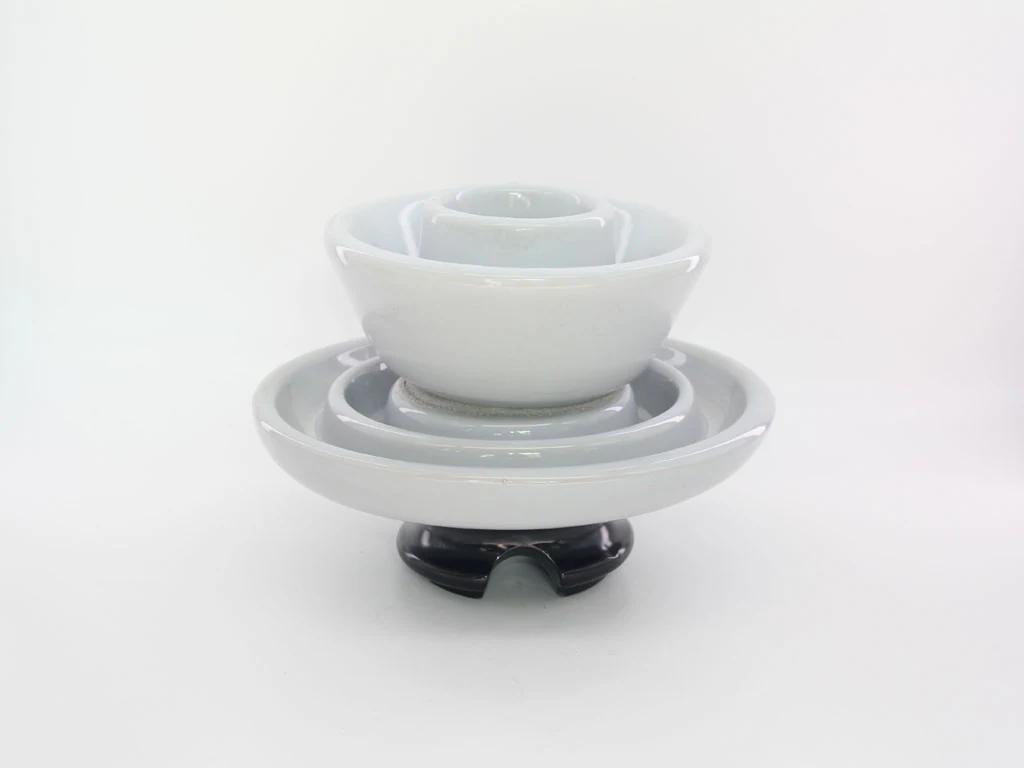
How ANSI Class Numbers Identify an Insulator
An ANSI class number such as 52-4, 53-2, 54-3, 55-4, 56-3 or 57-2 defines the insulator's family, geometry, coupling type, and minimum mechanical and electrical ratings. The first digit identifies the family: 52 for suspension discs, 53 for spools, 54 for strain insulators, 55 and 56 for pin types, 57 for line posts. The second digit indicates the size and rating step within that family.
What the First Number in an ANSI Class Means
The first number in an ANSI class identifies the insulator family. For example, ANSI 57-2 is a line post insulator, ANSI 56-3 is a high voltage pin type insulator, and ANSI 52-4 is a suspension disc. Each family has a distinct shape, mounting method, and application. A mismatch in family means the insulator will not fit the structure.
Line Post Insulators ANSI 57-2
What the Second Number in an ANSI Class Means
The second number in an ANSI class indicates the size and rating step within the family. ANSI 56-3 is larger and stronger than ANSI 56-2, with a 267mm diameter and 13.6kN cantilever strength. ANSI 57-2 has a 152mm diameter and 12.5kN cantilever strength. The number alone does not indicate strength or voltage rating.
High Voltage Pin Type Insulators ANSI 56-3
How IEC Designations Differ from ANSI Classes
IEC designations such as C4-125 describe the insulator by its duty rather than by a family index. C4-125 means a station post insulator with a 4kN cantilever strength and a 125kV lightning impulse withstand voltage. The designation states the mechanical and electrical values directly, allowing direct comparison between parts.
Station Post Insulators IEC C4-125
Comparing ANSI and IEC Insulators by Rating
ANSI 57-2 has a 35kV type application voltage and a 12.5kN cantilever strength. IEC C4-125 has a 125kV lightning impulse withstand voltage and a 4kN cantilever strength. The two are not directly comparable. The ANSI class includes the application voltage, while the IEC designation includes the impulse withstand voltage.
Line Post Insulators ANSI 57-2
Why Dimensions and Ratings Must Be Checked Together
Two insulators with the same class may differ in leakage distance, dry arcing distance, or mechanical strength. ANSI 56-3 has a 533mm leakage distance and 13.6kN cantilever strength. ANSI 57-2 has a 559mm leakage distance and 12.5kN cantilever strength. Dimensions and ratings must be verified against the application, not assumed from the class number.
High Voltage Pin Type Insulators ANSI 56-3
What a Class Number Does Not Tell You
An ANSI class number fixes geometry and minimum ratings. It does not fix glaze colour, cement quality, pollution performance, or radio influence voltage. Two ANSI 57-2 insulators from different suppliers may have different RIV levels, leakage distances, or flashover behaviour in polluted environments.
Line Post Insulators ANSI 57-2
How to Use Class Numbers in a Procurement Enquiry
When specifying an insulator, state the ANSI class or IEC designation, the required application voltage, and the mechanical and electrical ratings. Include the leakage distance and RIV data if pollution or radio interference is a concern. Use the exact dimensions and ratings from the product records to avoid mismatches.