
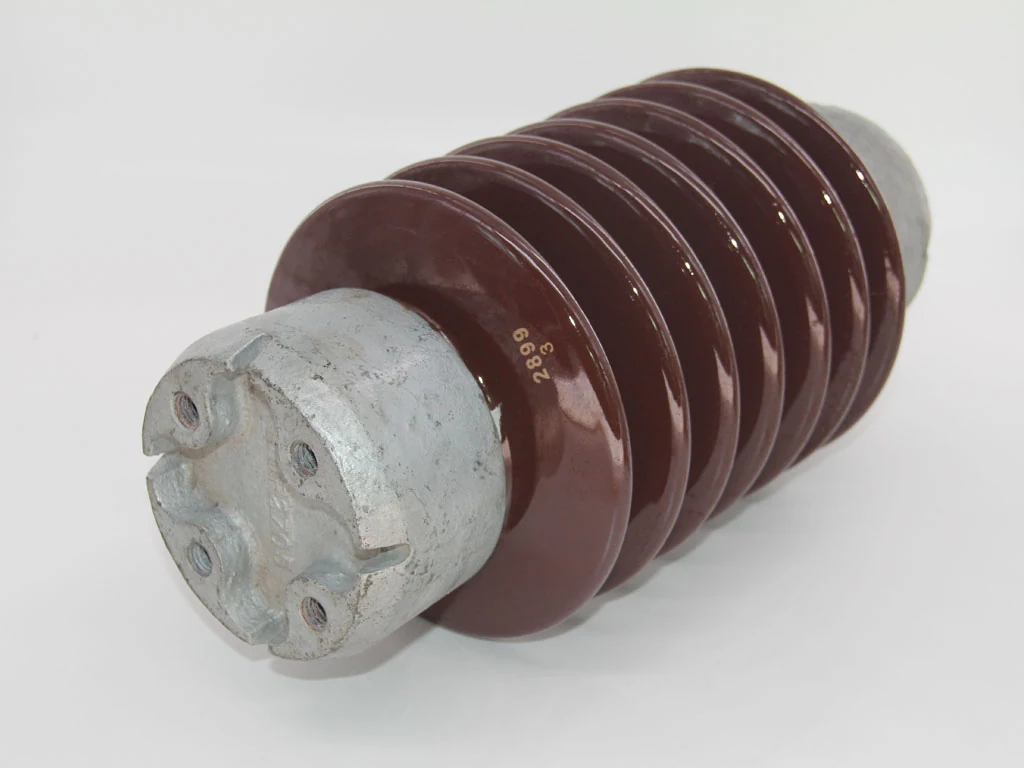
What Creepage Distance Means in Practice
Creepage distance is the shortest path along the insulator surface between the conductor and the grounded structure. It determines how well the insulator resists flashover in polluted, coastal, desert or industrial environments where salt, dust or chemical deposits can form conductive layers on the surface.
How Creepage Distance Affects Performance in Polluted Areas
In polluted environments, moisture combines with contaminants on the insulator surface to create a conductive film. A longer creepage distance increases the resistance of this film, reducing the risk of flashover. Insulators with insufficient creepage may fail under wet or foggy conditions even at normal system voltage.
Comparing Creepage Distance Across Standards
The IEC C4-125 station post insulator has a creepage distance of 500mm. The ANSI TR-208 station post has a leakage distance of 610mm. The ANSI 57-2 line post has 559mm. The ANSI 56-3 high voltage pin type has 533mm. These values are direct comparisons for pollution performance across different standard designs.
Why Creepage Distance Is Not the Only Factor
While creepage distance is critical, it does not guarantee performance on its own. Shed profile, material quality, glaze integrity and pollution severity also affect long-term reliability. A higher creepage distance does not compensate for poor shed design or weak glaze.
Using Creepage Distance to Select the Right Insulator
When specifying insulators for coastal, desert or industrial zones, compare the creepage distance directly. For example, the ANSI TR-208 (610mm) offers more pollution resistance than the IEC C4-125 (500mm), even though both are station post insulators with similar mechanical ratings.
How to Verify Creepage Distance in a Quotation
Always check the leakage or creepage distance in the product data sheet. It must be listed in millimetres or inches. If it is missing, request it before placing an order. A value without a unit is not usable for comparison.
Creepage Distance and System Voltage Are Not the Same
The type application voltage defines the system voltage the insulator is designed for. Creepage distance is a physical dimension that supports performance at that voltage under pollution. For example, the ANSI 57-2 has a 35kV application voltage and a 559mm creepage distance, but the creepage is not derived from the voltage.