
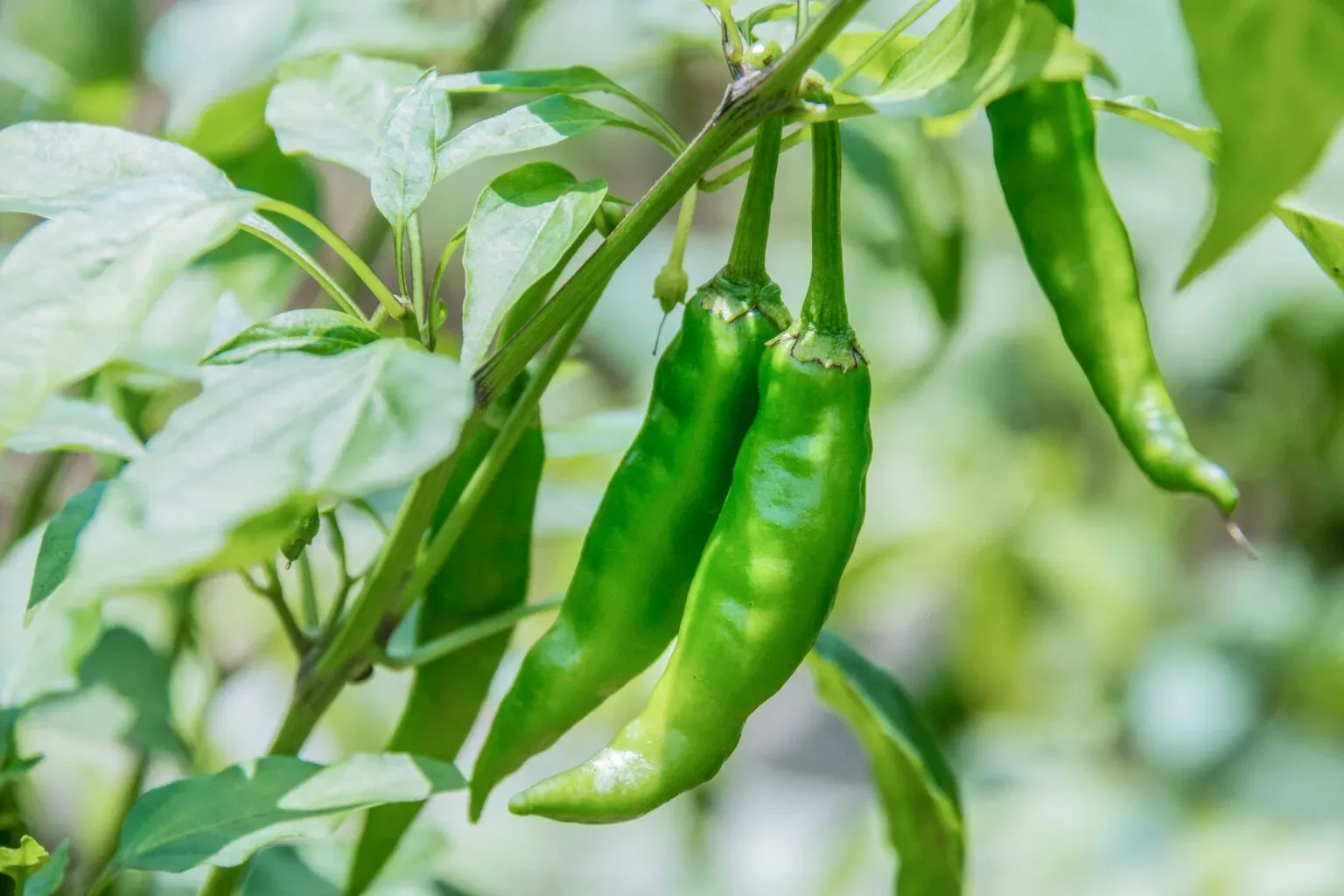
Which Crops Benefit Most From Amino Acid Fertilizer
Many crops can be formulated for with compound amino acid powder, but four groups account for most of the enquiries we receive from distributors and blenders. This guide sets out those groups, explains what changes between them from a formulation point of view, and leaves you able to decide which grade to trial for the crops in your own portfolio.
The Four Crop Groups Most Often Formulated For
The crops below are the ones our customers most frequently build products around. Listing them describes where the material is used commercially; it is not a promise of a response in any particular field, because results depend on the product, the rate, the crop's condition and the growing environment.
- Vegetables: tomatoes, peppers and leafy greens
- Fruit trees: citrus, apples and stone fruits
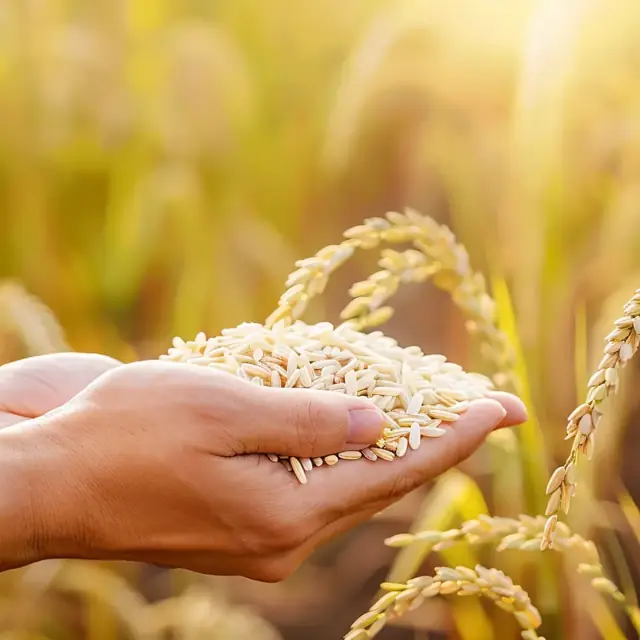
- Cereals and grains: wheat, rice and maize
- Flowers and ornamentals: roses, tulips and ornamental shrubs
Vegetables
Tomatoes, peppers and leafy greens are usually grown intensively, often under protection, and usually under drip irrigation or frequent foliar programmes. That makes them the most demanding group for solubility and salt load rather than for amino acid concentration, because the material passes through filters and emitters repeatedly and the crop carries several growth stages at once.
For these crops, check sodium and chloride on the COA as carefully as the amino acid grade, and run a jar test with the complete ingredient list before the first commercial batch. Leafy greens in particular have a short cycle and visible foliage, so a crop-safety trial at the intended rate is worth completing before any recommendation goes out to growers.
Fruit Trees
Citrus, apples and stone fruits are perennial crops with long programmes and high-value harvests, which changes the commercial logic. A product used here will typically be applied several times across a season, so consistency between batches matters more than it does for a single-application product.
Ask for the assigned batch COA rather than only a representative one, and where a programme spans a season, request results from more than one production run so you can see the variation. Preharvest restrictions and harvest quality also need attention at the fruit-development stage, and any salt loading on mature foliage should be kept conservative.
Cereals and Grains
Wheat, rice and maize are broad-acre crops, so cost per hectare dominates the decision. Here the grade arithmetic is the whole argument: at a fixed powder weight per hectare, Amino Acids 35 delivers at least 35% total amino acids, Amino Acids 45 at least 45% and Amino Acids 80 at least 80%, so the cost per kilogram of delivered amino acid, not the price per kilogram of powder, is the figure to compare between quotations.
Water volumes per hectare are usually lower in broad-acre spraying than in horticulture, which raises the working concentration in the tank for a given per-hectare dose. Check crop safety at that concentration rather than at the one used in your greenhouse trials, and keep an untreated comparison strip so that a seasonal effect is not recorded as a product effect.
Flowers and Ornamentals
Roses, tulips and ornamental shrubs are sold on appearance, which makes crop safety the governing constraint. Visible leaf marking that would be tolerated on a cereal crop destroys the value of an ornamental, so foliar concentrations should be trialled from the low end of the range upwards rather than set at the maximum.
Ornamental production also tends to run on controlled substrates with precise fertigation recipes, so compatibility with the existing calcium, phosphate and micronutrient programme deserves a full jar test. Where a product is applied to open flowers, follow the label and local guidance on timing and on pollinator protection.
Choosing a Grade for Your Crop Portfolio
Grade selection is driven by formulation space and cost rather than by the crop itself. Amino Acids 35 guarantees at least 35% total amino acids, at least 17% total nitrogen, at least 35% organic matter, no more than 5% moisture, pH 4 to 6 and full solubility. Amino Acids 45 guarantees at least 45% amino acids, at least 16% nitrogen and at least 60% organic matter. Amino Acids 80 guarantees at least 80% amino acids, at least 12% nitrogen and at least 80% organic matter.
If your formulation has room to carry more powder and cost is the constraint, the 35 grade usually wins. If inclusion rate is tight, as it often is in concentrated liquids and in premium horticultural blends, the 80 grade carries the same amino acid load in less material. The 45 grade sits between the two and is the most common starting point for a first trial across a mixed portfolio.
Where free amino acid content is part of your specification, there is third-party data to work from: Eurofins in Chengdu, a CNAS-accredited laboratory, reported free amino acids by method GB/T 18246-2019 on 29 April 2026 at 41.93% for the 45 grade under certificate AR-26-Y3-008790-02, 48.22% for the 50 grade under AR-26-Y3-008792-02, and 75.37% for the 80 grade under AR-26-Y3-008791-02.
How to Qualify a Crop Before You Recommend It
Whatever crop group you are targeting, the qualification sequence is the same and it is short. Dissolve the powder in the actual process water at the working concentration and record dissolution time and insoluble matter. Run a jar test with the full ingredient list and observe precipitation, foam, odour and pH change. Then test crop safety at the intended rate on a small area, keeping an untreated comparison.
A free sample of 200 to 500 g with its batch COA is enough material to complete all three steps. Doing so before the first container is ordered is the difference between a recommendation you can defend to a grower and one you have to withdraw mid-season.
Conclusion
Vegetables, fruit trees, cereals and ornamentals are where compound amino acid powder is most often formulated, but the grade you choose depends on your formulation space and cost target rather than on the crop name. Tell us which crops and application methods you are targeting at [email protected] and we will recommend a grade and send a free 200-500 g sample with its batch COA; we reply within 24 hours, Monday to Saturday.
Products Discussed In This Article
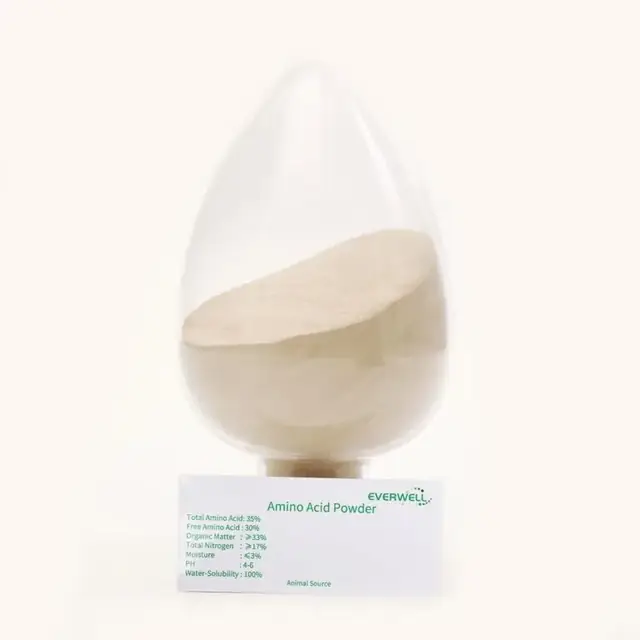
Amino Acids 35
The volume grade. A fully water-soluble hydrolysed feather protein powder carrying ≥ 17% total nitrogen, priced for foliar and fertigation programmes
View specification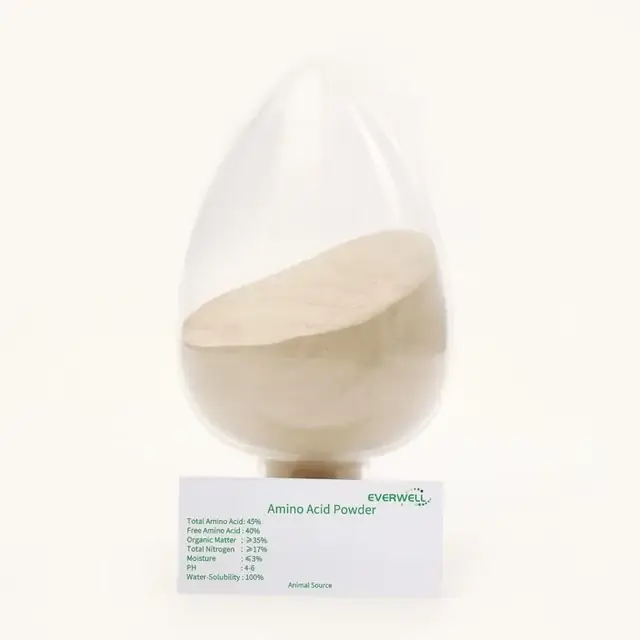
Amino Acids 45
The benchmark grade: ≥ 45% total amino acids, ≥ 60% organic matter, and 41.93% free amino acids measured by Eurofins under GB/T 18246-2019. The grade
View specification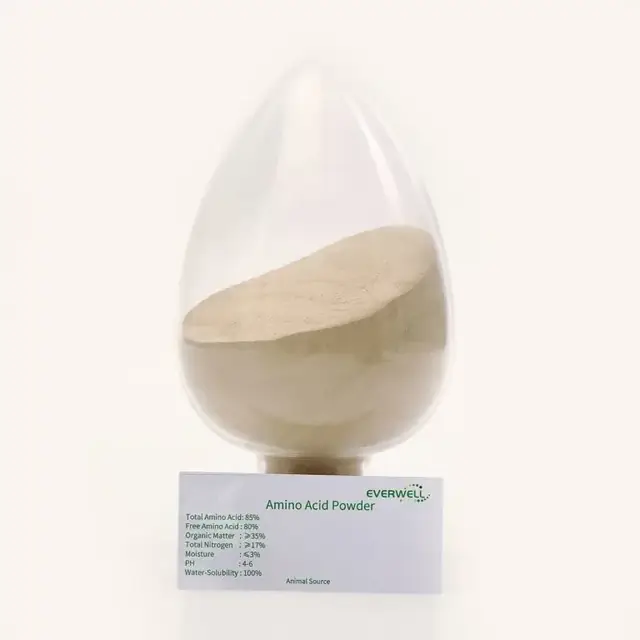
Amino Acids 80
The density grade: ≥ 80% total amino acids, ≥ 80% organic matter, and 75.37% free amino acids measured by Eurofins. Glycine and proline rich, for conc
View specificationRelated Articles
Amino Acid 45: Practical Advantages and Real Limits
What a 45% total amino acid grade actually offers a formulator, what it cannot do, and the specifications to verify first.
Read more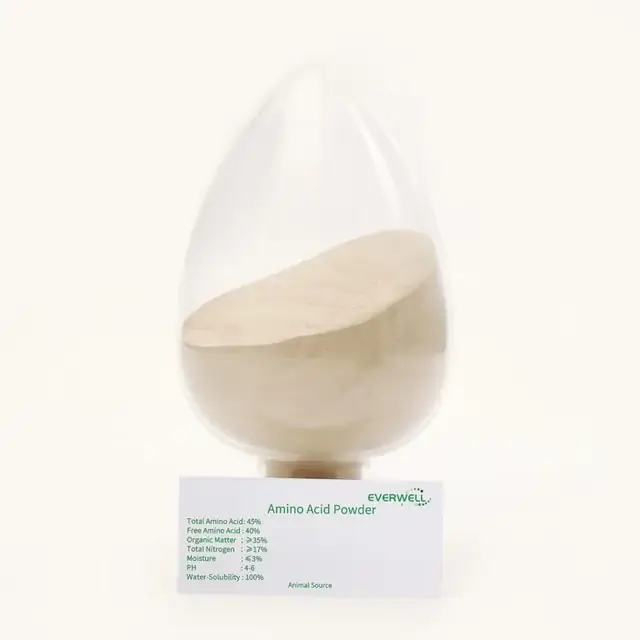
Amino Acid 45 Explained: Composition, Uses, Buyer Checks
How a 45% grade is defined and produced, where it fits in formulations, and the analytical checks that make two offers comparable.
Read more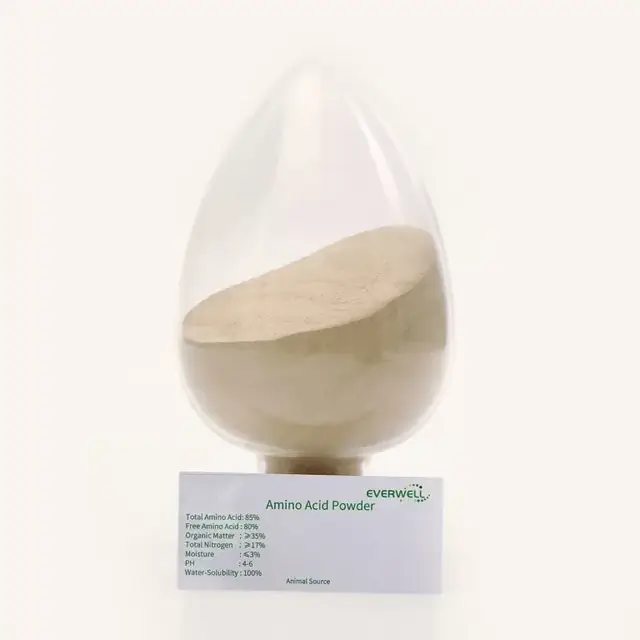
Amino Acid 80 Explained: Composition and Formulation Use
What an 80% total amino acid grade delivers per kilogram, where concentration helps, and why higher is not automatically better.
Read moreQuestions On This Topic
Which crops are most commonly targeted?
Vegetables such as tomatoes, peppers and leafy greens; fruit trees including citrus, apples and stone fruits; cereals and grains such as wheat, rice and maize; and flowers and ornamentals including roses, tulips and ornamental shrubs.
Does the crop determine which grade I should buy?
Not directly. The grade is chosen by how much formulation space you have and by your cost target. The 35 grade suits blends that can carry more powder, the 80 grade suits concentrated formulations, and the 45 grade sits between them.
What matters most when formulating for greenhouse vegetables?
Solubility and salt load. The material passes repeatedly through filters and emitters, so check sodium and chloride on the COA and run a jar test with the complete ingredient list before commercial production.
Why is batch consistency more important for fruit trees?
Perennial crops are treated several times across a long season, so variation between production runs shows up in the programme. Request the assigned batch COA and, where possible, results from more than one run.
How do I compare cost between grades for broad-acre crops?
Compare cost per kilogram of delivered amino acid rather than price per kilogram of powder, using the guaranteed minimum grade of 35%, 45% or 80% total amino acids.
Can I test the material on my crop before ordering?
Yes. Free samples of 200 to 500 g are supplied with a batch COA, which is enough for dissolution, jar and small crop-safety tests.
Ask Us About This Directly
Technical questions are answered by the export and production team, normally within 24 hours.