
Sourcing Amino Acid Powder for Fertilizer in Turkiye
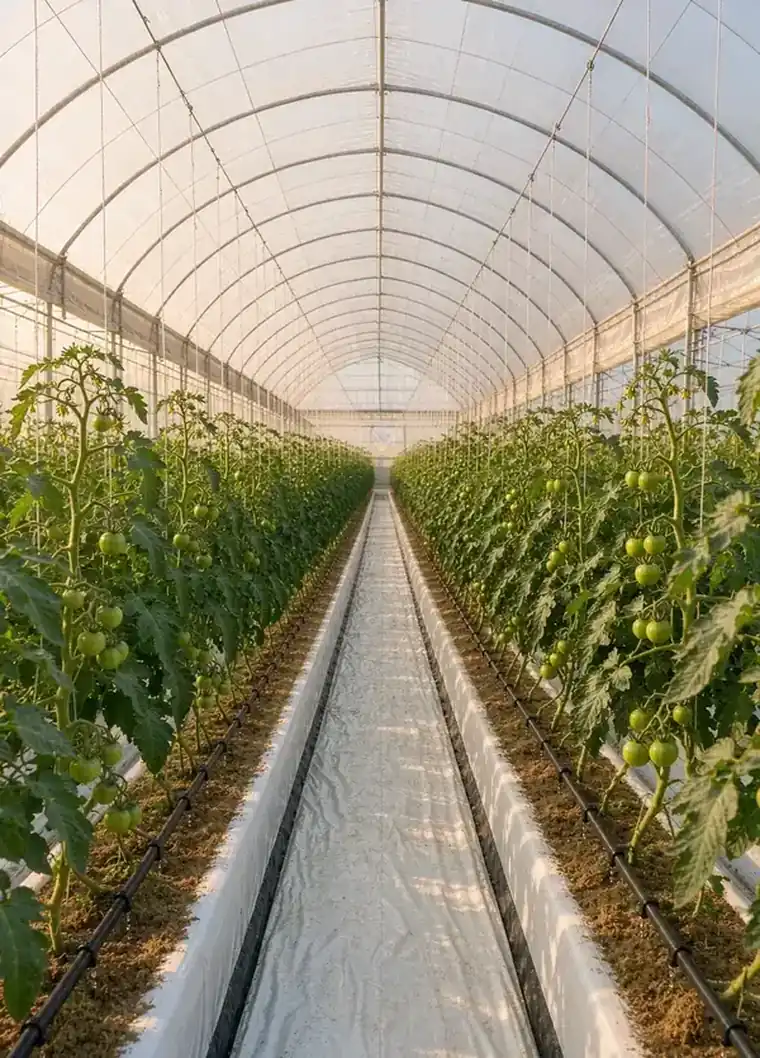
Turkiye has substantial greenhouse, horticultural and field-crop production, which creates steady demand for water-soluble fertilizer and specialty plant-nutrition ingredients. Compound amino acid powder may be evaluated as a raw material for foliar fertilizers, fertigation products and water-soluble blends. This is a procurement guide rather than a complete legal checklist, and after reading it you will know which technical and documentary questions to settle before you confirm an order for Turkiye.
Choose the Grade by Formulation, Not by Percentage
Everwell Bio currently supplies 35%, 45% and 80% total amino acid grades. The percentage refers to total amino acids and does not automatically equal free amino acids, so a 45% label is not a 45% free amino acid claim and should never be restated as one in Turkish product literature.
Pick the grade by how much formulation space you have. The 35% grade suits cost-focused formulations where there is room to carry more powder, the 45% grade balances concentration against cost, and the 80% grade suits high-concentration formulations or lower inclusion requirements.
Alongside the grade number, compare the values below across any suppliers you are qualifying. Several of them, particularly sodium and chloride, matter more for Turkish protected cultivation than the headline percentage does.
- Free amino acids and the test method used
- Total nitrogen and organic nitrogen
- Organic matter
- Moisture and the reporting basis
- pH and water solubility
- Sodium, chloride and other relevant salts
- Exact raw-material origin
- Hydrolysis process, where this is required
Solubility for Drip Irrigation
Drip irrigation is widely used in Turkish protected cultivation, and this is where a published specification is most often over-read. A stated 100% solubility is a useful figure, but it describes the stated test conditions and does not guarantee performance in every stock solution or fertilizer blend.
Test the powder against your own system before commercial production, and record what you see. A dissolution test, a jar test and a short storage observation are enough to reveal most of the problems that would otherwise appear in a customer's greenhouse. Record precipitation, foam, pH change and sediment in each case.
- Water hardness and pH
- Water temperature
- Stock-tank concentration
- Filter and emitter system
- Calcium, phosphate and micronutrient levels
- Mixing order
Documents for Supplier Qualification
Depending on the exact product and the transaction, buyers may request the product specification or TDS, a representative COA, the assigned batch COA, the SDS, a raw-material origin and process statement, the commercial invoice, packing list and bill of lading, a certificate of origin where required, the packaging and label specification, and any additional documents requested by the importer, the customs adviser or the authority.
Collecting that list is necessary but not sufficient. A generic document list does not establish import eligibility. Product classification, GTIP, registration requirements and the required analysis should all be confirmed before shipment, not after the container has sailed.
Turkish Regulatory Checks
Fertilizer imports and market placement in Turkiye are subject to rules administered by the Republic of Turkiye Ministry of Agriculture and Forestry and other relevant authorities. What applies to your shipment depends on the product composition, its classification, the intended use and the legislation current at the time of import.
The importer is the party best placed to confirm these points, and should do so in writing before the order is confirmed. Everwell Bio can provide the available technical and commercial documents for the selected grade, but final classification and import approval should be confirmed by the Turkish importer and qualified advisers.
- The proposed GTIP code and product definition
- Whether registration, pre-approval or a conformity document is required
- The required laboratory parameters and the validity period of the report
- Turkish-language label requirements
- Animal-origin documentation where applicable
- Customs and port requirements for the planned shipment
Raw-Material Origin and HALAL Questions
Everwell Bio's current 35%, 45% and 80% grades are produced from hydrolyzed duck feather protein. Buyers who require a plant-source or another specified origin should request a separately confirmed product rather than assuming that every amino acid powder on the market is interchangeable at the origin level.
If HALAL documentation is required for your market or your customer, ask for the current certificate covering the exact product, the exact facility and its validity period. A supplier statement or a description of the animal source is not a substitute for a current certificate that your market accepts. Settle this before artwork and before any commitment to a customer who has made it a condition.
Packaging, Private Label and Shipping Terms
Confirm the packaging specification in writing: available bag size, bag construction and liner, palletization, net and gross weight, Turkish or customer-language labels, private-label artwork approval, and the minimum order quantity that applies to customized packaging. Do not print final artwork until the product name, composition, claims and required legal text have been reviewed specifically for Turkiye, because reprinting a run of labels is more expensive than a week of review.
On shipping, Everwell Bio may quote terms such as FCA Suzhou warehouse, FOB China port, or CIF a named Turkish port, depending on the order. FOB Shanghai and FOB Qingdao are the standard China-side options, and payment terms include T/T, L/C, D/P and O/A. The Incoterm and the named place or port must be written precisely in the contract.
Destination discussions commonly involve Mersin, the Istanbul-area ports or Izmir. The appropriate route depends on carrier schedules, cargo classification, container type, your location and your customs arrangements, so agree it alongside the Incoterm rather than afterwards. Regular orders run on a 30-day lead time.
RFQ Checklist for Turkish Buyers
A complete first enquiry saves an entire round of correspondence and lets us quote a firm delivered price rather than an indicative one. Include the following in the request.
- Required grade and target specification
- Raw-material origin required
- Intended formulation and application
- Order quantity
- Packaging and label requirements
- Destination port or delivery point
- Preferred Incoterm
- Required technical and regulatory documents
- Sample and test requirements
Grade selection for Turkish formulators
| Grade | General purchasing consideration |
|---|---|
| 35% | Cost-focused formulations with sufficient formulation space |
| 45% | Mid-range balance of concentration and cost |
| 80% | High-concentration formulations or lower inclusion requirements |
Conclusion
Successful sourcing for Turkiye requires more than choosing between 45% and 80%. Verify the analytical methods, the formulation behaviour in your own water and emitters, the raw-material origin, the documentation and the current Turkish import requirements before confirming the order. Send the grade, raw-material origin, order quantity, packaging, destination port and required documentation to [email protected] and we will reply within 24 hours, Monday to Saturday, with specifications, current FOB or CIF pricing and a free 200-500 g sample with its batch COA.
Products Discussed In This Article
Amino Acids 45
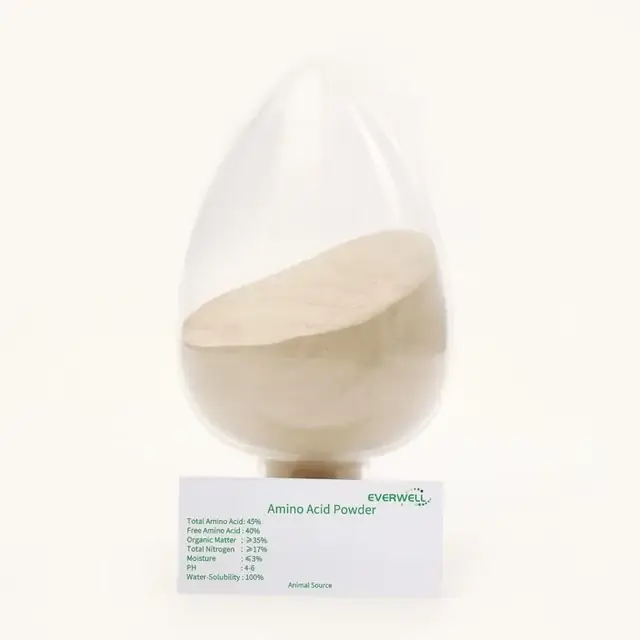
The benchmark grade: ≥ 45% total amino acids, ≥ 60% organic matter, and 41.93% free amino acids measured by Eurofins under GB/T 18246-2019. The grade
View specification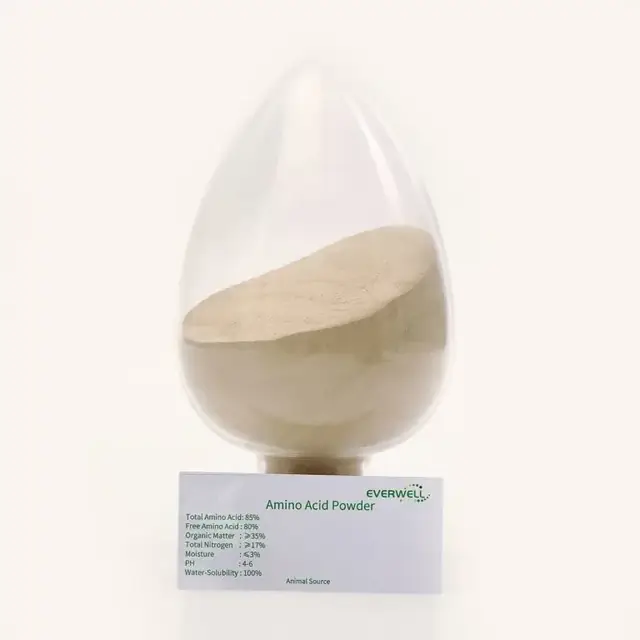
Amino Acids 80
The density grade: ≥ 80% total amino acids, ≥ 80% organic matter, and 75.37% free amino acids measured by Eurofins. Glycine and proline rich, for conc
View specification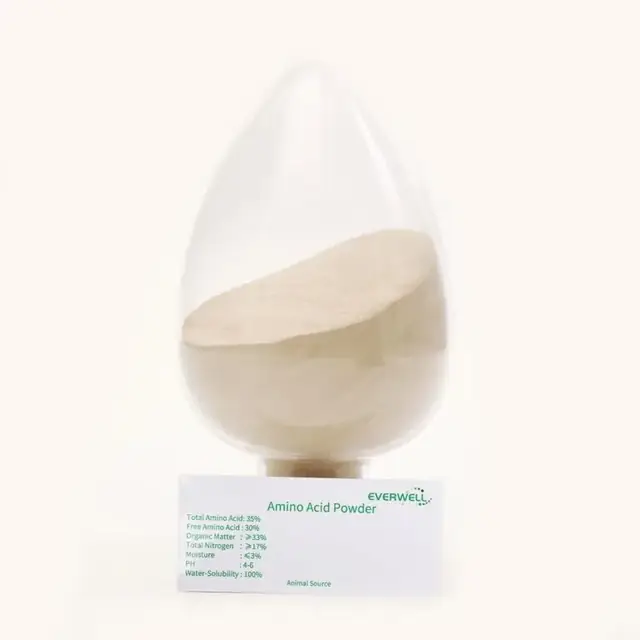
Amino Acids 35
The volume grade. A fully water-soluble hydrolysed feather protein powder carrying ≥ 17% total nitrogen, priced for foliar and fertigation programmes
View specificationRelated Articles
What Is Compound Amino Acid Powder? A Buyer's Guide
What compound amino acid powder actually is, why the grade number alone does not qualify it, and the documents to request before you buy.
Read more
When to Apply Amino Acid Fertilizer: A Timing Guide
Why there is no universal application date, which windows are worth testing locally, and the safeguards that keep a timing decision crop-safe.
Read more
Which Crops Benefit Most From Amino Acid Fertilizer
The crop groups most often formulated for with compound amino acid powder, and how to qualify a grade for each of them.
Read moreQuestions On This Topic
Does a 45% grade mean 45% free amino acids?
No. The percentage refers to total amino acids. Free amino acids are a separate measurement and the test method must be stated.
Is 100% solubility enough for my drip system?
It is a useful specification but not a guarantee in every stock solution or blend. Test with your actual water hardness, pH, temperature, stock-tank concentration, filters, emitters and micronutrient levels before commercial production.
What raw material are the amino acid grades made from?
The current 35%, 45% and 80% grades are produced from hydrolyzed duck feather protein. If you need a plant-source or other specified origin, request a separately confirmed product.
Can you supply HALAL documentation?
Ask for the current certificate covering the exact product, facility and validity period. A supplier statement or an animal-source description is not a substitute for a certificate your market accepts.
Who confirms the GTIP code and registration requirements?
The Turkish importer and qualified advisers. We can supply the available technical and commercial documents for the selected grade, but final classification and import approval are confirmed on the Turkish side.
Which shipping terms and ports are usual?
Terms may be quoted as FCA Suzhou warehouse, FOB China port such as Shanghai or Qingdao, or CIF a named Turkish port. Mersin, the Istanbul-area ports and Izmir are commonly discussed destinations.
Ask Us About This Directly
Technical questions are answered by the export and production team, normally within 24 hours.