
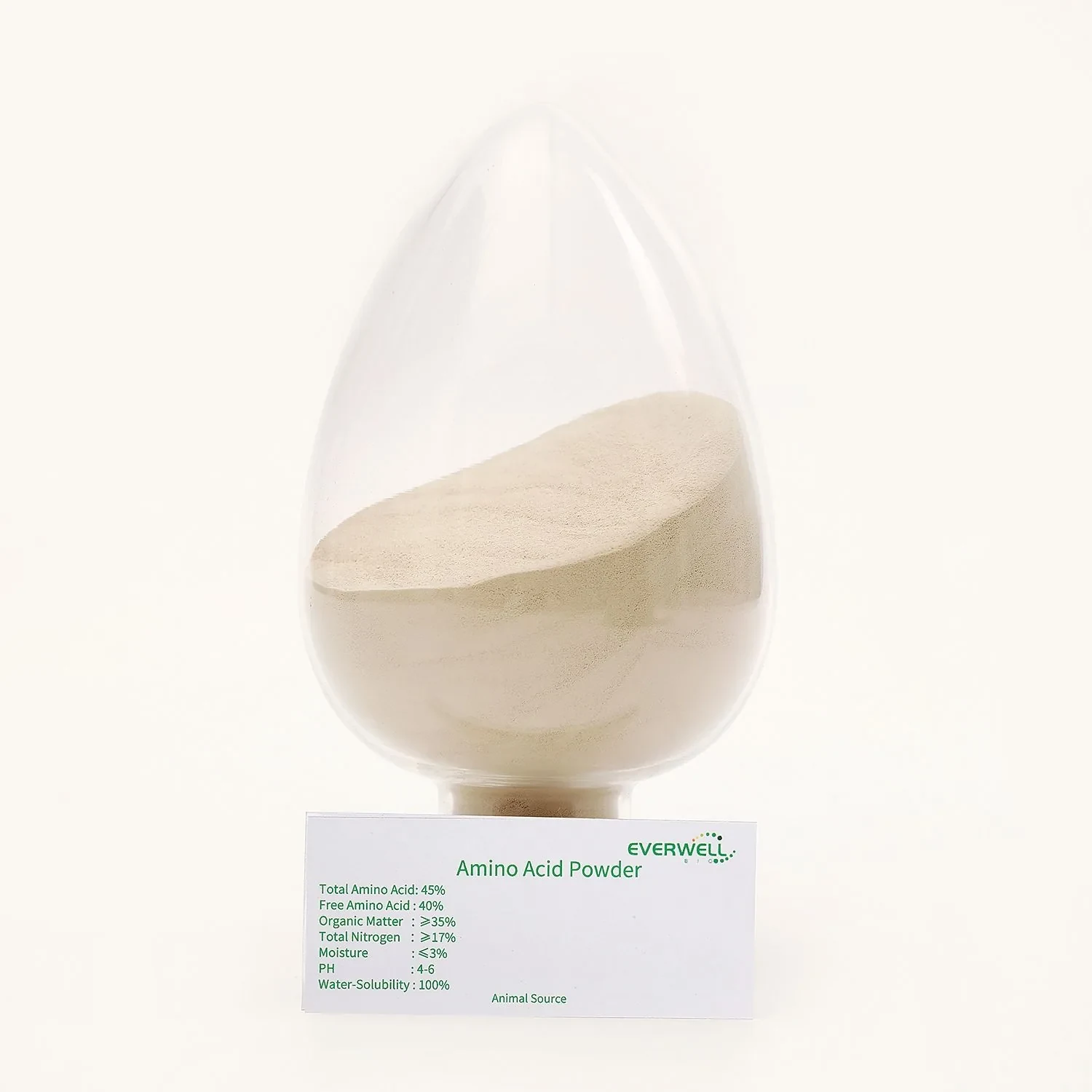
Recommended Dosage for Compound Amino Acid Powder
The dosage for compound amino acid powder varies with crop type and growth stage, but there are general starting figures that a formulator or distributor can build a programme around. After reading this you will be able to convert those starting rates into a defensible use recommendation for your own product, and you will know which variables force you to adjust them before printing a label.
The General Starting Rates
Two numbers cover most of the enquiries we receive. For foliar spraying, use a concentration of 0.1 to 0.5%, which is 1 to 5 grams of powder per litre of water, applied every two to three weeks. For soil application, apply 1 to 2 kg per hectare, either mixed into the soil or dissolved in water and delivered through irrigation.
Treat both as starting points for local evaluation rather than as fixed instructions. Always follow the manufacturer's recommendations for the specific product in hand and adjust according to the crop's needs and local conditions. A rate that is correct for a mature orchard under drip irrigation is not automatically correct for a young leafy vegetable crop under overhead spray.
Reading the Foliar Concentration Correctly
A 0.1 to 0.5% concentration is a solution strength, not a per-hectare rate. The amount of powder you actually use per hectare therefore depends on your water volume. At 500 litres of spray solution per hectare, a 0.2% concentration uses 1 kg of powder; the same concentration at 1,000 litres per hectare uses 2 kg. Distributors who publish only the percentage and then quote volumes on a different water rate end up with inconsistent field results and blame the material.
Start at the lower end of the range on any crop you have not treated before. The wider the range on a label, the more important it is to establish where within it your crop and your water quality sit, and a low first pass costs very little to repeat.
The two to three week interval assumes a crop in active growth with the leaf area to intercept the spray. On a crop with very little canopy, or one that is already under stress, an extra application on the calendar adds salt load without adding benefit.
Soil and Fertigation Application
The 1 to 2 kg per hectare soil rate can be delivered either by mixing the powder into the soil or by dissolving it and applying it through the irrigation system. Fertigation is usually the more controllable route because the material is water-soluble and the dose can be split across several events rather than delivered in one pass.
Because this is a low-rate input, be careful about the claims attached to it. A few kilograms per hectare is a small nutrient or biostimulant contribution and should be described as such. It is not a substitute for the base fertility programme, and any reduction you propose in conventional fertilizer has to be calculated nutrient by nutrient rather than assumed.
Why the Grade Changes the Arithmetic
The same physical dose of powder does not deliver the same amino acid load across grades. Amino Acids 35 guarantees at least 35% total amino acids, Amino Acids 45 at least 45%, and Amino Acids 80 at least 80%. At a fixed 2 kg per hectare, those grades deliver roughly 0.7, 0.9 and 1.6 kg of total amino acids respectively.
If your recommendation is written against an amino acid target rather than a powder weight, switching grade means recalculating the dose. If it is written against a powder weight, switching grade silently changes the amount of active material the crop receives. Decide which basis your label uses and state it, because this is the most common source of confusion when a distributor moves between grades to manage cost.
The salt and nitrogen load moves with the grade too. Amino Acids 35 carries at least 17% total nitrogen, Amino Acids 45 at least 16%, and Amino Acids 80 at least 12%. At a foliar concentration near the top of the range, those differences influence crop safety and are worth checking before you standardise a rate across a portfolio.
Variables That Force an Adjustment
Before fixing a rate for a market, work through the factors that legitimately change it. Each of these can move the appropriate concentration within, or occasionally outside, the general range.
- Crop species and cultivar sensitivity to foliar salt load
- Growth stage, and whether the crop has functioning leaf area
- Grade, and therefore the amino acid, nitrogen and salt delivered per kilogram of powder
- Water volume per hectare and sprayer calibration
- Water hardness, pH and temperature in the spray or stock tank
- Tank-mix partners already in the programme
- Local weather and the risk of leaf burn under hot, dry conditions
Confirming a Rate Before You Publish It
Run the dose you intend to recommend through a short qualification sequence rather than adopting the general figure directly. Dissolve the powder in the actual process water at the working concentration and record dissolution time and any insoluble matter. Run a jar test with the complete ingredient list if the product will be tank-mixed, and observe precipitation, foam and pH change.
Then test crop safety at the intended use rate on a small area, and keep an untreated comparison strip so you can tell a product effect from a seasonal one. A 200-500 g free sample with its batch COA is enough material to complete this sequence before any commercial commitment.
Document the result. If a customer later asks why your label says 0.2% rather than 0.5%, the jar test and the crop-safety observation are the answer, and they are also the evidence a registration authority is most likely to ask for.
General starting dosage for compound amino acid powder
| Application method | Rate | Frequency |
|---|---|---|
| Foliar spray | 0.1 - 0.5% concentration (1 - 5 g per litre of water) | Every 2 - 3 weeks |
| Soil application | 1 - 2 kg per hectare, mixed with soil or dissolved for irrigation | Per programme and local conditions |
Conclusion
Use 0.1 to 0.5% foliar and 1 to 2 kg per hectare in soil as the starting frame, then adjust for grade, crop, growth stage, water quality and local conditions, and confirm the final rate with a small trial that keeps an untreated comparison. Tell us your crops, application method and target market at [email protected] and we will recommend a grade and send a free 200-500 g sample with its batch COA; we reply within 24 hours, Monday to Saturday.
Products Discussed In This Article
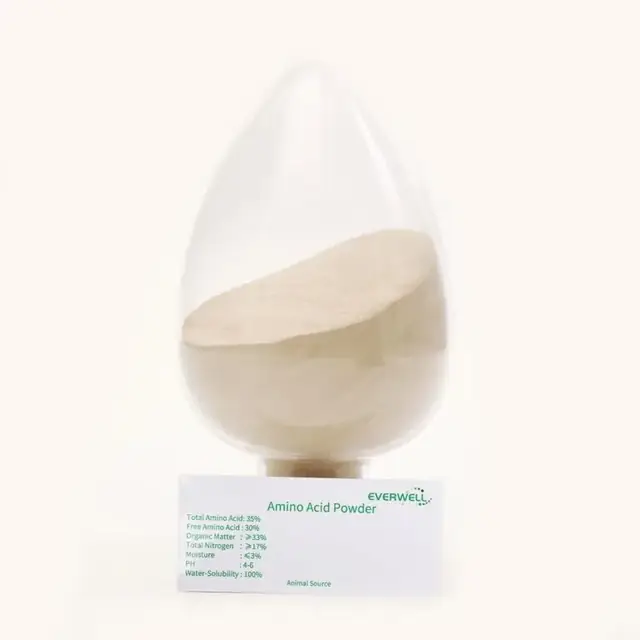
Amino Acids 35
The volume grade. A fully water-soluble hydrolysed feather protein powder carrying ≥ 17% total nitrogen, priced for foliar and fertigation programmes
View specification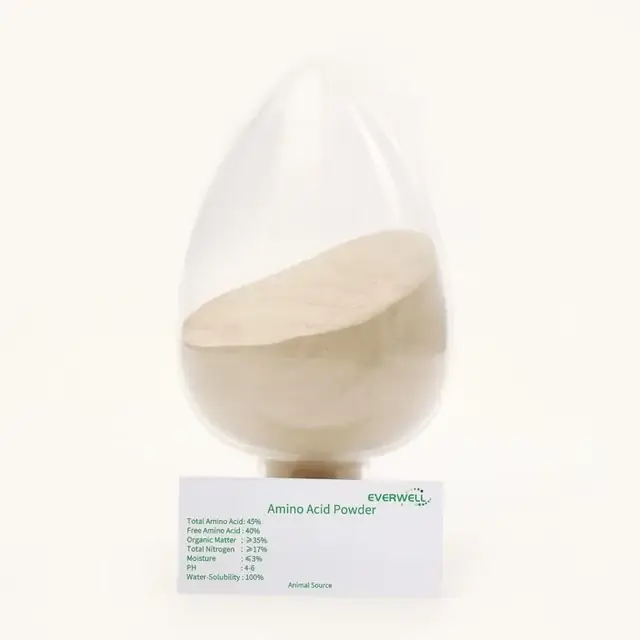
Amino Acids 45
The benchmark grade: ≥ 45% total amino acids, ≥ 60% organic matter, and 41.93% free amino acids measured by Eurofins under GB/T 18246-2019. The grade
View specification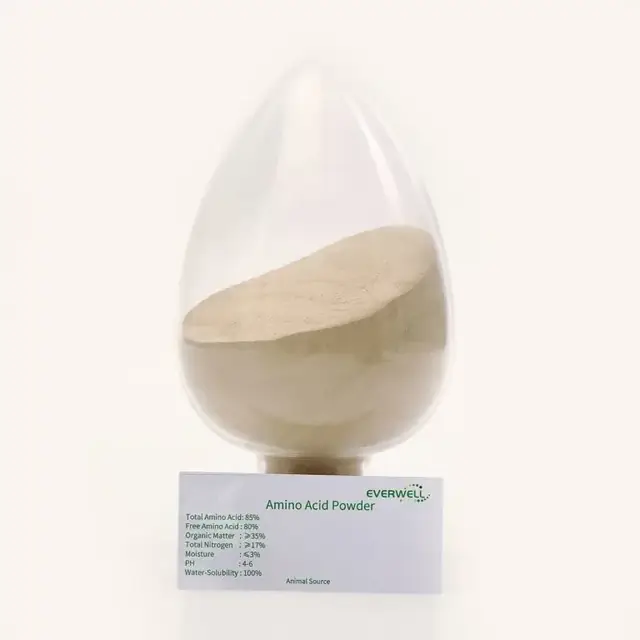
Amino Acids 80
The density grade: ≥ 80% total amino acids, ≥ 80% organic matter, and 75.37% free amino acids measured by Eurofins. Glycine and proline rich, for conc
View specificationRelated Articles
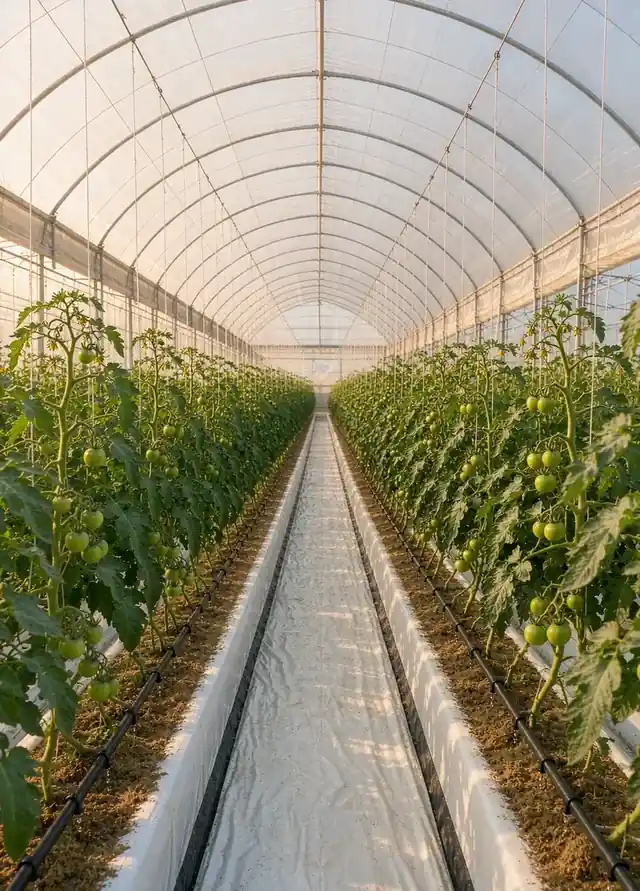
Sourcing Amino Acid Powder for Fertilizer in Turkiye
A procurement guide for Turkish importers and formulators: grade selection, drip-irrigation testing, documents, GTIP questions, HALAL and shipping terms.
Read more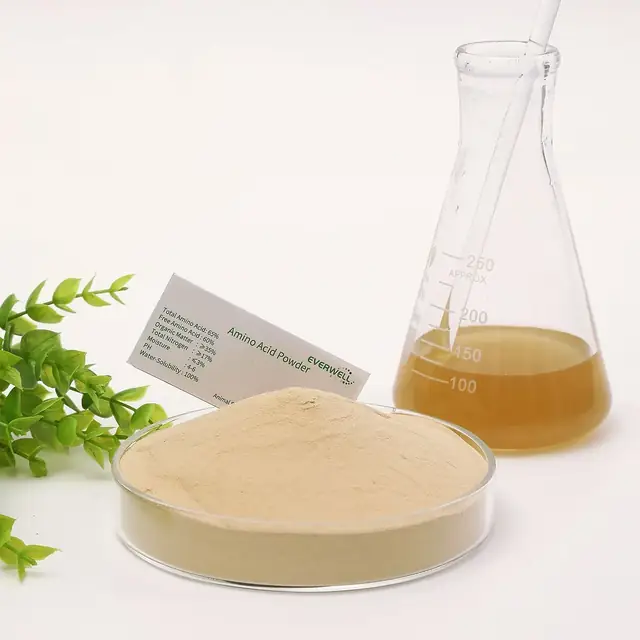
What Is Compound Amino Acid Powder? A Buyer's Guide
What compound amino acid powder actually is, why the grade number alone does not qualify it, and the documents to request before you buy.
Read more
When to Apply Amino Acid Fertilizer: A Timing Guide
Why there is no universal application date, which windows are worth testing locally, and the safeguards that keep a timing decision crop-safe.
Read moreQuestions On This Topic
What foliar concentration should I start with?
0.1 to 0.5%, which is 1 to 5 grams of powder per litre of water, applied every two to three weeks. Start at the lower end on any crop you have not treated before.
What is the soil application rate?
1 to 2 kg per hectare, either mixed into the soil or dissolved in water and applied through irrigation.
Does the dosage change between the 35, 45 and 80 grades?
Yes, if your recommendation is based on an amino acid target. Amino Acids 35 guarantees at least 35% total amino acids, the 45 grade at least 45% and the 80 grade at least 80%, so the same powder weight delivers different amounts of active material.
How do I convert a percentage concentration into a per-hectare figure?
Multiply the concentration by your spray water volume. At 500 litres per hectare a 0.2% solution uses 1 kg of powder; at 1,000 litres per hectare it uses 2 kg.
Can I reduce my NPK programme by the amount of amino acid powder applied?
Not on a general percentage. Any proposed reduction must be calculated nutrient by nutrient and validated under local conditions, because this material supplies little or no phosphorus and potassium unless they are added separately.
Can I get material to test a rate before ordering?
Yes. Free samples of 200 to 500 g are supplied with a batch COA, which is enough to run dissolution, jar and small crop-safety tests.
Ask Us About This Directly
Technical questions are answered by the export and production team, normally within 24 hours.