
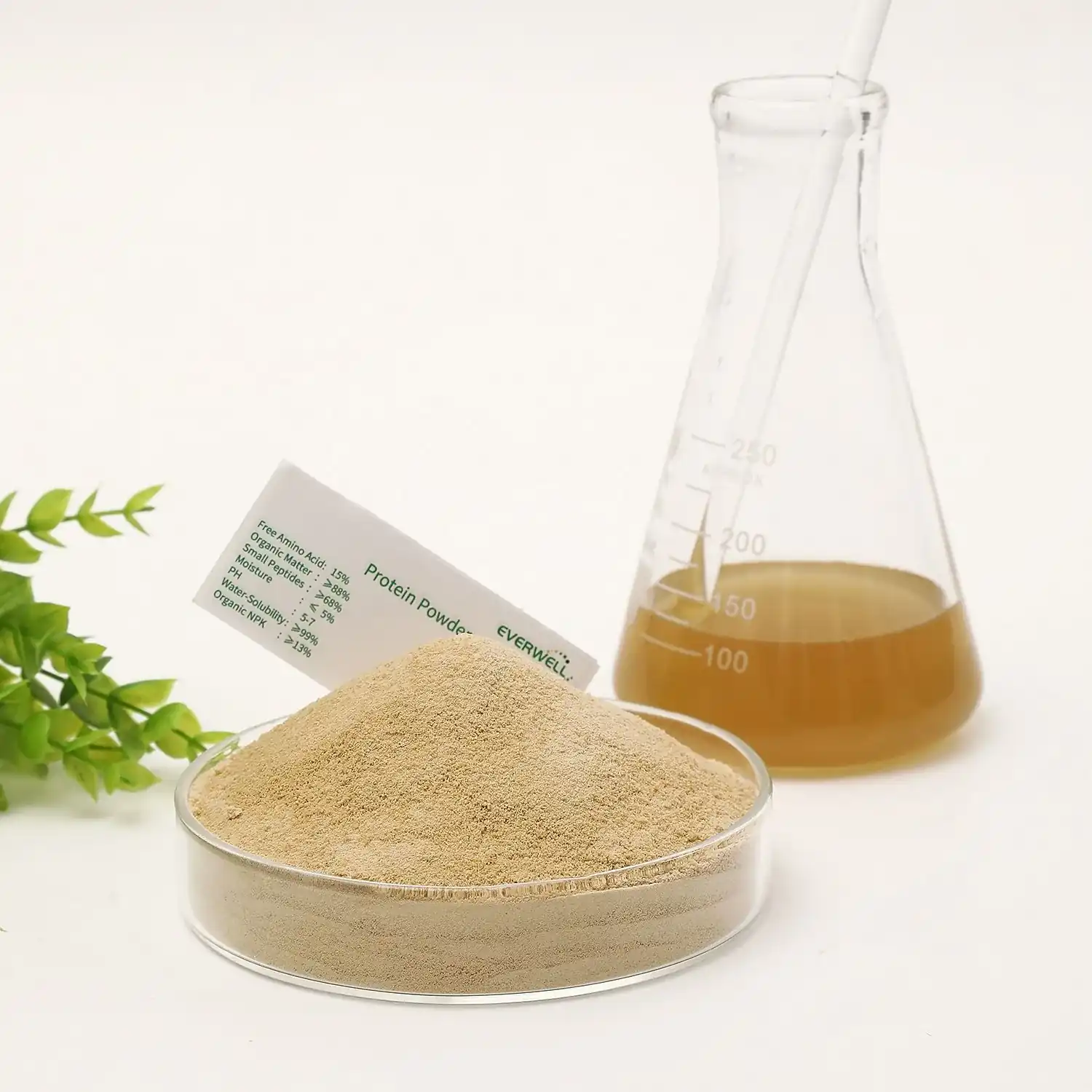
Hydrolyzed Protein Powder: Composition, Uses, Compliance
Hydrolyzed protein powder is made by breaking protein-rich raw materials into a soluble mixture that may contain peptides, amino acids and other protein-derived components. Everwell Bio's current product is a hydrolyzed cattle-bone powder with at least 90% crude protein and at least 80% total amino acids. After reading this you will know what that specification does and does not tell you, and what you still have to verify before approving the material for agriculture, feed, pet food, aquaculture or fermentation.
What the Specification Establishes
The published figures describe composition. They do not, by themselves, establish approval for animal feed, pet food, aquaculture, organic production or any other regulated use. That distinction is the single most important point in this article, and it is where most sourcing mistakes begin.
Before purchase, request the complete current specification and the batch COA for the material assigned to your order. Two further questions decide whether the numbers are comparable with other quotations: which test method was used, and whether results are reported on an as-is or a dry-matter basis. A 90% crude protein figure on a dry-matter basis is not the same commercial proposition as 90% as-is.
Protein Powder Versus Amino Acid Powder
The two categories overlap, but they are normally purchased against different headline specifications, and confusing them leads to buying the wrong material for the intended process.
A hydrolyzed protein powder is bought mainly on crude protein, total amino acids and peptide profile, with typical composition being peptides plus amino acids. Key quality checks are digestibility or peptide size where relevant, microbiology and contaminants. An amino acid powder is bought mainly on total and free amino acids, nitrogen and salt content, with a more variable composition and a higher emphasis on the amino acid grade; its key checks are free and total amino acids, solubility, pH and salts. Regulatory status is use-specific and market-specific for both.
More hydrolyzed does not automatically mean better. The appropriate molecular-weight distribution depends on the intended use, and a very short peptide profile that suits one fermentation process may be irrelevant or undesirable in another application.
Agricultural Evaluation
A hydrolyzed protein may be assessed as an organic-nitrogen or protein-hydrolysate input. Its agronomic role depends on nitrogen content, the amino acid and peptide distribution, the rate applied, the soil or substrate, and local product registration.
One claim to avoid deliberately: application at only a few kilograms per hectare should not be promoted as materially increasing soil organic matter. The arithmetic does not support it. Any effect is more appropriately evaluated as a small nutrient or biostimulant input under the specific trial conditions, and described that way in your literature.
Animal Feed and Pet Food
Feed use requires compliance with applicable animal-by-product, feed-material, species, contaminant, microbiological, labeling and import rules. A high crude-protein value or a cattle-bone origin does not establish legal eligibility or safety in any market, and no supplier statement can substitute for the destination market's own requirements.
Before describing the product for feed or pet-food use, confirm each of the following.
- Legal status of the raw material and the processing chain
- Approved species and intended use
- Relevant health or veterinary certificates
- Microbiological and contaminant specifications
- Traceability and batch records
- Destination-country registration and import requirements
Aquaculture and Fermentation
These uses also require application-specific data, and the data sets differ from each other. Aquaculture buyers may need digestibility, amino acid balance, ash, palatability, microbiology and species-specific approval before the material can enter a diet formulation.
Fermentation users are asking different questions: soluble nitrogen, peptide distribution, sterilization behavior and batch consistency. A material that performs well as a nitrogen source in one fermentation may fail on sterilization behaviour or on lot-to-lot variation, so batch consistency data over several production runs is worth requesting alongside the first COA.
Natural, Safe and Organic Claims
Do not infer these claims from the source or the process description alone. Hydrolysis may use acids, alkalis, enzymes, heat or combined processes, and the phrase no synthetic additives does not establish regulatory approval anywhere.
Animal-derived products may also face restrictions that do not apply to plant-derived products, and organic-production eligibility depends on the exact product and the current rules of the specific program. Every claim you intend to print should be supported by current documents for the exact grade and the exact market. The EU Fertilising Products Regulation and the EU rules for products and substances used in organic production are the usual starting references for European buyers.
Solubility and Formulation Testing
The published water solubility of 99% is a useful specification, but buyers should test the material under their own actual conditions. Concentration, temperature, hardness, pH and the other ingredients present can all influence dissolution, viscosity, sediment and filtration behaviour.
For liquid or process applications, run a structured evaluation rather than a single dissolution check, and keep the records as part of your qualification file.
- Dissolution time and the mixing energy required
- Insoluble matter and filterability
- Foam and odour
- Heat stability
- Microbiological stability
- Storage stability in the final formulation
Buyer Qualification Checklist
Request the following before commercial approval, and treat the list as cumulative rather than optional: current specification, TDS and SDS; a representative COA and the assigned-batch COA; a raw-material and process statement; the crude-protein and amino-acid methods used; peptide or molecular-weight information where relevant; microbiological and contaminant limits for the intended use; traceability and any required certificates; and confirmation from a qualified regulatory adviser in the destination market.
Current published specification, hydrolyzed protein powder
| Parameter | Specification |
|---|---|
| Source | Hydrolyzed cattle bone |
| Crude protein | ≥90% |
| Total amino acids | ≥80% |
| Crude ash | ≥9% |
| Crude fat | ≥0.5% |
| Moisture | ≤6% |
| pH, 1% solution | 5 - 7.5 |
| Water solubility | 99% |
Conclusion
Hydrolyzed protein powder is a broad technical category, not a universal feed, pet-food or agricultural approval. Qualify the cattle-bone protein powder against your exact use, the analytical data that use requires and your destination market's rules. Email [email protected] with the application you have in mind, whether feed, pet food, aquaculture, fermentation or agriculture, and we will reply within 24 hours with the COA, price and a free 200-500 g sample for your trial.
Products Discussed In This Article
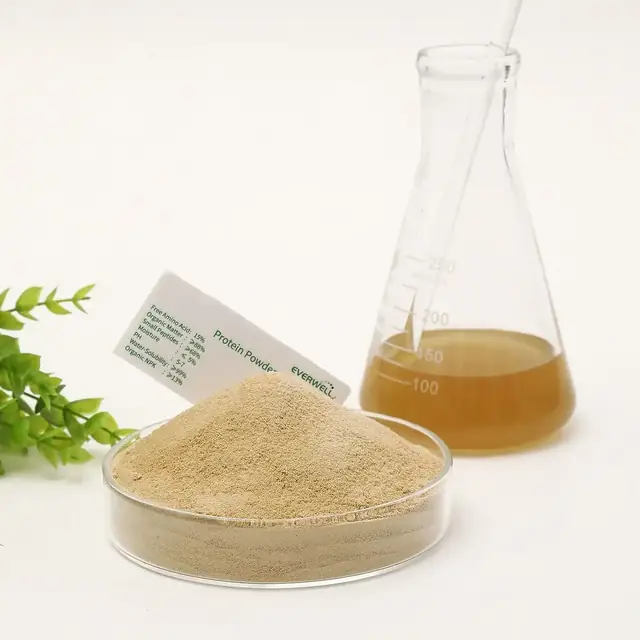
Protein Powder
A collagen-derived protein input at ≥ 90% crude protein and ≥ 80% total amino acids, glycine and proline rich, dissolving at 99% for animal feed, pet
View specification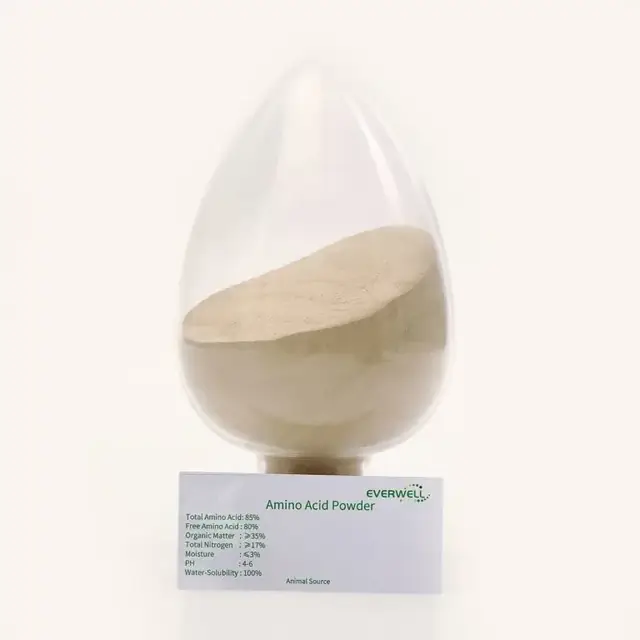
Amino Acids 80
The density grade: ≥ 80% total amino acids, ≥ 80% organic matter, and 75.37% free amino acids measured by Eurofins. Glycine and proline rich, for conc
View specificationRelated Articles
Recommended Dosage for Compound Amino Acid Powder
Starting foliar and soil rates for compound amino acid powder, how to convert them into a real programme, and why the grade changes the arithmetic.
Read more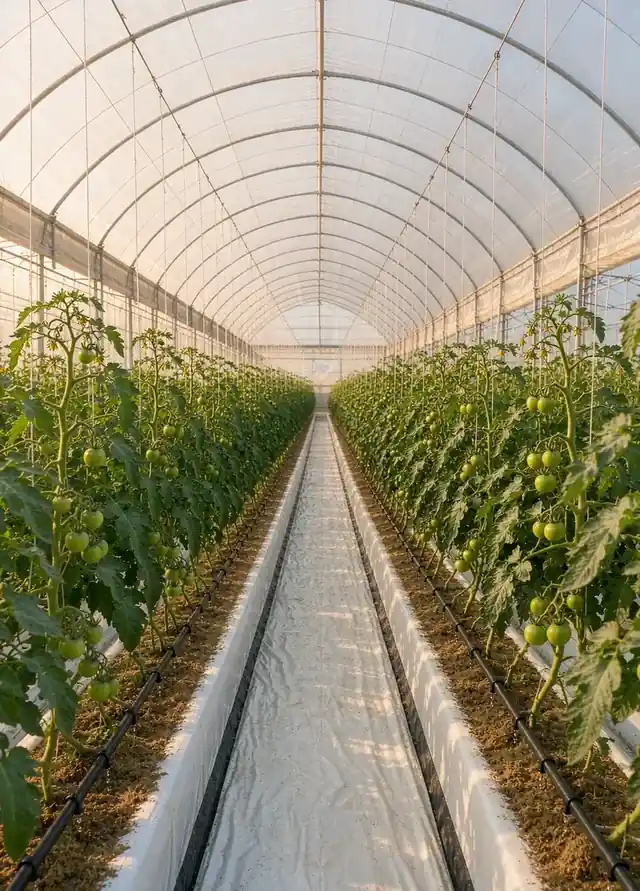
Sourcing Amino Acid Powder for Fertilizer in Turkiye
A procurement guide for Turkish importers and formulators: grade selection, drip-irrigation testing, documents, GTIP questions, HALAL and shipping terms.
Read more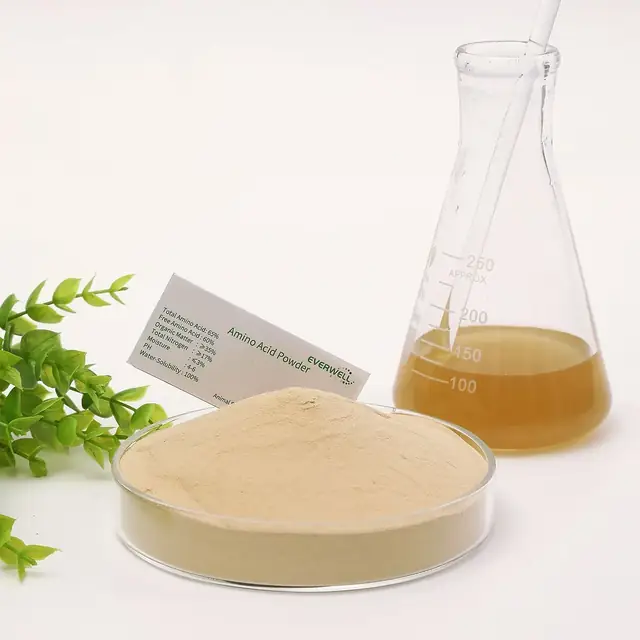
What Is Compound Amino Acid Powder? A Buyer's Guide
What compound amino acid powder actually is, why the grade number alone does not qualify it, and the documents to request before you buy.
Read moreQuestions On This Topic
Does 90% crude protein mean the product is approved for animal feed?
No. Crude protein describes composition only. Feed eligibility depends on animal-by-product, feed-material, species, contaminant, microbiological, labeling and import rules in the destination market.
How is this different from your amino acid powders?
Protein powder is purchased on crude protein, total amino acids and peptide profile and consists of peptides plus amino acids. Amino acid powders are purchased on total and free amino acids, nitrogen and salt content.
Is a more hydrolyzed product better?
Not automatically. The appropriate molecular-weight distribution depends on the intended use, so specify the peptide or molecular-weight information your process needs.
The specification says 99% water solubility. Is further testing necessary?
Yes. Concentration, temperature, water hardness, pH and other ingredients affect dissolution, viscosity, sediment and filtration, so test under your actual process conditions.
Can the product be described as natural or organic?
Not on the basis of source or process alone. Hydrolysis may use acids, alkalis, enzymes or heat, and organic eligibility depends on the exact product and current program rules.
What documents come with a shipment?
A batch-specific COA accompanies every shipment, and the TDS and SDS are available on request. Regular orders run on a 30-day lead time, FOB Shanghai or Qingdao.
Ask Us About This Directly
Technical questions are answered by the export and production team, normally within 24 hours.