
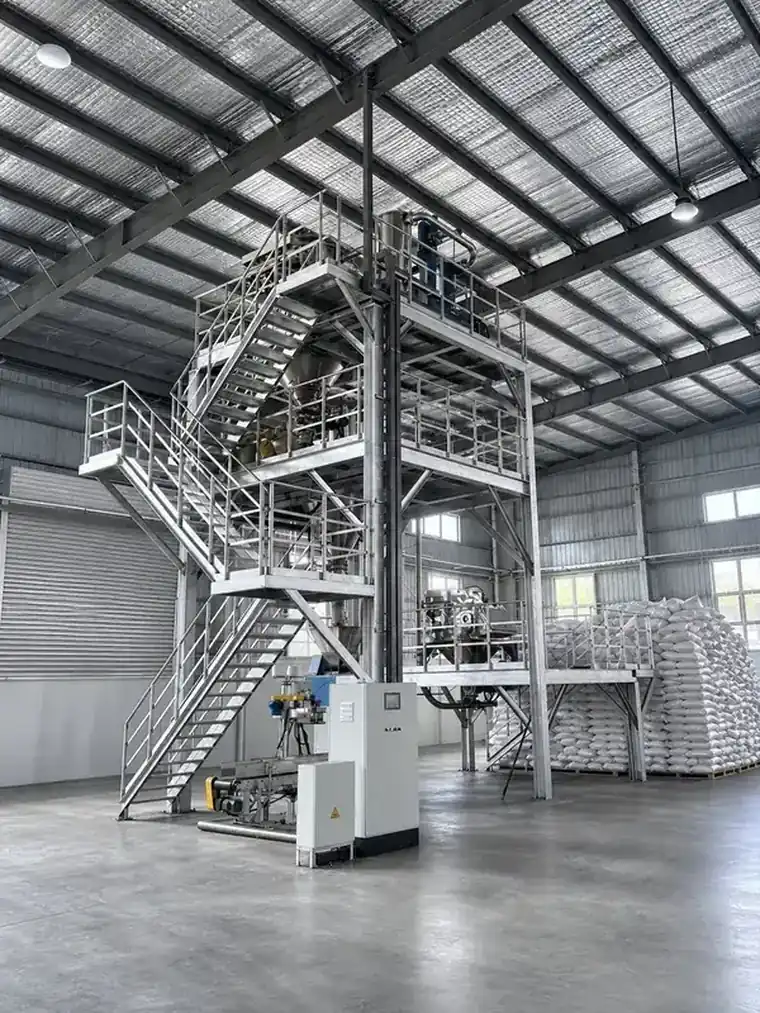
Everwell Bio Adds Production and Packaging Capacity
Everwell Bio has commissioned additional liquid-handling and automated packaging equipment at its Suzhou facility, and the new equipment is now operating alongside the existing production system. This note sets out what was installed, how it was verified before routine use, and what it does and does not mean for buyers planning a grade, a packaging format or a shipment date.
What the Project Covers
Installation and commissioning are complete, and the equipment is in routine operation alongside the existing line. The project was undertaken to give the production team more scheduling flexibility across the water-soluble amino acid powder grades, and to improve finished-bag handling at the end of the process.
Product specifications and batch-release requirements are unchanged by the project. That point is deliberate: the expansion addresses scheduling and handling capacity, not product definition, and buyers who have already qualified a grade do not need to requalify it because of this work.
Additional Liquid-Handling Capacity
New stainless-steel tanks provide additional capacity for preparation, blending and intermediate holding within the production process. In practical terms this is capacity between process steps rather than at a single bottleneck.
The benefit sits in coordination. With more intermediate holding available, the production team has greater freedom when sequencing batches against downstream drying schedules, which is the part of the process that most often constrains how closely two orders for different grades can be run together.
Automated Bagging and Pallet Handling
The added packaging equipment supports weighing, sealing and pallet preparation for standard industrial bags. Automation here is aimed at repeatability in finished-package handling and at more consistent pallet preparation, both of which matter to buyers receiving full containers of bagged material.
Packaging availability still depends on the selected grade, bag format, order quantity and the confirmed production schedule. The new equipment widens what can be scheduled; it does not make every packaging option available on every order.
Commissioning and Verification
Before routine use, the equipment went through the facility's commissioning process. That covered mechanical and electrical checks, instrument calibration, dry and wet operating trials, and evaluation of product against the applicable specification.
Routine production from the added equipment follows the same batch documentation and release process already used for existing operations. Material is released against the agreed specification and supported by a batch COA, exactly as before.
- Mechanical and electrical checks
- Instrument calibration
- Dry and wet operating trials
- Product evaluation against the applicable specification
- Release against the agreed specification, supported by a batch COA
What the Expansion Means for Buyers
The added equipment gives more flexibility when scheduling different amino acid powder grades, additional holding and packaging capacity, more consistent pallet preparation, and more options when planning larger or overlapping orders. For a buyer running several grades through one supplier, the scheduling flexibility is usually the most relevant of those.
It should not be read as a guaranteed lead time for every order. Actual scheduling still depends on grade, quantity, packaging, document requirements, raw-material availability and shipment planning, and the standard lead time for regular orders remains 30 days. The equipment operates within the existing Suzhou facility, which covers 20,000 m2 with more than 80 workers, a stated capacity of 4,000 tons per month and shipment of up to 50 40 ft high-cube containers per month to more than 20 countries.
What Remains Unchanged
The expansion does not change the agreed specification or the release criteria for existing products. The process route is also unchanged, running controlled hydrolysis, purification, concentration and spray drying, with the compound amino acid powders produced from hydrolyzed duck feather protein and the protein powder from cattle bone.
Buyers should continue to qualify each grade the same way: using the current TDS, a representative COA, a sample, and the batch COA assigned to the delivered lot. Existing packaging, private-label and export-document options remain subject to order confirmation, as they were before the project.
Planning an Order
To obtain a current production and shipment estimate, provide the information below in a single enquiry. Everwell Bio will confirm the available production window and a quotation for that specific enquiry rather than a general figure, since the scheduling variables differ from order to order.
- Product grade and specification
- Quantity
- Packaging and pallet requirements
- Destination market
- Required documents
- Preferred shipment timing
Conclusion
If you are planning an order, send the grade and specification, quantity, packaging and pallet requirements, destination market, required documents and preferred shipment timing to [email protected], and you will receive the available production window and a quotation for that enquiry. Replies are issued within 24 hours, Monday to Saturday. Buyers qualifying a grade for the first time should also request the current TDS, a representative COA and a sample before the order is confirmed.
Products Discussed In This Article
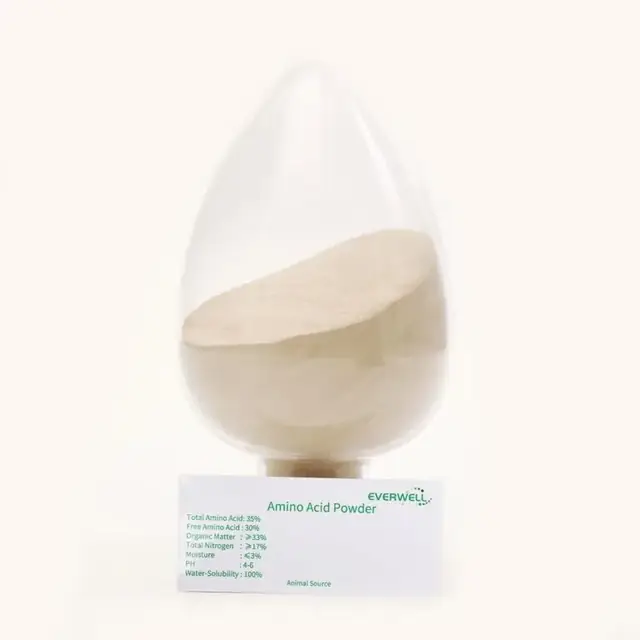
Amino Acids 35
The volume grade. A fully water-soluble hydrolysed feather protein powder carrying ≥ 17% total nitrogen, priced for foliar and fertigation programmes
View specification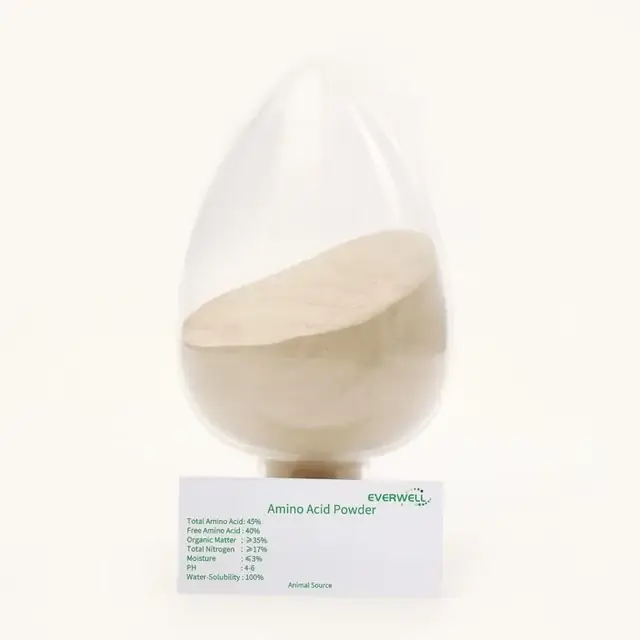
Amino Acids 45
The benchmark grade: ≥ 45% total amino acids, ≥ 60% organic matter, and 41.93% free amino acids measured by Eurofins under GB/T 18246-2019. The grade
View specification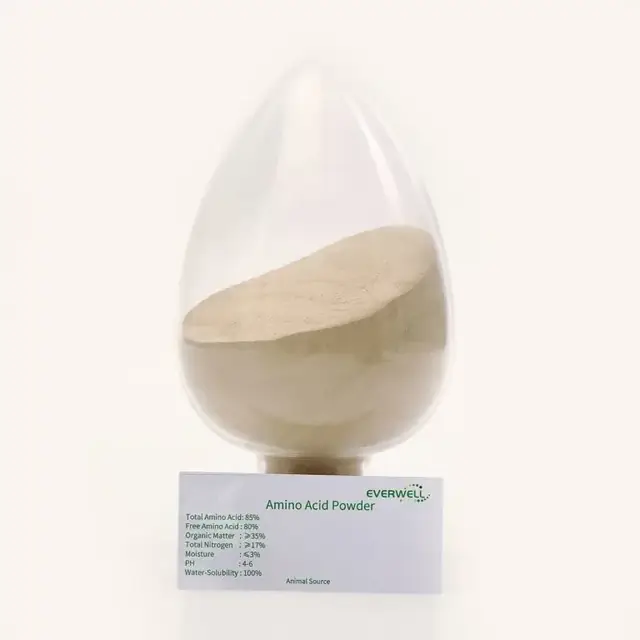
Amino Acids 80
The density grade: ≥ 80% total amino acids, ≥ 80% organic matter, and 75.37% free amino acids measured by Eurofins. Glycine and proline rich, for conc
View specificationRelated Articles
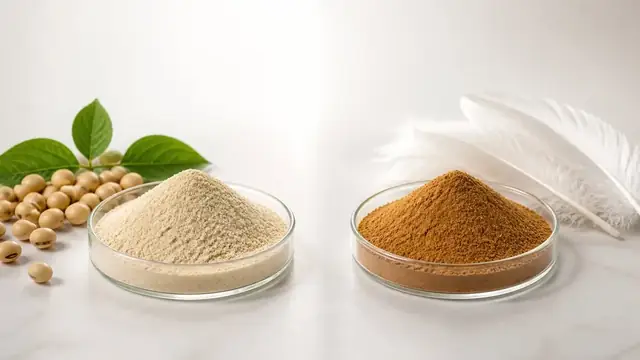
Plant vs Animal Source Amino Acid Powder for Fertilizer
How soy, corn, feather, fish and collagen hydrolysates really differ, and why the finished specification decides more than the protein source.
Read more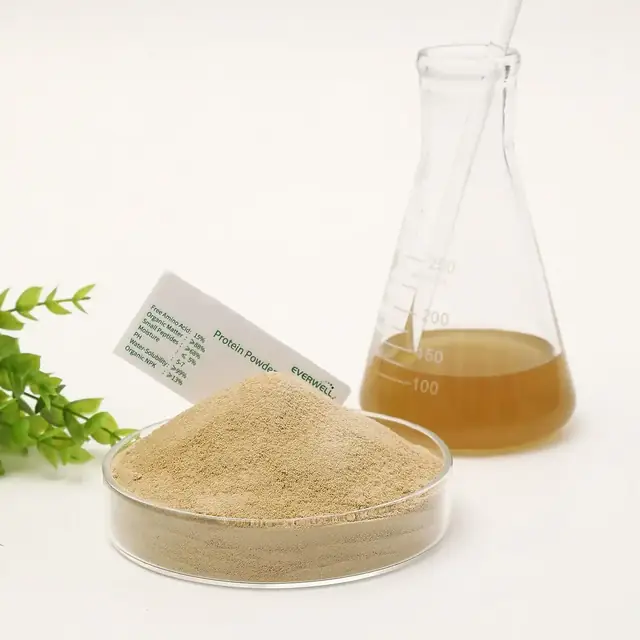
Hydrolyzed Protein Powder: Composition, Uses, Compliance
What a 90% crude protein cattle-bone hydrolysate is, how it differs from amino acid powder, and what each end use still requires you to prove.
Read more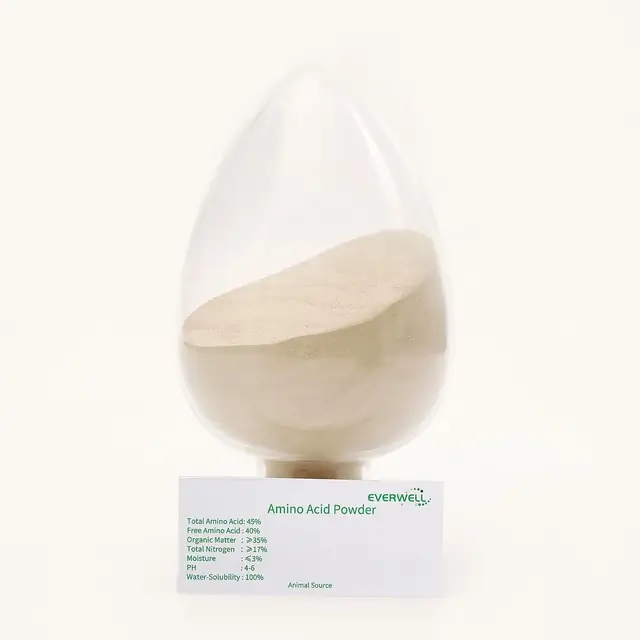
Recommended Dosage for Compound Amino Acid Powder
Starting foliar and soil rates for compound amino acid powder, how to convert them into a real programme, and why the grade changes the arithmetic.
Read moreQuestions On This Topic
Does the new equipment change the product specification?
No. Product specifications and batch-release requirements are unchanged, and existing products keep the same agreed specification and release criteria.
Is the equipment already in operation?
Yes. Installation and commissioning are complete and the equipment is operating alongside the existing production system.
How was the equipment verified before routine use?
Through the facility's commissioning process, covering mechanical and electrical checks, instrument calibration, dry and wet operating trials, and product evaluation against the applicable specification.
Does the expansion guarantee a shorter lead time?
No. Scheduling still depends on grade, quantity, packaging, document requirements, raw-material availability and shipment planning. The standard lead time for regular orders is 30 days.
Do I need to requalify a grade I have already approved?
No, but each grade should continue to be qualified using the current TDS, a representative COA, a sample and the batch COA assigned to the delivered lot.
What information is needed for a production and shipment estimate?
Product grade and specification, quantity, packaging and pallet requirements, destination market, required documents and preferred shipment timing.
Ask Us About This Directly
Technical questions are answered by the export and production team, normally within 24 hours.