Is Amino Acid Powder Allowed in Organic Farming?
Amino acid powder is not automatically allowed in organic farming: eligibility turns on the exact product, all of its ingredients, the manufacturing process, the intended use and the organic program the farm operates under. This guide explains how the major programs treat protein-hydrolysate inputs and which documents to collect, so you can tell whether a product will survive a certifier's review before you commit to a shipment.
Input Approval Is Not Product Certification
Organic standards primarily regulate certified farms, handlers and final agricultural products. Fertilizers, soil amendments and crop inputs are assessed separately, to decide whether a certified operation may use them. Confusing the two is the most common error in this area.
The words natural, animal source, plant source or organic nitrogen prove nothing about compliance. The safest buyer question is not whether amino acid powder is organic, but whether this exact product, with this formulation and manufacturing process, has been accepted for the intended use by the certifier or material-review system responsible for the farm or the downstream customer.
- A fertilizer input is not automatically a certified organic product.
- An input may be reviewed or listed as suitable for a defined use in organic production.
- The farm's certifier normally has the final say on use within the approved organic system plan.
- Approval under one country or program does not transfer automatically to another.
USDA National Organic Program and OMRI
Under the USDA National Organic Program, fertilizers and other crop inputs are generally not certified in the way organic crops or foods are. Their ingredients and manufacture are reviewed against NOP requirements, and that review may be carried out by a USDA-accredited organic certifying agent or by a material review organization such as the Organic Materials Review Institute.
An OMRI listing is useful independent evidence that a named product has been reviewed for the listed use. It is not the only route and it does not substitute for the certified operation's own approval process, because the farm's certifier makes the final decision for that operation and that intended use.
- Confirm that the product and manufacturer match the listing or review document.
- Check the approved use class and any restrictions attached to it.
- Include the material in the operation's organic system plan where required.
- Obtain final confirmation from the certifier before use.
European Union: Regulations (EU) 2018/848 and 2021/1165
EU organic production rules authorize specified fertilizers and soil conditioners under defined conditions. Regulation (EU) 2021/1165 includes products and by-products of animal origin, hydrolysed proteins among them, subject to the applicable requirements. For hydrolysed animal proteins, the regulation states that they must not be applied to the edible parts of the crop, which is a restriction on use rather than a bar on the material.
Further requirements may apply concerning animal by-products, manufacturing processes, national fertilizer rules and the farm's demonstrated need for the input. Inclusion as an authorized material category does not make every commercial formulation acceptable: carriers, additives, salts, processing aids and the intended application all remain subject to review. Ask the relevant EU control body and the competent national authority to confirm the exact product and use.
Japanese Agricultural Standards and Other Markets
Organic JAS rules include criteria and appendices covering fertilizers and soil-improvement substances in organic plant production. Evaluation looks at the source material, the ingredients and the production process, including whether chemically synthesized substances are added or used in a way that affects eligibility. Japanese importers and certified operators should give their JAS certification body the exact product composition and manufacturing information before purchasing, because a general statement that a product is plant based or protein derived is not sufficient.
Canada, China, Korea, Australia and other markets each maintain their own standards, certifiers and input-review practices. A document accepted under NOP, EU rules or JAS may support an application elsewhere, but it does not by itself establish compliance in another jurisdiction.
Does Plant or Animal Origin Decide Eligibility?
Source matters, but it is not the deciding factor on its own. Animal-source products may derive from feathers, hides, collagen, fish materials or other controlled by-products, and their eligibility depends on the source category, traceability, processing, formulation and intended use. Everwell Bio's compound amino acid powders are produced from hydrolyzed duck feather protein and its protein powder from cattle bone, which places both within the EU restriction on applying hydrolysed animal protein to edible parts of crops.
Buyers should also note that animal-origin, vegan, Halal, veterinary or import requirements imposed by individual customers or markets sit outside organic rules entirely and have to be checked separately. Plant-source products, made from soy, corn, wheat or other protein materials, face the same review of source, extraction or hydrolysis process, carriers, processing aids, salts and other ingredients. Plant origin alone creates no automatic eligibility.
Four Terminology Traps
Organic fertilizer in marketing copy frequently means only that a product contains carbon-based or biologically derived material. It is not evidence of acceptance under NOP, EU organic rules, JAS or any other program, and should be read as a description unless a current product-specific review, listing or certifier decision backs it.
Organic nitrogen is a chemical description of nitrogen bound in organic compounds, not a certification claim. A conventional amino acid powder can contain organic nitrogen while holding no approval for use in a certified organic operation.
Made from organic raw material does not transfer status to the finished input. Hydrolysis, neutralization, concentration, drying, carriers and blending are all relevant to the finished-product review. And OMRI approved is the wrong phrase: the preferred wording is OMRI Listed, used only where the exact product holds a current listing for the relevant use, and it still does not replace the farm's certifier.
Documents Buyers Should Request
Start with exact product identity. The product name, manufacturer and manufacturing location should be consistent across the label, specification, review document and commercial paperwork, because an inconsistency there will stop a review before the technical content is even read.
Then formulation and process information. A reviewing organization may need confidential detail on raw-material origin, hydrolysis method, processing aids, neutralization materials, carriers and additives, anticaking agents, and cleaning or cross-contamination controls. A public TDS often does not contain enough for an organic-input review, so expect the supplier to handle some of this under confidentiality.
Finally, the current listing, review or certifier decision that applies to your intended program and use. Check the exact product and company name, the standard or program, the use class or product category, any restrictions, the issue and expiry dates where applicable, and the current status of the document rather than relying on a copy of unknown age.
Conclusion
Put the question to the certifier, not to the supplier's website: name the exact product, its formulation and its manufacturing process, and ask whether it is accepted for your intended use under the program your farm or customer operates under. Assemble the identity, formulation and process file first so the review has something to work on. To request the TDS, SDS, batch COA and raw-material and process information for a specific grade, email [email protected] and state the destination market and the organic program involved.
Products Discussed In This Article
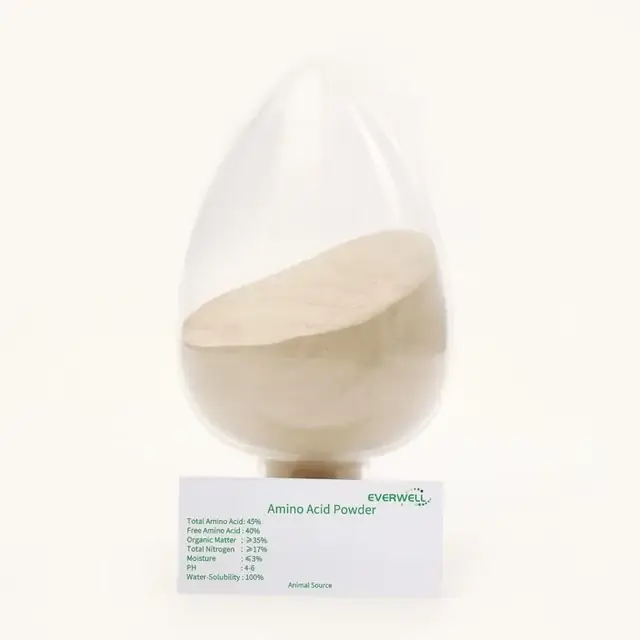
Amino Acids 45
The benchmark grade: ≥ 45% total amino acids, ≥ 60% organic matter, and 41.93% free amino acids measured by Eurofins under GB/T 18246-2019. The grade
View specification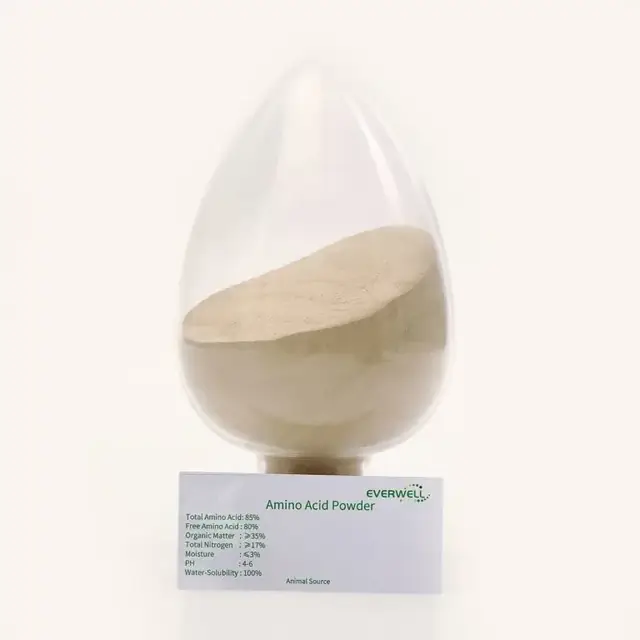
Amino Acids 80
The density grade: ≥ 80% total amino acids, ≥ 80% organic matter, and 75.37% free amino acids measured by Eurofins. Glycine and proline rich, for conc
View specification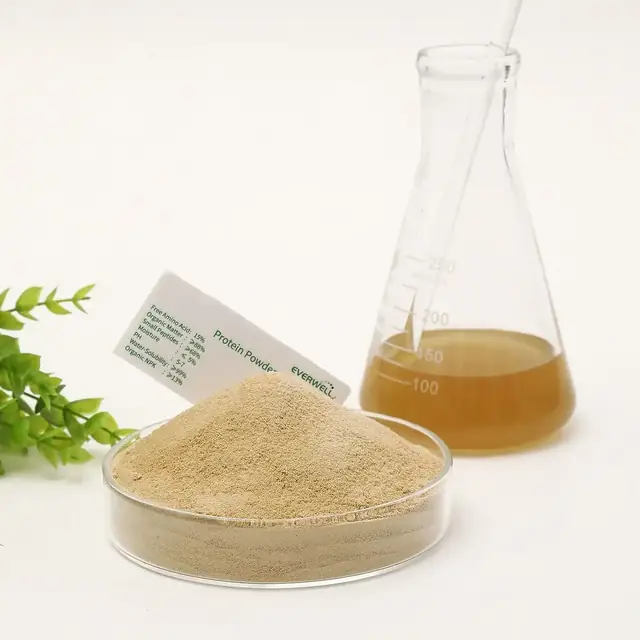
Protein Powder
A collagen-derived protein input at ≥ 90% crude protein and ≥ 80% total amino acids, glycine and proline rich, dissolving at 99% for animal feed, pet
View specificationRelated Articles
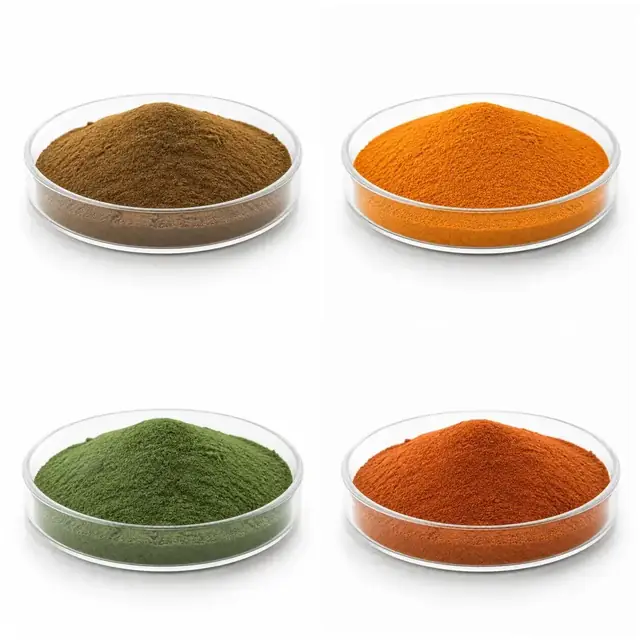
Mixed-SKU FCL Consolidation for Fertilizer Inputs
How several fertilizer raw materials can be loaded into one buyer-dedicated container at the Suzhou warehouse, with no consolidation fee.
Read more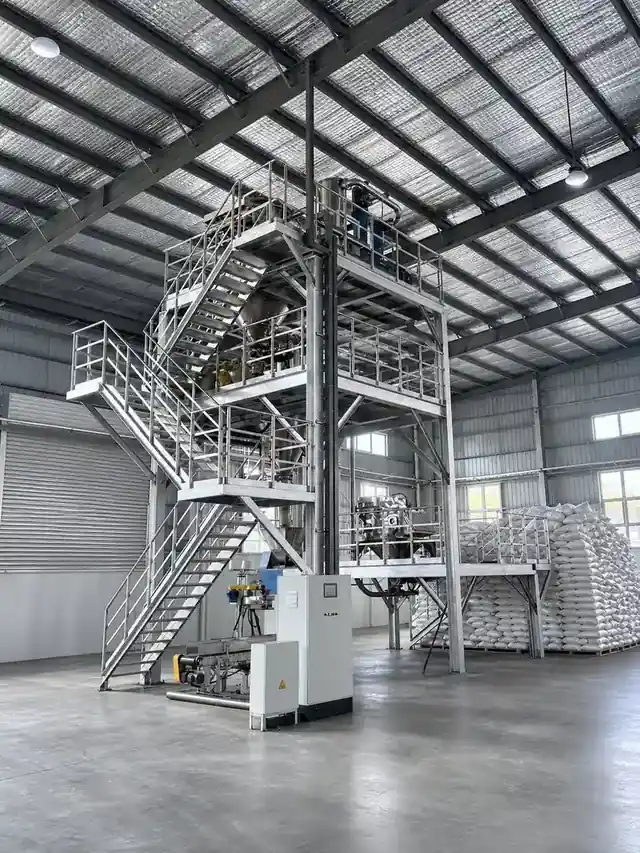
Everwell Bio Adds Production and Packaging Capacity
New liquid-handling tanks and automated bagging equipment are commissioned and running at the Suzhou facility, with specifications unchanged.
Read more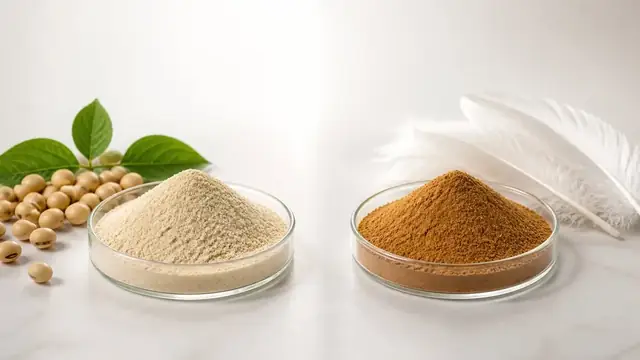
Plant vs Animal Source Amino Acid Powder for Fertilizer
How soy, corn, feather, fish and collagen hydrolysates really differ, and why the finished specification decides more than the protein source.
Read moreQuestions On This Topic
Is amino acid powder allowed in organic farming?
Not automatically. Eligibility depends on the exact product, all ingredients, the manufacturing process, the intended use and the organic program the farm operates under, and the farm's certifier normally has the final say.
Does an OMRI listing settle the question?
It is useful independent evidence that a named product was reviewed for a listed use, but it is not the only route and does not replace the certified operation's own approval process with its certifier.
Can hydrolysed animal protein be used under EU organic rules?
Regulation (EU) 2021/1165 includes hydrolysed proteins among authorized animal-origin materials, but states they must not be applied to edible parts of the crop. Other requirements on animal by-products and national fertilizer rules may also apply.
Does organic nitrogen on a specification mean the product is organic-approved?
No. Organic nitrogen is a chemical description of nitrogen associated with organic compounds. A conventional powder can contain it with no approval for use in a certified organic operation.
Is a plant-source product easier to approve than an animal-source one?
Not inherently. Plant-source hydrolysates are still reviewed for source, extraction or hydrolysis process, carriers, processing aids, salts and other ingredients. Plant origin alone creates no eligibility.
What is Everwell Bio's raw material?
The compound amino acid powders are made from hydrolyzed duck feather protein, and the protein powder from cattle bone, so both fall under animal-origin requirements in the markets that impose them.
Ask Us About This Directly
Technical questions are answered by the export and production team, normally within 24 hours.