
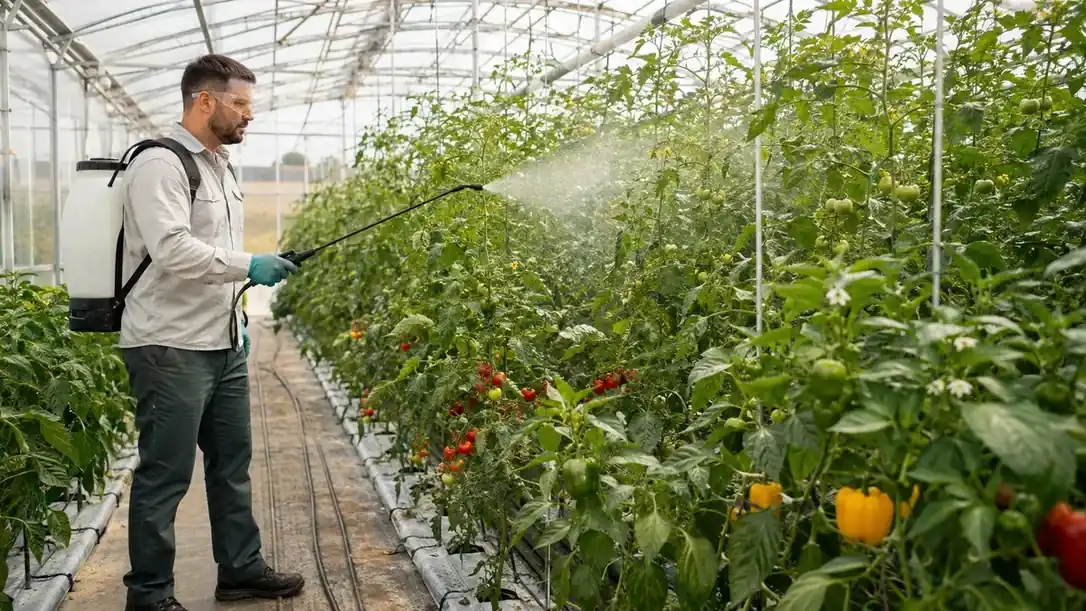
Amino Acid Fertilizer for Vegetables: Foliar Guide by Crop
A protein hydrolysate can be a useful supplemental input in some vegetable programs, but there is no universal rate, spray interval or guaranteed response, and it complements rather than replaces a balanced nutrient program. This guide gives you a crop-group framework for choosing evaluation windows, a method for arriving at a defensible concentration, and the measurements that show whether the treatment paid for itself.
Vegetables Are Not One Crop Category
A tomato crop harvested over months, a 30-day leafy green, an onion building a bulb and a carrot filling a storage root differ in nutrient demand, leaf surface, sensitivity and economic target. A recommendation that opens with a generic vegetable rate has skipped the only two things that determine the answer: the product specification and the production system.
Correct use depends on the exact product, the crop, the production system, the growth stage, plant condition, water quality and local evidence. Everything below is a framework for generating that evidence, not a schedule to copy.
Start With the Exact Product, Not the Name
Amino acid fertilizer describes products of very different composition. Before designing any application, read the label, technical data sheet and current certificate of analysis for the following values.
Do not assume an 80% powder is automatically more effective or gentler on leaves than a 45% powder. Total amino-acid percentage alone describes neither foliar salt load nor free-amino-acid content, peptide profile or crop safety. A rate developed for one commercial protein hydrolysate should not be transferred to a different plant- or animal-derived product without validation.
- Total amino acids and the analytical method used
- Free amino acids versus peptides
- Total and organic nitrogen
- Sodium, chloride, ash and moisture
- pH and solubility
- Added nutrients, carriers or processing aids
- Permitted crops, application methods and rates in the target market
Where Amino Acids Fit in Vegetable Nutrition
Protein hydrolysates containing amino acids and peptides are studied as plant biostimulants and as supplemental nutrient sources. Some experiments report effects on growth, nutrient-use processes, quality or abiotic-stress responses, with results varying by formulation, dose, crop, cultivar, application method and environment.
Foliar application cannot supply the full nutrient requirement of a high-yielding vegetable crop. Penn State Extension notes that leaves do absorb nutrients but that the quantities absorbed are generally too small to satisfy overall crop demand, and that overly concentrated foliar fertilizers can injure plants. Soil, substrate, irrigation water and tissue data should keep guiding the main fertility program.
In the European Union a plant biostimulant is defined by its function in stimulating plant nutrition processes independently of its nutrient content. That distinction is commercially useful: evaluate and support the nutrient contribution and the biostimulant claim separately in each destination market.
Timing the Application Through the Season
After transplanting, do not spray on a fixed five to seven day reflex. Confirm first that irrigation is correct, that plants are rehydrated and that new growth has resumed, and diagnose root disease, salinity, temperature injury or waterlogging before adding another input. A weak plant with damaged roots tolerates a foliar treatment less well.
During active growth, healthy foliage gives a practical test window. Apply against a defined objective and keep an untreated or standard-practice comparison alongside it. Repeating a spray every 10 to 15 days without measuring a response adds cost without necessarily improving marketable yield.
Around flowering and fruit set the period may be worth evaluating in fruiting vegetables, but better pollen viability, flower retention or fruit set cannot be promised from the category name. Response depends on temperature, humidity, irrigation, pollination, cultivar and the exact formulation, and open flowers should not be sprayed where the label or local pollinator guidance advises against it.
During harvest, continuous-harvest crops do not automatically need a standing spray program. Check the product's permitted timing and the preharvest interval or restrictions of every tank-mix partner, and consider worker re-entry, produce appearance, washing and buyer specifications. Never state that all amino acid powders leave no relevant residue or need no preharvest interval; that depends on composition, registration, contaminants, other ingredients, tank partners and destination-market rules.
Determining Rate and Concentration
A blanket recommendation such as 0.1 to 0.25%, or 300 to 600 g/ha for every 80% powder, is too broad to be safe, and advising users to roughly double the weight for a 45% product is worse, because two grades can differ in far more than total amino acids.
Use the following process, then convert units with the standard calculation: finished concentration in g/L equals product rate in kg/ha multiplied by 1,000 and divided by spray volume in L/ha. That formula converts units only; it does not establish that the resulting concentration is either safe or effective.
- Confirm the exact product is intended for the vegetable crop and application route
- Begin with the minimum supported label or supplier rate
- Calculate the finished concentration from the actual product mass and calibrated water volume
- Test the solution on a small representative area
- Inspect sensitive foliage for spotting, edge burn, distortion or delayed growth
- Compare marketable yield and quality before expanding the program
Spray Volume, Coverage and Equipment
There is no universal 300 to 500 L/ha requirement across vegetables. Correct spray volume follows from canopy size, crop architecture, nozzle, pressure, travel speed, application platform and label directions.
A high water volume does not compensate for the wrong concentration, and a low-volume application cannot automatically run a proportionally higher concentration instead.
- Calibrate the sprayer with clean water
- Select droplets that give target coverage while controlling drift
- Wet the intended leaf surface evenly without runoff
- Maintain agitation if the finished formulation requires it
- Use the personal protective equipment specified for the product and every tank partner
- Clean equipment according to label and local requirements
Choosing a Grade for a Vegetable Trial
Everwell Bio's Amino Acids 35, 45 and 80 are produced from hydrolyzed duck feather protein by controlled hydrolysis, purification, concentration and spray drying, and are specified as 100% water soluble with a pH of 4 to 6 in a 1% solution. The grade changes the mass of powder handled to reach a given amino acid contribution; it does not remove the need for a crop-safety test on the tissue you actually sell.
Request the batch COA, TDS and SDS for the lot you will trial. A free sample of 200 to 500 g with its batch COA covers a dissolution check, a jar test and a small treated area on the most sensitive crop in the program.
Crop-group framework: possible evaluation windows and what to measure
| Vegetable group | Possible stages for local evaluation | Main risks and measurements |
|---|---|---|
| Fruiting vegetables: tomato, pepper, eggplant | After transplant establishment, active vegetative growth, selected flowering or early fruit-development stages | Measure marketable fruit number, size, quality and total yield; avoid unsupported claims about flower retention or fruit set |
| Cucurbits: cucumber, melon, watermelon, squash | Established vine growth and selected reproductive stages | Consider cultivar sensitivity, pollination, open flowers, spray coverage and tank-mix restrictions |
| Leafy vegetables: lettuce, spinach, pak choi, herbs | After establishment and, if supported, during active leaf expansion | Tender foliage can show spotting or burn; assess residue appearance, leaf quality and harvest timing |
| Root and bulb crops: carrot, radish, onion, garlic | Early canopy development and the transition to root or bulb enlargement | A greener canopy does not prove improved root or bulb yield; measure harvested grade and storage quality |
| Legume vegetables: beans and peas | Established vegetative growth and selected pre-flowering or pod-development stages | Maintain appropriate inoculation and nutrient management; avoid assuming more nitrogen is always beneficial |
| Vegetable seedlings and transplants | Only where the exact product supports nursery use | Young tissue is sensitive; test a small group first and monitor germination, roots, leaf injury and transplant performance |
Conclusion
Pick one crop group, one clearly defined stage and one measurable objective, calculate the concentration from the calibrated spray volume, and keep a standard-practice comparison so the result can be read. Send your crop, production system and target market to [email protected] to receive the grade specification, batch COA and a free 200-500 g sample for a small treated area; replies go out within 24 hours, Monday to Saturday.
Products Discussed In This Article
Amino Acids 45
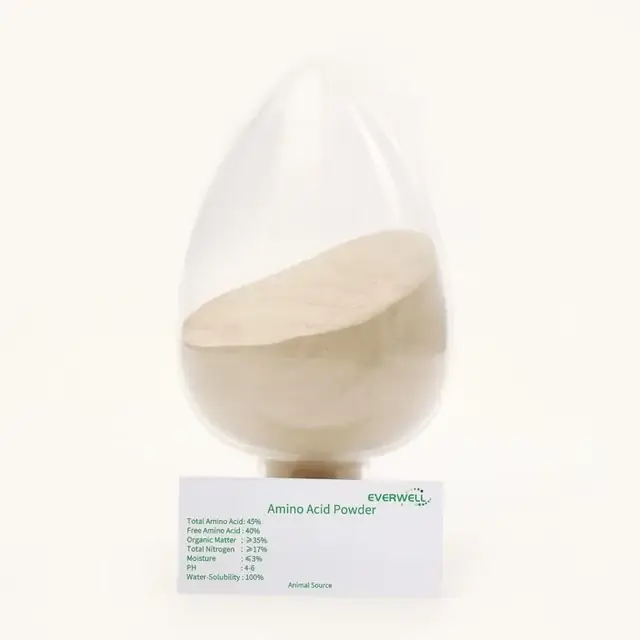
The benchmark grade: ≥ 45% total amino acids, ≥ 60% organic matter, and 41.93% free amino acids measured by Eurofins under GB/T 18246-2019. The grade
View specification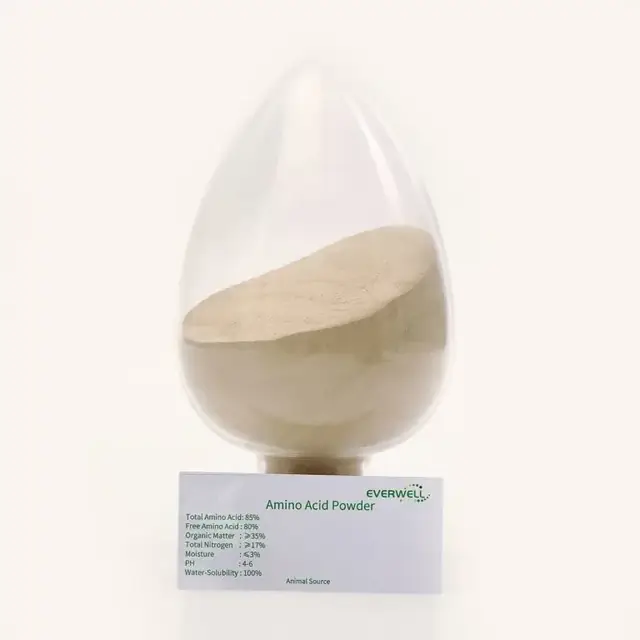
Amino Acids 80
The density grade: ≥ 80% total amino acids, ≥ 80% organic matter, and 75.37% free amino acids measured by Eurofins. Glycine and proline rich, for conc
View specification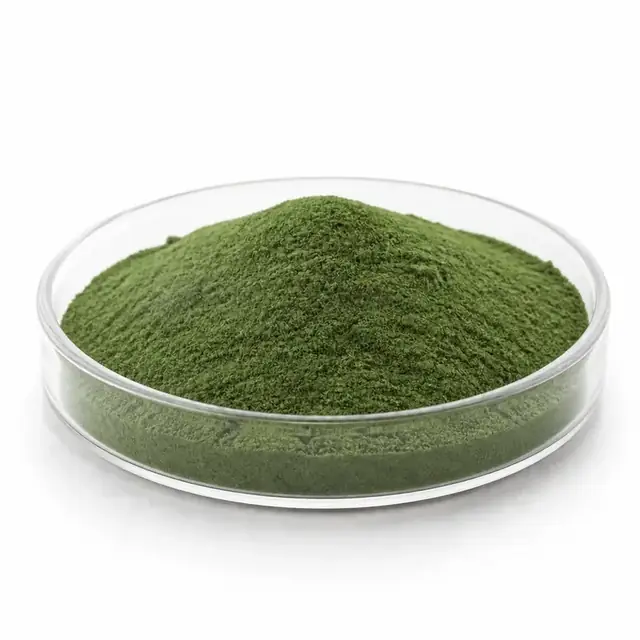
Seaweed Extract 30%
A cold-water extract of brown seaweed standardised to 30% alginic acid on a dry basis, carrying alginates, mannitol and betaines, supplied through the
View specificationRelated Articles
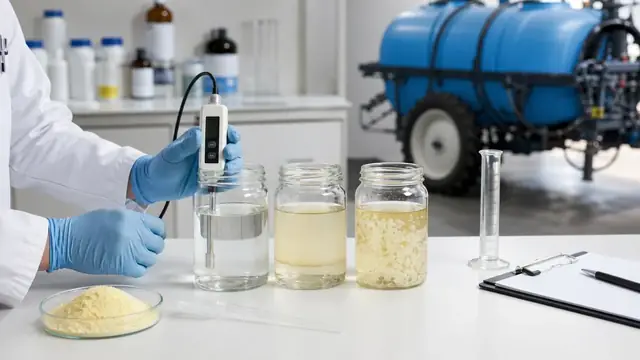
Mixing Amino Acid Powder: A Safer Compatibility Guide
Why category-level compatibility claims fail, how labels and water quality govern the answer, and how to run a jar test that means something.
Read more
Amino Acid Powder Shelf Life and Storage: A Buyer's Guide
What shelf life, expiry and retest dates actually mean, how to store sealed and opened bags, and how to judge caking without guessing.
Read more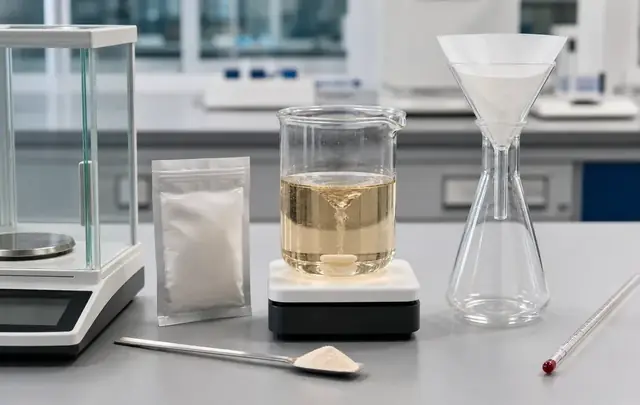
Amino Acid Powder Solubility: Testing and Mixing Guide
How to read a water-solubility claim, specify a defensible insoluble-residue method, and run a jar test that reflects real tank conditions.
Read moreQuestions On This Topic
Is there a standard vegetable rate for an 80% amino acid powder?
No. A figure such as 0.1 to 0.25% or 300 to 600 g/ha is too broad to apply across products and crops. Start from the minimum supported label or supplier rate for the exact product.
Can I double the weight when switching from an 80% to a 45% powder?
That is unsafe as a rule. Two grades can differ in salt load, free amino acids, peptide profile and additives, not only in total amino acids.
How do I convert a per-hectare rate to a tank concentration?
Finished concentration in g/L equals the product rate in kg/ha times 1,000, divided by spray volume in L/ha. The formula converts units only and says nothing about safety.
Should I spray five to seven days after transplanting?
Not automatically. Confirm irrigation is correct and new growth has resumed, and rule out root disease, salinity, temperature injury or waterlogging first.
Which vegetables are most likely to show leaf injury?
Tender leafy crops and young seedling or transplant tissue. Test a small representative area and inspect for spotting, edge burn and distortion before scaling up.
Does the product need a preharvest interval on continuous-harvest crops?
Check the product's permitted timing and the restrictions of every tank partner. No amino acid powder can be assumed to be free of residue or preharvest requirements.
Ask Us About This Directly
Technical questions are answered by the export and production team, normally within 24 hours.