
How to Choose a Flasher Relay for Heavy Trucks
What a Flasher Relay Actually Does
A flasher relay controls the on-off cycle of the turn signals in a commercial vehicle. It receives a signal from the steering column stalk and switches power to the indicator lamps at a consistent rate, typically 60 to 120 flashes per minute. Electronic flashers use a timing circuit instead of a bimetal strip, which ensures stable flash rate even as battery voltage fluctuates. Any failure in the flasher affects the entire turn signal system, leading to no flash, fast flash, or continuous illumination.
Start With the Pin Count Not the Vehicle Model
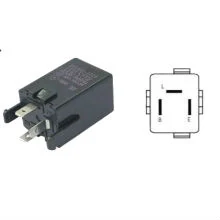
The physical connector housing determines compatibility. Common pin counts on heavy trucks are 2P, 3P, 5P, 6P, 10P, and 11P. A mismatch in pin count means the unit will not seat properly in the socket. Forcing an incorrect part creates a loose connection that fails under vibration. Always count the terminals on the original unit and photograph the connector face before ordering.
Confirm the System Voltage Before You Buy
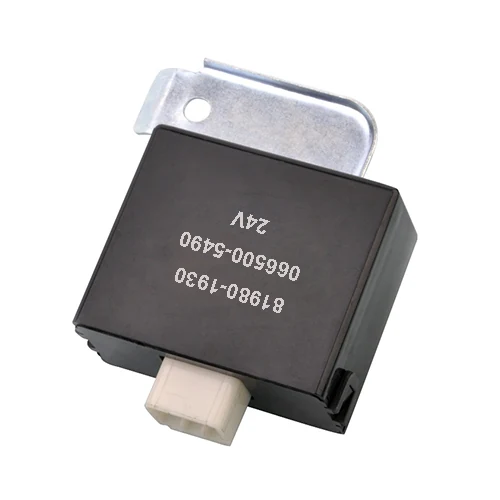
Most heavy trucks and buses operate on 24V systems. Light commercial vehicles use 12V. A 12V flasher used in a 24V circuit will overheat and fail quickly, potentially blowing the indicator fuse. A 24V unit on a 12V system may not flash at all or flash too slowly to be visible. The voltage is always printed on the original part, and every product listing includes it for verification.
LED Lamp Conversions Change the Load
Filament bulbs draw several hundred milliamps. LED clusters draw a fraction of that. Thermal flashers rely on current through the unit to heat a bimetal strip; with low load, they either flash too fast or not at all. Electronic flashers are not affected by load changes. If your fleet uses LED lamps, specify this when requesting a quote to ensure the correct electronic flasher is supplied.
Reading the Symptoms
Fast flashing on one side indicates a failed bulb or poor earth on that side, not a faulty flasher. No flash on both sides with working lamps points to the flasher or its power supply. Flashing that stops when the cab warms up suggests a cracked solder joint inside the unit. Indicators that stay on solid mean the relay contact has welded shut and the unit must be replaced.
Cross Referencing Before a Bulk Order
The same physical flasher can carry multiple part numbers: the OEM vehicle number, the original supplier number, and the factory number. These refer to the same unit. When placing a bulk order across brands, list every number you have for each part. We confirm the match against a physical photograph of the connector before production begins to avoid incorrect shipments.
What to Send When You Ask for a Quote
Send the number printed on the original flasher, a clear photo of the connector face showing the pin layout, the system voltage, the vehicle brand and model, and your expected annual quantity. This allows us to confirm the correct part and provide an accurate quote. For new part numbers, request a free sample first—only freight cost is borne by the buyer.
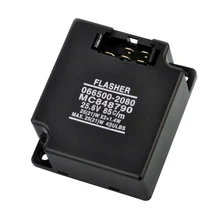
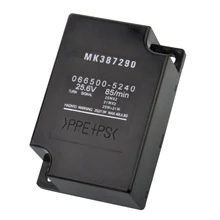
Parts Covered in This Guide
Quick Answers
Why do my indicators flash too fast after fitting LED lamps?
LED lamps draw much less current than filament bulbs. Thermal flashers depend on this current to operate. Use an electronic flasher designed for low-load circuits instead of adding resistors.
Can I use a 12V flasher on a 24V truck?
No. A 12V flasher used in a 24V system will overheat and fail quickly, possibly damaging the indicator fuse. Always verify system voltage before ordering.
Is the pin count the same as the number of lamps?
No. Pin count refers to the number of terminals in the connector housing. It includes power, ground, input, and output connections, not the number of lamps.
One side flashes fast and the other is normal. Is the flasher faulty?
Almost certainly not. Check for a blown bulb or poor earth connection on the fast-flashing side first.
How do I confirm a cross reference before ordering in volume?
Send the number on the original unit and a photo of the connector face. We verify the match against the physical part before production.
Can I get a sample before committing to a fleet order?
Yes. Samples are free of charge and you only cover the freight cost.
More Guides
Truck Starter Relay Failure Symptoms and Diagnosis
A starter relay is the high-current switch in the starting circuit. When the ignition key is turned, the relay closes a heavy cont
Brake Light Switch and Back Lamp Switch Explained
The brake light switch is a safety device that closes the circuit when the brake pedal is pressed, sending power to the stop lamps
How to Read OEM Cross Reference Numbers for Truck Electrical Parts
A single electrical component can carry several identifiers: the vehicle manufacturer's OEM number, the original supplier's part n
Still Not Sure Which Part You Need
Send a photograph of the connector face and the number printed on the original unit. We confirm the match before you order.