Home › Knowledge Centre › High Voltage Ceramic Capacitors in Induction Heating Plant
Material Guide
High Voltage Ceramic Capacitors in Induction Heating Plant
How tank circuit capacitors are specified, why reactive power matters as much as capacitance and voltage, and what to send when you reorder.
The Job of a Tank Capacitor
In an induction heating generator the tank capacitor works with the work coil to set the operating frequency and to carry the circulating current. The current in that loop is much larger than the current drawn from the supply, which is why a capacitor that looks generously rated on voltage alone can still fail in service.
Three Numbers Not Two
A tank capacitor is specified by capacitance, working voltage and reactive power. The third number is the one most often left off an enquiry, and it is the one that decides whether the part survives. If you only quote capacitance and voltage, you are describing a family of parts that behave very differently in a high current loop.
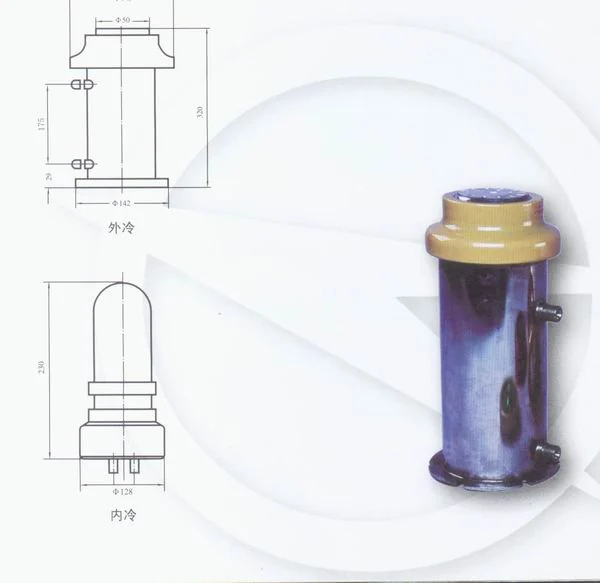
The CCG series includes both water cooled and air cooled constructions. Water cooled parts are used where the circulating current would otherwise take the body temperature beyond what the dielectric will tolerate. The two styles are not interchangeable: a water cooled part fitted without coolant flow fails quickly.
Why These Parts Are Consumables
Dielectric losses partial discharge and thermal cycling all accumulate. A capacitor in continuous duty plant is a wear item with a service life, not a fit and forget component, and treating it as a planned replacement rather than an emergency purchase is what keeps the line running.
Reordering Correctly
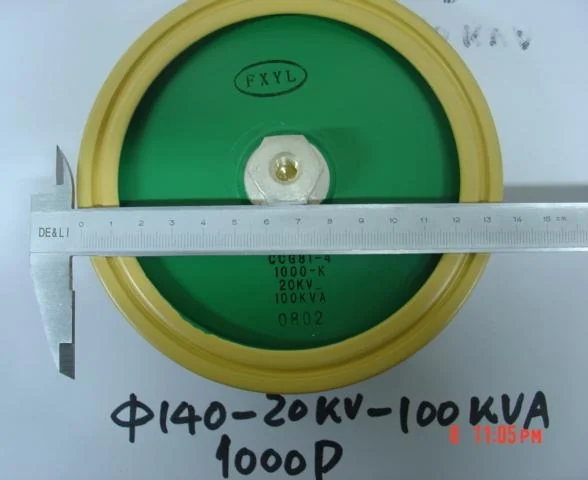
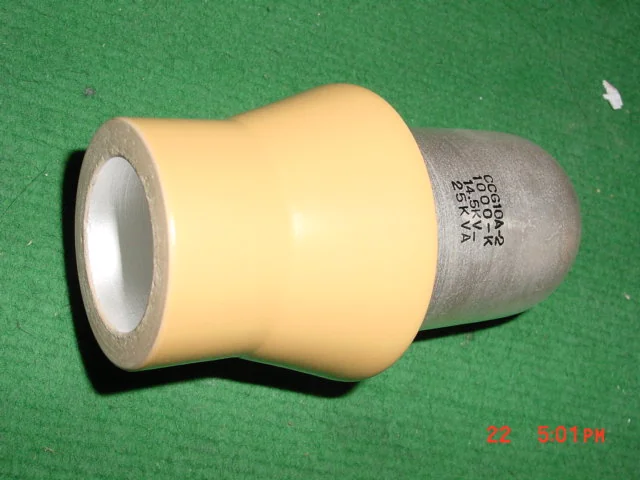
Photograph the label on the old part, note the series designation and the mounting arrangement, and measure the terminal spacing. Send that with the enquiry along with whether the part is water cooled. Those details are enough to quote the same item rather than something close to it.
Related Components in the Same Loop
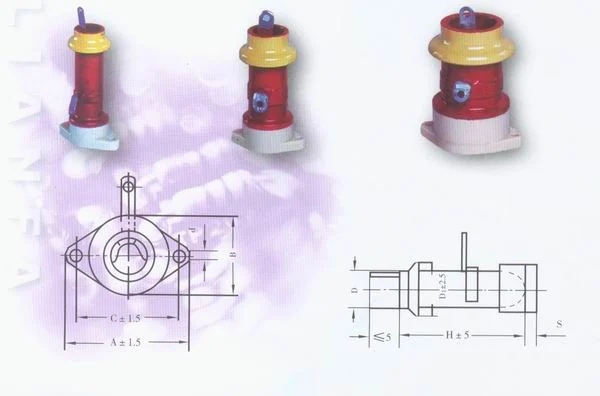
Where the circuit uses vacuum capacitors for matching or tuning, the same discipline applies: the series designation and the operating conditions matter more than the nominal value on its own.
 Request A Quotation