Air Cooled and Water Cooled Power Tubes in Service
How the cooling arrangement changes what you have to buy alongside the tube and what shortens tube life in industrial and broadcast service.
Cooling Is Part of the Specification
A power grid tube dissipates a large fraction of its input as heat at the anode. How that heat leaves the tube is designed into the tube itself, which is why the cooling method appears in the type designation rather than being left to the installer. A forced air type and a water cooled type from the same family are different products with different accessories and different failure modes.
Forced Air Cooling
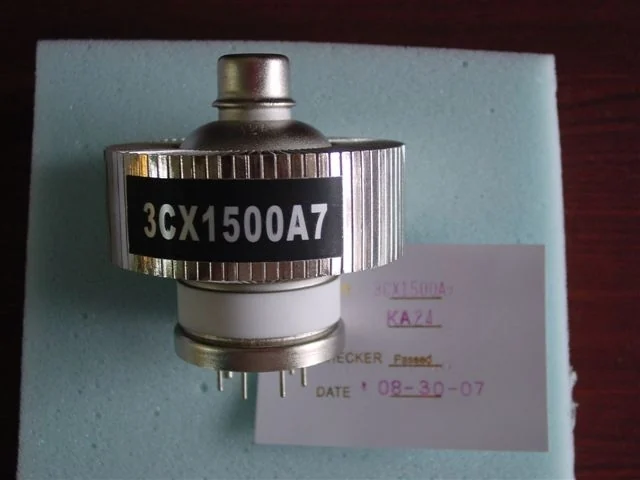
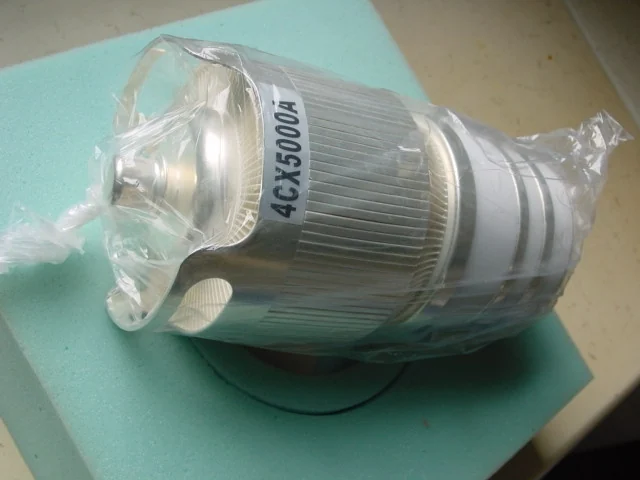
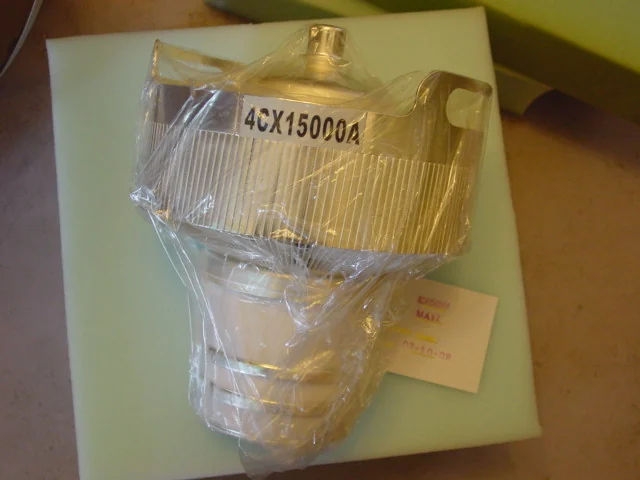
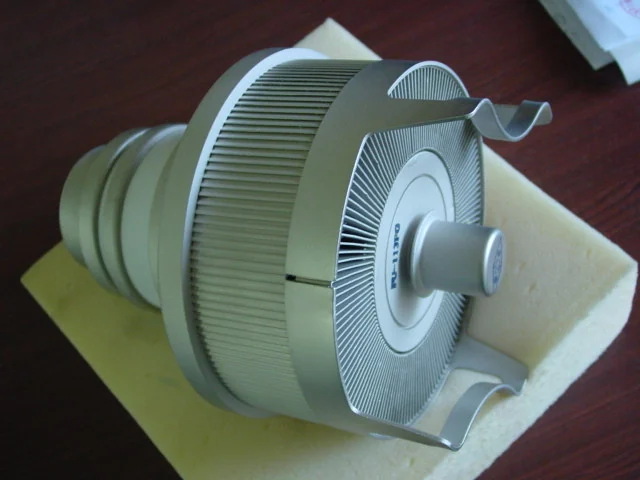
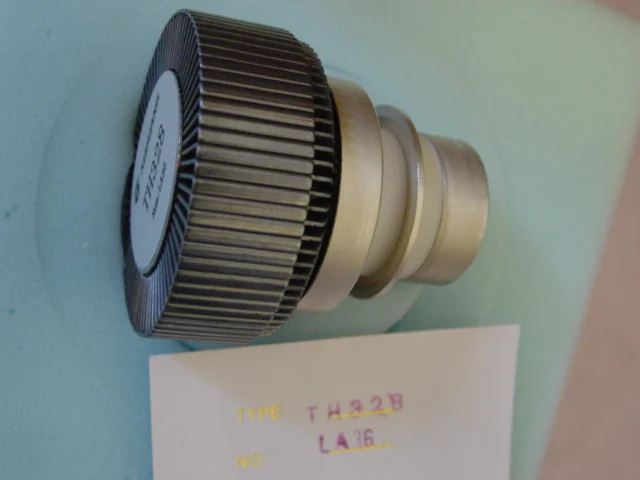
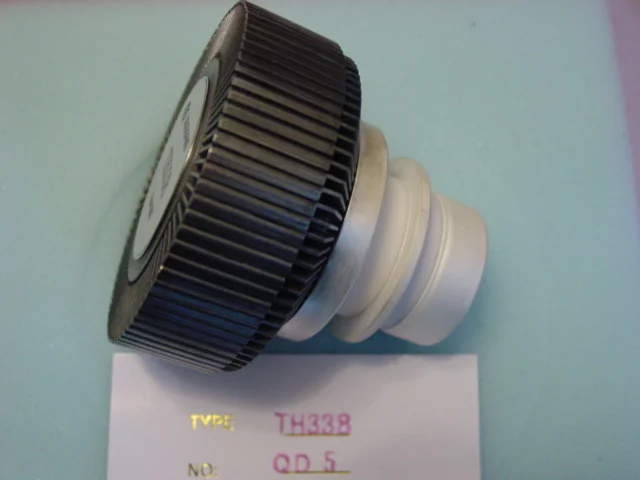
Air cooled tubes sit inside a chimney that directs air through the anode cooler. The chimney is not an optional extra: without it the air takes the easy path around the tube and the cooler runs hot while the airflow meter says everything is fine. If a tube is being replaced, the chimney and the socket should be inspected at the same time, because a distorted chimney or a socket with poor contact pressure will take the new tube out as quickly as it took the old one.
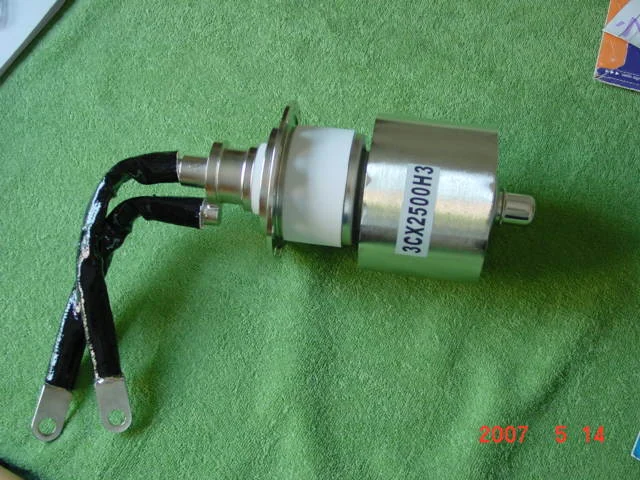
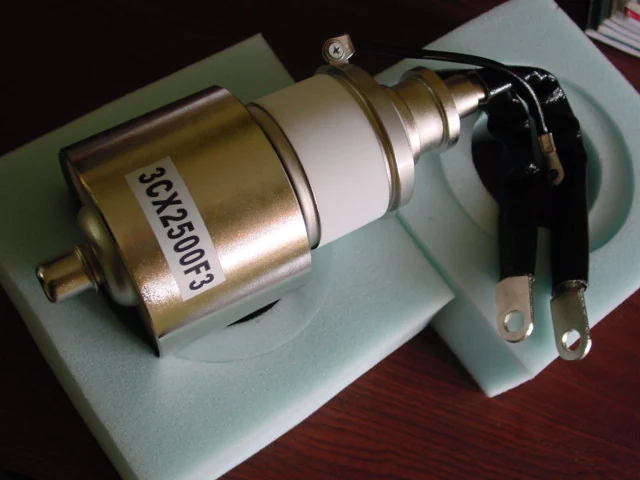
Water cooled anodes run inside a jacket that carries coolant across the anode surface. The two things that kill water cooled tubes are scale and flow. Scale on the anode surface acts as insulation and raises the anode temperature at unchanged flow, and a partially blocked circuit does the same. Jackets corrode, seals harden, and both are cheaper to replace during a planned tube change than after an unplanned one.
What to Order With the Tube
For an air cooled type, quote the socket and the chimney with the tube. For a water cooled type, quote the jacket and confirm the seals. Doing this at quotation stage costs nothing and avoids the situation where the tube is on the bench and the assembly cannot be completed.
Handling During a Change
Keep the tube in its packing until the socket and the cooling parts are ready. Handle by the body, not by the anode terminal or the top cap. Check contact ring surfaces before fitting. Once a tube has been dropped, even without visible damage, treat it as suspect rather than fitting it and hoping.
Planning the Next One
The best time to order the next tube is when you fit this one. Availability of a discontinued type is never better later than it is today, and a spare on the shelf converts an outage into a shift of work.
 Request A Quotation