
CNC milling for pockets, slots, and 3D form
Milling removes material from a solid blank to the shape on the drawing. It is the route AS Precision uses when a part is not a simple revolved body — angles, slots, channels, chamfers, holes, and curves.
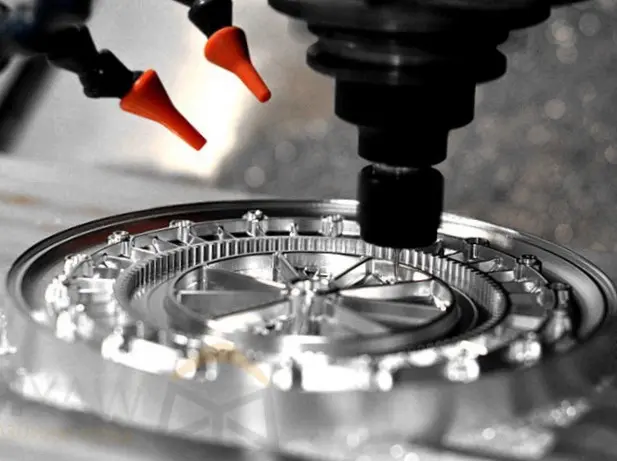
Methods named on the source page: plain milling, face milling, and form milling. The shop path is CAD 3D model → CAM → setup → cut the blank → mill to print.
AS Precision notes that soft or sticky materials are a poor fit, and that hardened stock needs special cutters. Batch shipments are used so customers can keep inventory low.
What milling solves that turning cannot
Flats, pockets, intersecting holes, and sculpted faces. Many jobs on this floor start on a lathe and finish on a mill — one drawing, one inspection pack.
Questions buyers actually send
What tolerance should I put on a first RFQ?
Use the print. The milling page publishes ±0.001–0.005 in as the working band; tighter numbers are reviewed against process capability.
Do you mill plastics?
Yes. The category list includes POM/Delrin, ABS, HDPE, nylon, PC, PEEK, PMMA, PP, and PTFE.