Why Three-Zone Tube Furnaces Are Ideal for Three-Stage Catalyst Preparation
Among available thermal processing equipment, the three-zone tube furnace has become a preferred solution for researchers working on advanced catalyst systems. Its ability to independently control multiple heating zones makes it particularly well-suited for three-stage catalyst preparation processes
- LaboratoryThermal ProcessingCatalyst Activation FurnaceCatalyst Calcination EquipmentCatalyst preparation furnace2026-04-23
Table of Contents
Catalyst preparation is a highly sensitive, multi-step process in which temperature control, atmosphere stability, and thermal uniformity directly determine the final catalytic performance. For research laboratories and pilot-scale development, the challenge is not only to achieve the required temperatures, but to precisely control how heat is delivered across different stages of synthesis.
Among available thermal processing equipment, the three-zone tube furnace has become a preferred solution for researchers working on advanced catalyst systems. Its ability to independently control multiple heating zones makes it particularly well-suited for three-stage catalyst preparation processes, typically involving drying, calcination, and activation.
Understanding the Three-Stage Catalyst Preparation Process
In most catalyst synthesis workflows, the material undergoes three essential thermal stages:
1. Drying (Low-Temperature Stage)
At this stage, residual solvents are removed after impregnation or deposition. Controlled heating is critical to:
- Prevent migration of active components
- Maintain uniform distribution on the support
- Avoid structural damage caused by rapid evaporation
2. Calcination (Intermediate-Temperature Stage)
Calcination converts precursor compounds (e.g., nitrates or organics) into active oxide phases. This step determines:
- Crystal structure formation
- Surface area and porosity
- Metal-support interaction
Precise temperature ramping and uniform heat distribution are essential to avoid sintering or incomplete decomposition.
3. Activation / Reduction (High-Temperature Stage)
The final stage transforms the catalyst into its active form, often through reduction (e.g., in H₂ atmosphere). This step:
- Generates active sites
- Tunes electronic structure
- Directly impacts catalytic activity and selectivity
1. Independent Temperature Control for Each Stage
A three-zone tube furnace allows each heating zone to be programmed independently. Researchers can:
- Assign different temperatures to each zone simultaneously
- Create stable thermal regions for each process step
- Avoid repeated heating and cooling cycles
This is particularly useful for continuous or semi-continuous workflows where samples move through different thermal environments.
2. Enhanced Temperature Uniformity and Stability
Uniform temperature distribution is critical for reproducibility in catalyst preparation. Multi-zone design:
- Minimizes temperature gradients within each zone
- Reduces thermal fluctuations
- Ensures consistent treatment across the entire sample batch
As a result, active phase dispersion becomes more uniform, leading to more reliable catalytic performance.
3. Programmable Thermal Profiles for Complex Processes
Advanced PID control systems enable precise programming of:
- Heating rates
- Dwell times
- Cooling profiles
Researchers can replicate complex synthesis protocols with high accuracy, which is essential for:
- Academic research validation
- Industrial scale-up studies
4. Seamless Integration with Controlled Atmospheres
Catalyst preparation often requires specific gas environments such as air, inert gases (N₂, Ar), or reducing gases (H₂). Three-zone tube furnaces can be configured with:
- Mass flow controllers (MFCs)
- Vacuum systems
- Gas mixing units
This enables smooth transitions between different atmospheres across stages, without interrupting the process.
5. Ideal for Large-Diameter and Batch Processing
Large-diameter three-zone tube furnaces are especially advantageous when:
- Processing larger sample volumes
- Scaling up laboratory experiments
- Ensuring uniform exposure for bulk catalyst materials
The combination of large working space + multi-zone control ensures that even large batches maintain consistent thermal history.
Key Benefits for Catalyst Research
By aligning perfectly with the three-stage preparation workflow, three-zone tube furnaces offer:
- Improved dispersion of active components
- Reduced risk of particle agglomeration
- Higher reproducibility between experiments
- More accurate structure–performance correlations
- Greater flexibility for process optimization
These advantages are critical for researchers developing high-performance catalysts in fields such as:
- Heterogeneous catalysis
- Energy materials (e.g., fuel cells, hydrogen production)
- Environmental catalysis
- Chemical synthesis
Conclusion
Three-zone tube furnaces are not just an incremental improvement over single-zone systems—they represent a process-oriented solution tailored to the real needs of catalyst preparation.
By enabling independent temperature control, excellent thermal uniformity, programmable heating profiles, and precise atmosphere management, they provide researchers with the tools needed to optimize each stage of catalyst synthesis.
For laboratories aiming to improve data reliability, catalyst performance, and process scalability, investing in a three-zone tube furnace is a technically sound and future-ready choice.
Share this entry
You might also like
Powder Metallurgy Part 1 – Mechanical Milling Method for Powder Production
Heat Treatment Part 7: Quenching and Tempering (Quench-temper Treatment)
Heat Treatment Part 6: Conventional vs Vacuum Heat Treatment and Furnace Differences
Heat Treatment Part 5: Carburizing and Nitriding
Related ZYLAB Products
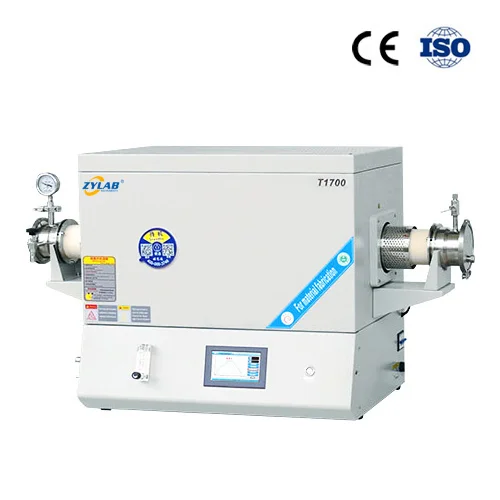
1700°C Two Zone Tube Furnace for Precision Thermal Processing
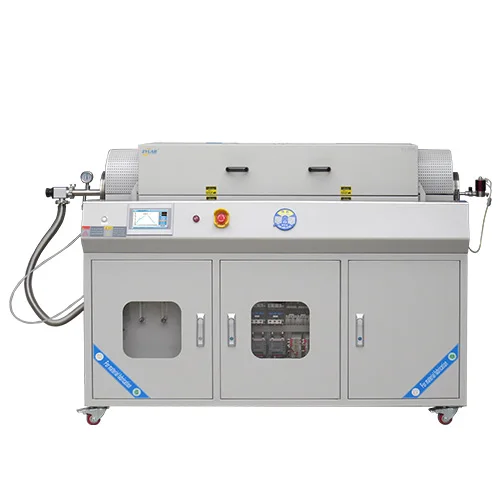
Multi-Zone High Temperature Quartz Tube Annealing Furnace for Wafer Processing
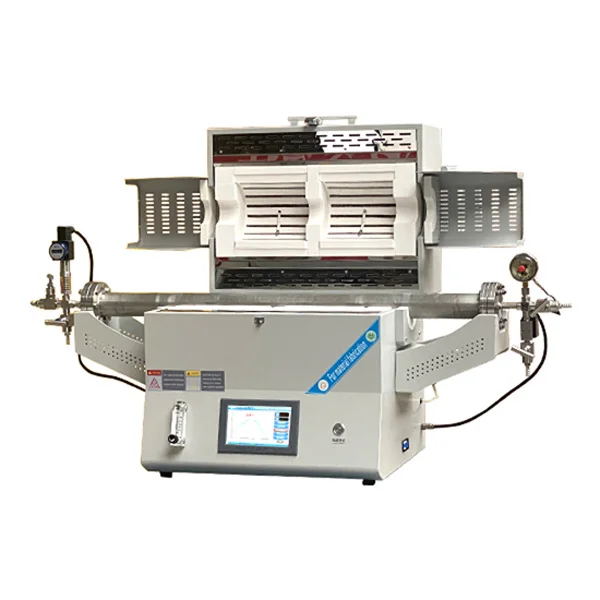
2-Zone High-Pressure Furnace for Laboratory Use – Ideal for Controlled Thermal Reactions
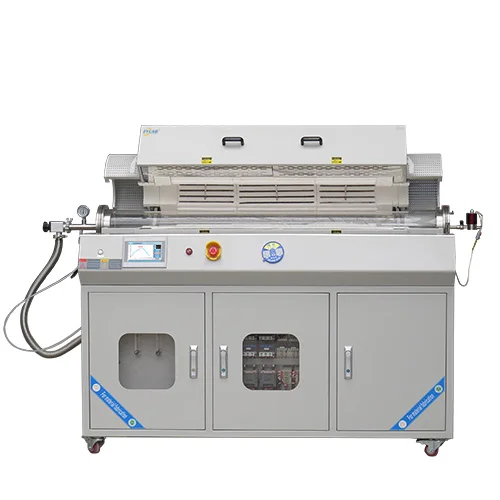
Large-Diameter Multi-Zone Tube Furnace – Precision Heat Treatment for Large Samples and Batch Processing
Working With ZYLAB On A Project Like This
How quickly can Why Three-Zone Tube Furnaces Are Ideal for Three-Stage Catalyst Prepar be shipped?
Most standard ZYLAB models are held in stock. After testing and packing we normally ship Why Three-Zone Tube Furnaces Are Ideal for Three-Stage Catalyst Prepar within 3 to 7 days. Customised builds are scheduled after the drawing is confirmed, and we give you the date in writing before the order is placed.
Is there a minimum order quantity for Why Three-Zone Tube Furnaces Are Ideal for Three-Stage Catalyst Prepar?
No. ZYLAB has no minimum order requirement, so a single unit of Why Three-Zone Tube Furnaces Are Ideal for Three-Stage Catalyst Prepar is a normal order. Occasionally a component supplier imposes a minimum quantity of their own, and we tell you as soon as we are notified.
Can we get technical help before ordering Why Three-Zone Tube Furnaces Are Ideal for Three-Stage Catalyst Prepar?
Yes, and it is free. Our technical staff help with model selection, troubleshooting, manuals and application questions whether or not you have ordered from us before. Write to [email protected] or message us on WhatsApp.
What if Why Three-Zone Tube Furnaces Are Ideal for Three-Stage Catalyst Prepar is damaged in transit?
Contact your ZYLAB sales engineer immediately with photographs. We arrange a substitute delivery promptly and handle the claim with the carrier.
Have A Similar Requirement
Describe the material, the temperature and the throughput you need and an engineer will answer with a workable configuration.