
Heat Treatment Part 7: Quenching and Tempering (Quench-temper Treatment)
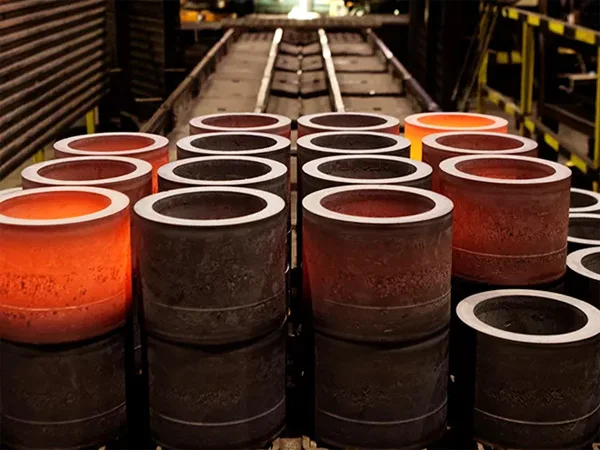
Quenching and tempering, commonly known as “tempering after quenching” or “quench-temper treatment”, is a fundamental heat treatment process used to optimize the mechanical properties of steel. This article explores what quenching and tempering is, its purpose, how it differs from simple quenching,
- Heat TreatmentKnowledge Sharing SeriesAlloy steel heat treatmentHeat treatment processQT steel treatment2025-09-26
Table of Contents
Quenching and tempering, commonly known as “tempering after quenching” or “quench-temper treatment”, is a fundamental heat treatment process used to optimize the mechanical properties of steel.
This article explores what quenching and tempering is, its purpose, how it differs from simple quenching, and essential technical considerations for researchers and engineers.
What Is Quenching and Tempering (QT)?
Quenching and tempering (QT) is a two-step heat treatment process:
Quenching – The steel is heated above its critical temperature (A3 for hypo-eutectoid steels, typically 800–900°C) and then rapidly cooled in water, oil, or another quenching medium. This produces a hard but brittle martensitic structure.
Tempering – The quenched steel is reheated to a temperature below the critical point (150–700°C) for a controlled period and then cooled, usually in air. Tempering reduces brittleness, relieves residual stresses, and adjusts mechanical properties to achieve a balance between hardness and toughness.
Purpose of Quenching and Tempering
The primary goal of QT is to produce steel with high hardness and sufficient toughness for industrial or research applications. Quenched steel alone is extremely hard (HRC 60–65) but brittle, prone to cracking under stress. Tempering modifies the martensite structure, relieving internal stresses and slightly reducing hardness while greatly improving toughness.
Key objectives include:
Stress relief – Reduces residual stresses from quenching.
Hardness control – Achieves target hardness for machining, wear resistance, or structural performance.
Toughness enhancement – Prevents brittle fracture in service.
Dimensional stability – Critical for precision components such as gears, shafts, dies, and molds.
Microstructure optimization – Fine carbide precipitation improves long-term material performance.
Advanced Considerations for Researchers
For research and industrial applications, the quenching and tempering (QT) process can be precisely controlled using batch-type box furnaces, which are ideal for small to medium batch production or research experiments.
Batch-Type Box Furnace (Intermittent Furnace)
Definition: A furnace where steel workpieces are loaded in batches, heated to quenching temperature, and then tempered, all within the same chamber.
Bottom Loading Furnace Advantage: Our Bottom Loading Furnace allows safe loading and unloading even at temperatures up to 1300°C, providing excellent convenience and safety for research operations.
Temperature Uniformity: Modern batch furnaces maintain a uniform temperature across the chamber, typically within ±1°C, ensuring consistent mechanical properties.
Application: Ideal for precision components, tooling, structural steel, and high-alloy steels used in R&D and small batch production.
Alloy Steels
Alloying elements like Cr, Mo, V, and Ni increase tempering resistance, allowing higher tempering temperatures without excessive hardness loss. This is essential for high-strength steels in aerospace, automotive, and tooling applications.
Multiple Tempering
Double or triple tempering cycles are used for high-carbon or high-alloy steels to further reduce brittleness and stabilize hardness.
Tempering Embrittlement
Prolonged tempering in the 350–450°C range may cause “temper embrittlement” in certain steels, characterized by decreased impact toughness.
Practical Example of Quenching and Tempering
Medium-carbon steel (0.4% C, 0.5% Cr, 0.2% Mo):
| Step | Temperature (°C) | Duration | Hardness (HRC) | Toughness (J, Charpy V-notch) |
|---|---|---|---|---|
| Quenching | 840 | Water | 62 | 10 |
| Tempering | 400 | 60 min | 52 | 30 |
| Tempering | 550 | 60 min | 45 | 60 |
This shows how tempering temperature directly affects hardness and toughness.
Summary
Quenching and tempering is a core heat treatment process that combines high hardness with improved toughness. By controlling quenching and tempering parameters—temperature, time, and alloy composition—researchers and engineers can optimize steel for structural, tooling, or specialized applications.
Understanding QT is essential for advanced materials engineering and precise mechanical performance design.
Share this entry
You might also like
Related ZYLAB Products
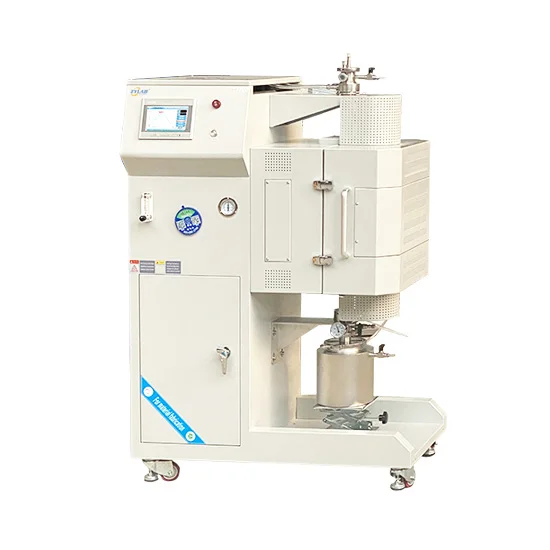
1700°C Vertical Atmosphere Controlled Quenching Furnace for High-Performance Heat Treatment
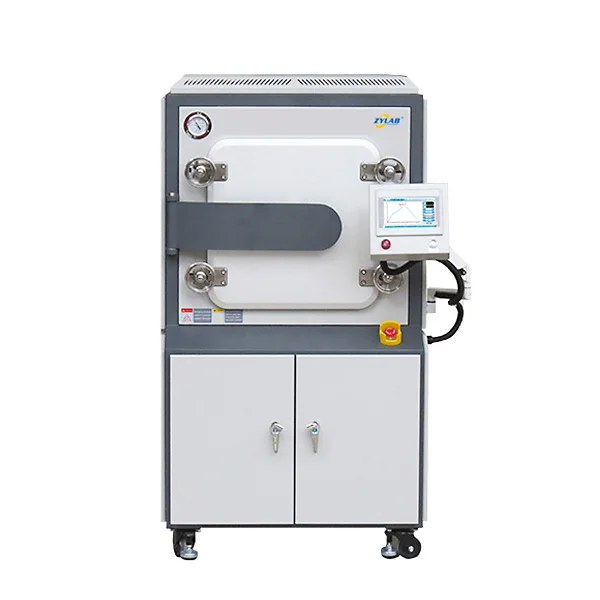
1200°C 27L Vacuum Atmosphere Muffle Furnace for Heat Treatment
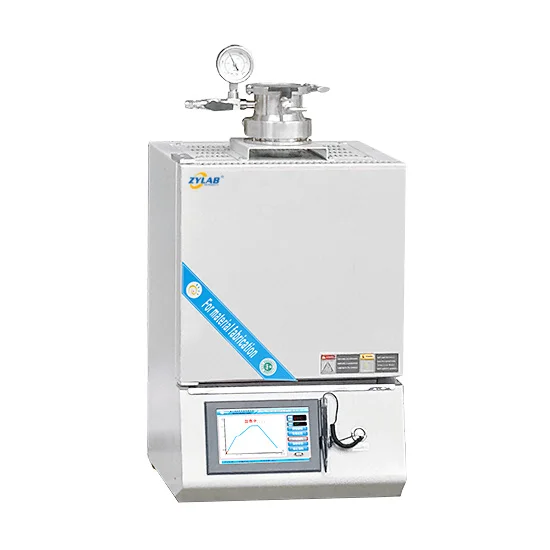
Vacuum Atmosphere Hybrid Box/Tube Furnace for Precision Heat Treatment
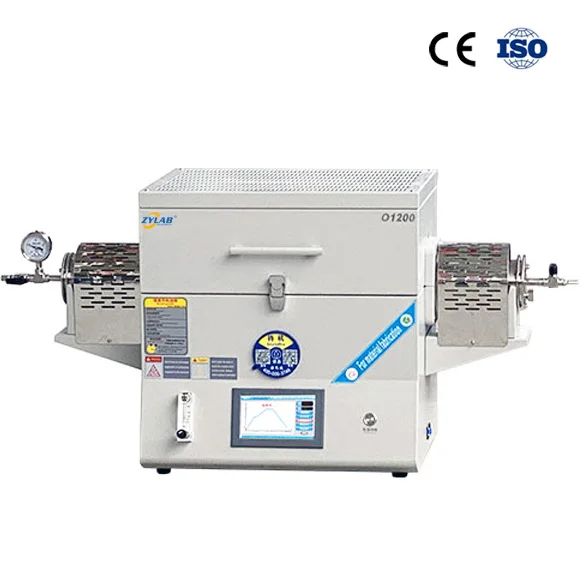
Horizontal Tube Furnace Range – Precision Heat Treatment up to 1700°C
Working With ZYLAB On A Project Like This
How quickly can Heat Treatment Part 7: Quenching and Tempering (Quench-temper Treatmen be shipped?
Most standard ZYLAB models are held in stock. After testing and packing we normally ship Heat Treatment Part 7: Quenching and Tempering (Quench-temper Treatmen within 3 to 7 days. Customised builds are scheduled after the drawing is confirmed, and we give you the date in writing before the order is placed.
Can Heat Treatment Part 7: Quenching and Tempering (Quench-temper Treatmen be customised for our process?
Yes. Chamber or tube size, temperature profile, atmosphere, gas path, control system and data recording can all be adapted. Send us your process conditions and sample details and our engineers work out a configuration with you.
What warranty comes with Heat Treatment Part 7: Quenching and Tempering (Quench-temper Treatmen?
Most ZYLAB products carry a 2-year warranty, glass components excluded; the exact term for this model is the one printed in its specification table and repeated on the quotation. Within the warranty period any part that fails through no misuse of your own is replaced free of charge.
Can we get technical help before ordering Heat Treatment Part 7: Quenching and Tempering (Quench-temper Treatmen?
Yes, and it is free. Our technical staff help with model selection, troubleshooting, manuals and application questions whether or not you have ordered from us before. Write to [email protected] or message us on WhatsApp.
Have A Similar Requirement
Describe the material, the temperature and the throughput you need and an engineer will answer with a workable configuration.