
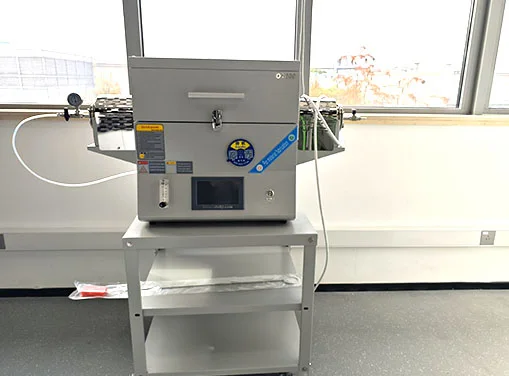
MOFs Synthesis and High-Temperature Treatment: Which Laboratory Furnace is More Suitable?
The synthesis and high-temperature treatment of MOFs require precise thermal control to ensure optimal crystal formation, stability, and performance. Selecting the right laboratory furnace is essential for researchers working on MOF development.
- LaboratoryThermal ProcessingBest furnace for MOF researchControlled atmosphere furnace for MOFsHigh-temperature furnace for MOF synthesis2025-03-02
Introduction
Metal-organic frameworks (MOFs) have gained significant attention in various fields such as gas storage, catalysis, drug delivery, and environmental applications due to their highly porous structures.
The synthesis and high-temperature treatment of MOFs require precise thermal control to ensure optimal crystal formation, stability, and performance. Selecting the right laboratory furnace is essential for researchers working on MOF development.
This guide explores the key factors to consider when choosing a suitable furnace for MOF synthesis and thermal treatment, with a focus on tube furnaces, muffle furnaces, and vacuum furnaces.
Key Factors in Choosing a Furnace for MOF Synthesis
Temperature Control and Uniformity
-
MOFs are typically synthesized at moderate temperatures (100-300°C) using solvothermal or hydrothermal methods.
Thermal treatment, including activation and carbonization, often requires higher temperatures (400-1000°C) with precise control to avoid structural collapse.
A furnace with uniform heating ensures reproducible results and consistent MOF properties.
Atmosphere Control
-
Some MOFs require an inert gas (e.g., nitrogen, argon) to prevent unwanted oxidation or decomposition.
Vacuum or controlled-atmosphere furnaces are ideal for removing solvents and residual organic compounds while maintaining MOF integrity.
Heating Rate and Stability
-
A slow and controlled heating rate prevents thermal stress and maintains the crystalline structure.
Furnaces with programmable temperature profiles allow precise ramp-up and cooling cycles.
1. Tube Furnaces
Advantages:
- Excellent for high-temperature activation and carbonization of MOFs.
- Supports vacuum and controlled-atmosphere processing.
- Uniform heating over the entire sample length.
Best Applications:
- MOF pyrolysis for creating carbon-based materials.
- Gas adsorption and catalytic applications requiring inert conditions.
2. Muffle Furnaces
Advantages:
- Ideal for batch processing of MOF samples.
- High thermal stability and uniform heating.
- Suitable for solid-state synthesis and post-treatment processes.
Best Applications:
- MOF crystallization under controlled air conditions.
- Thermal stability testing and structural modification.
3. Vacuum Furnaces
Advantages:
- Prevents oxidation and unwanted reactions.
- Essential for MOFs sensitive to air or moisture.
- Allows precise degassing and solvent removal.
Best Applications:
- MOF synthesis requiring solvent evaporation without degradation.
- High-purity applications in gas storage and catalysis.
Conclusion
Choosing the right laboratory furnace for MOF synthesis and high-temperature treatment depends on temperature precision, atmosphere control, and heating stability.
Tube furnaces are best for carbonization and pyrolysis, muffle furnaces excel in solid-state synthesis, and vacuum furnaces ensure high-purity MOF preparation.
Share this entry
You might also like
How Does an Automatic Feeding and Discharging Tube Furnace Synthesize Hydrogen Storage Materials Under High-Pressure Oxygen-Free Conditions?
Laboratory Crucible Comparison: Choosing the Right Crucible for Your Experiment
Applications of Vacuum Furnaces in Materials Preparation: An In-Depth Guide
Optimizing Battery Material Production with a Large-Diameter Tube Furnace
-
-
-
Related ZYLAB Products
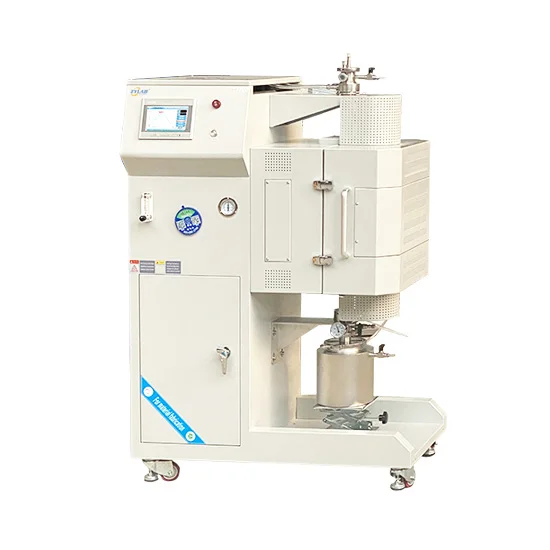
1700°C Vertical Atmosphere Controlled Quenching Furnace for High-Performance Heat Treatment
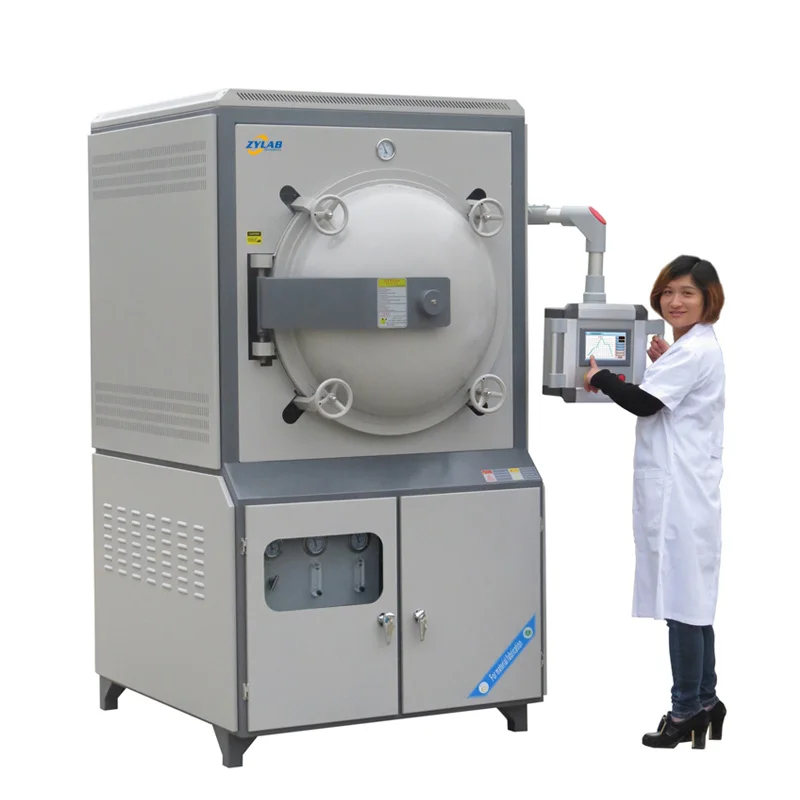
Large High-Temperature Controlled Atmosphere Furnace
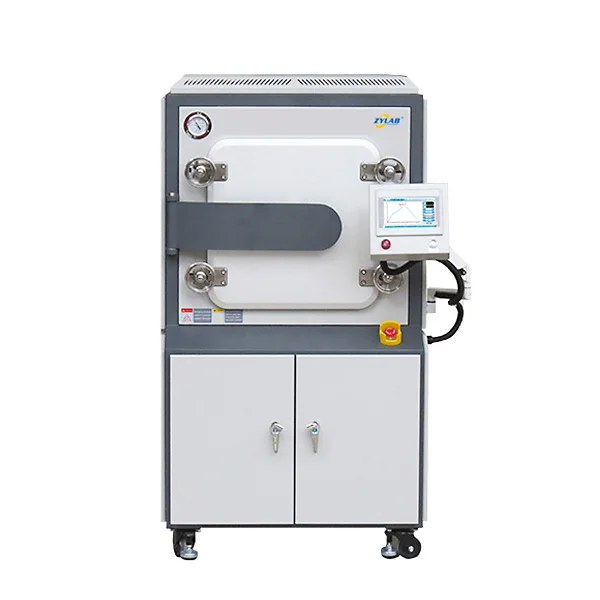
1200°C 27L Vacuum Atmosphere Muffle Furnace for Heat Treatment
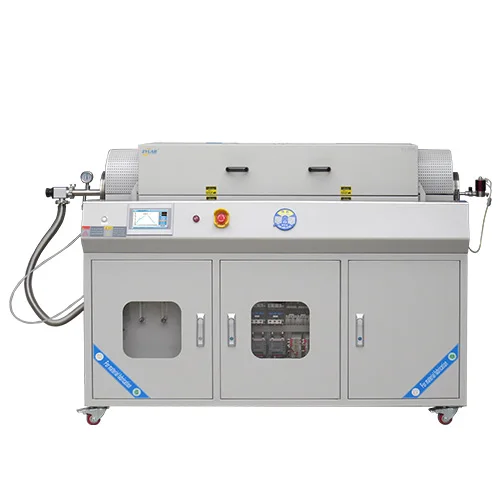
Multi-Zone High Temperature Quartz Tube Annealing Furnace for Wafer Processing
Working With ZYLAB On A Project Like This
How quickly can MOFs Synthesis and High-Temperature Treatment: Which Laboratory Furnac be shipped?
Most standard ZYLAB models are held in stock. After testing and packing we normally ship MOFs Synthesis and High-Temperature Treatment: Which Laboratory Furnac within 3 to 7 days. Customised builds are scheduled after the drawing is confirmed, and we give you the date in writing before the order is placed.
Can MOFs Synthesis and High-Temperature Treatment: Which Laboratory Furnac be customised for our process?
Yes. Chamber or tube size, temperature profile, atmosphere, gas path, control system and data recording can all be adapted. Send us your process conditions and sample details and our engineers work out a configuration with you.
What warranty comes with MOFs Synthesis and High-Temperature Treatment: Which Laboratory Furnac?
Most ZYLAB products carry a 2-year warranty, glass components excluded; the exact term for this model is the one printed in its specification table and repeated on the quotation. Within the warranty period any part that fails through no misuse of your own is replaced free of charge.
Can we get technical help before ordering MOFs Synthesis and High-Temperature Treatment: Which Laboratory Furnac?
Yes, and it is free. Our technical staff help with model selection, troubleshooting, manuals and application questions whether or not you have ordered from us before. Write to [email protected] or message us on WhatsApp.
Have A Similar Requirement
Describe the material, the temperature and the throughput you need and an engineer will answer with a workable configuration.