
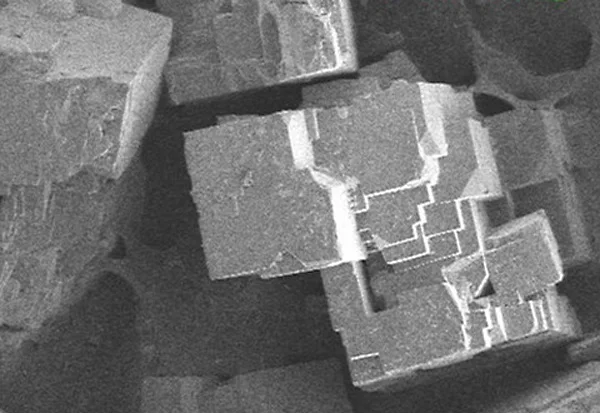
Solvothermal Synthesis of MOF Powder Materials: Process, Equipment, and Optimal Conditions
Among the various synthesis methods, solvothermal synthesis is one of the most effective techniques for obtaining high-purity MOF powders with controlled morphology and crystallinity. This article provides a detailed guide on the solvothermal synthesis process, the required reaction equipment, and k
- LaboratoryThermal ProcessingBest equipment for MOF synthesisHigh-pressure autoclave for MOFsLaboratory reactor for MOFs2025-03-05
Introduction
Metal-organic frameworks (MOFs) are highly porous materials with wide-ranging applications in gas storage, catalysis, and separation.
Among the various synthesis methods, solvothermal synthesis is one of the most effective techniques for obtaining high-purity MOF powders with controlled morphology and crystallinity.
This article provides a detailed guide on the solvothermal synthesis process, the required reaction equipment, and key parameters such as temperature and reaction time.
Solvothermal Synthesis Process of MOF Powders
The solvothermal method involves dissolving metal precursors and organic ligands in a suitable organic solvent under high-temperature and high-pressure conditions inside a sealed reaction vessel. The step-by-step process is as follows:
1. Preparation of Precursors
- Dissolve a metal salt (e.g., Zn(NO₃)₂, Cu(NO₃)₂, FeCl₃) and an organic linker (e.g., terephthalic acid, trimesic acid, imidazolate) in a polar organic solvent such as N,N-Dimethylformamide (DMF), ethanol, or acetonitrile.
- Adjust the solution pH using acidic or basic additives if needed.
2. Transfer to a Sealed Reaction Vessel
- The prepared precursor solution is poured into a high-pressure reactor, typically a Teflon-lined stainless steel autoclave or a glass-lined hydrothermal reactor.
- The vessel is securely sealed to maintain high-pressure conditions during heating.
3. Solvothermal Reaction
- The sealed reactor is placed inside a laboratory oven or a heating mantle for controlled temperature treatment.
- The reaction temperature generally ranges from 100°C to 250°C, depending on the specific MOF being synthesized.
- The reaction time varies from 12 to 48 hours, allowing sufficient crystal growth.
4. Cooling and Filtration
- After the reaction is complete, the autoclave is cooled to room temperature naturally or by water cooling to avoid thermal stress.
- The obtained MOF crystals are separated by vacuum filtration or centrifugation, followed by thorough washing with fresh organic solvent to remove residual unreacted precursors.
5. Drying and Activation
- The purified MOF powder is dried under vacuum or in an oven at 60-120°C to remove residual solvent.
- For enhanced porosity, MOFs may undergo solvent exchange with a low-surface-tension liquid like methanol, followed by activation under vacuum at 150-250°C to remove trapped solvents from the pores.
1. High-Pressure Autoclave (Teflon or Glass-Lined)
- Essential for maintaining high-temperature and high-pressure reaction conditions.
- Available in various sizes for small-scale lab research or pilot-scale synthesis.
2. Temperature-Controlled Oven or Heating Mantle
- Provides precise heating to ensure uniform temperature distribution.
- Some models allow programmable temperature ramping for optimized synthesis conditions.
3. Vacuum Filtration System
- Used for efficient separation and purification of MOF crystals.
- Includes a vacuum pump, filter flask, and membrane filter.
4. Vacuum Drying Oven
- Ensures complete removal of residual solvents while maintaining the MOF’s porous structure.
Optimal Reaction Conditions for MOF Synthesis
| Parameter | Typical Range | Importance |
|---|---|---|
| Temperature | 100°C – 250°C | Affects crystal growth and porosity |
| Pressure | 10 – 50 bar | Maintains solvent in liquid phase at high temperature |
| Reaction Time | 12 – 48 hours | Longer time leads to better crystallinity |
| Solvent | DMF, ethanol, water | Determines solubility and crystal formation |
| pH Control | 4 – 9 (varies by MOF) | Optimizes nucleation and growth |
Conclusion
Solvothermal synthesis is a highly effective method for producing MOF powders with well-defined morphology and high porosity. By carefully selecting the reaction temperature, time, solvent, and equipment, researchers can optimize MOF crystallinity and performance.
Share this entry
You might also like
Customized Boron Nitride Crucibles for Queen’s University, Canada
How Muffle Furnaces Support Ceramic and Metal Sintering in R&D Labs
Installation Guide for a Muffle Furnace: Key Tips for Safe and Efficient Setup
How to Use a Muffle Furnace for Cement Calcination? | ZYLAB Guide
Related ZYLAB Products
Fluidized Bed Calcination Furnace for Powder and Fine Particle Materials
Lab-Scale 12 Ton Bench-Top Automatic Hydraulic Pellet Press for Powder Compaction & Dry Granulation Processing
Advanced Continuous Pyrolyzers for Biomass and Organic Solid Waste Thermal Processing & Sintering
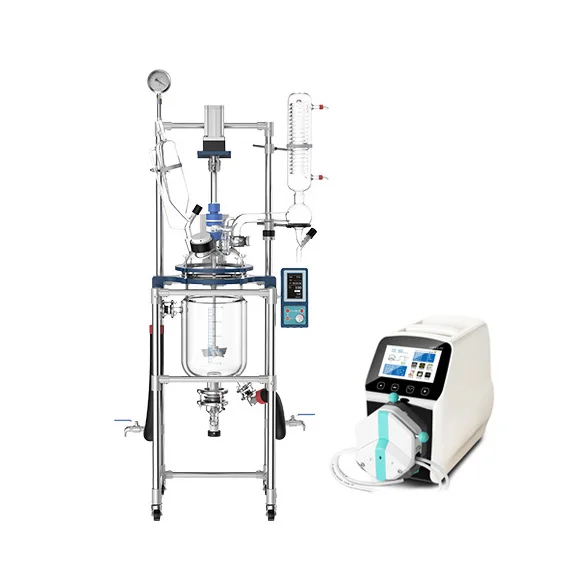
Double Glass Walled Reactor with Dosing System | Temperature Control | For Lab Synthesis & Catalysis
Working With ZYLAB On A Project Like This
Can Solvothermal Synthesis of MOF Powder Materials: Process, Equipment, an be customised for our process?
Yes. Chamber or tube size, temperature profile, atmosphere, gas path, control system and data recording can all be adapted. Send us your process conditions and sample details and our engineers work out a configuration with you.
What warranty comes with Solvothermal Synthesis of MOF Powder Materials: Process, Equipment, an?
Most ZYLAB products carry a 2-year warranty, glass components excluded; the exact term for this model is the one printed in its specification table and repeated on the quotation. Within the warranty period any part that fails through no misuse of your own is replaced free of charge.
How can we pay for Solvothermal Synthesis of MOF Powder Materials: Process, Equipment, an?
Bank (wire) transfer, letter of credit for larger orders, major credit and debit cards, and PayPal. Bank details are printed on the invoice; send us the transfer confirmation and we start processing straight away.
How is Solvothermal Synthesis of MOF Powder Materials: Process, Equipment, an packed for export?
Packing is chosen for the safety of the machine against freight cost, typically a plywood or wooden crate with internal padding and vacuum-sealed accessories. Export documents such as Form A, Form E and Form F can be issued to help you save duty.
Have A Similar Requirement
Describe the material, the temperature and the throughput you need and an engineer will answer with a workable configuration.