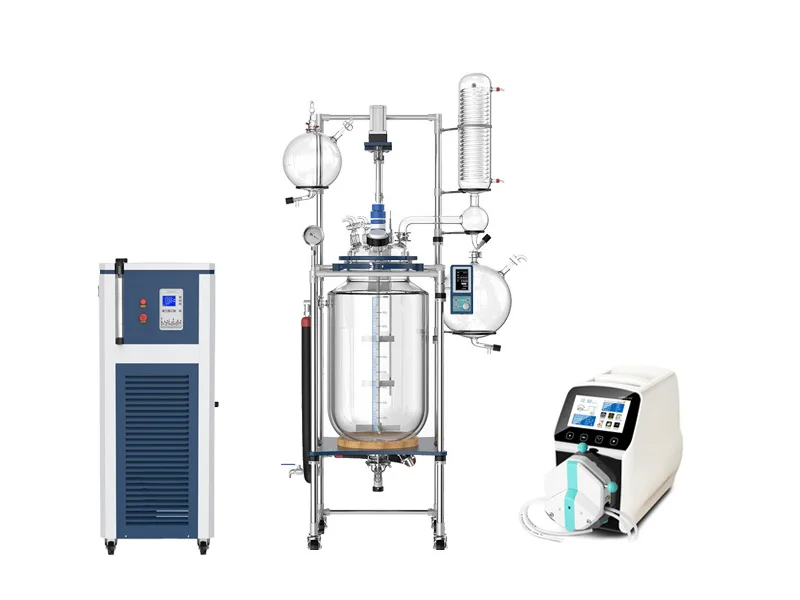
Laboratory Glass Reactor Feed Pump
A feed pump is a device used to transport liquids or other fluids, typically moving materials from one container or location to another.
- Chemical SynthesisAutomatic Feed PumpChemical Feed PumpContinuous Feed PumpFeed Pump for Reactors2024-08-22
What Is a Feed Pump?
A feed pump is a device used to transport liquids or other fluids, typically moving materials from one container or location to another.
It plays a critical role in various industrial processes and laboratory operations, ensuring that materials are delivered accurately and continuously to the designated equipment or reactor as needed.
Main Functions of a Feed Pump
Liquid Transport: Transfers liquid materials from storage containers or piping systems to production equipment, reactors, filtration systems, etc.
Flow Control: By adjusting the pump’s operating parameters, the flow rate of the liquid can be precisely controlled to meet process requirements.
Pressure Boosting: Some feed pumps can increase the pressure of the liquid to ensure it is delivered to the target location under high-pressure conditions.
Peristaltic Pump
Advantages: The medium only contacts the hose, reducing the risk of contamination and cross-contamination; flow is precisely controllable, making it suitable for transporting corrosive liquids, suspensions, or liquids with particles.
Applications: Due to its easy cleaning and simple operation, it is commonly used for transporting solvents, acids, bases, and other sensitive liquids, making it very suitable for laboratory environments.
Diaphragm Pump
Advantages: Can handle corrosive or volatile liquids, with excellent leak-proof performance, suitable for applications requiring high sealing.
Applications: Commonly used for transporting corrosive chemicals, liquids containing particles, or other liquids where leakage must be avoided.
Gear Pump
Advantages: Suitable for transporting high-viscosity liquids, with high precision delivery capability; compact structure and strong durability.
Applications: Used for precise metering of viscous chemicals, resins, or oils in reactions.
Syringe Pump
Advantages: Extremely precise flow, suitable for small volume and high-precision liquid delivery; easy to control the delivery speed.
Applications: Particularly useful for trace addition and titration processes, commonly found in experiments requiring precise control of reaction feed rates, such as in pharmaceuticals and chemical synthesis.
Magnetic Drive Pump
Advantages: No mechanical seals, eliminating the risk of leakage; suitable for corrosive and volatile chemicals.
Applications: Often used for transporting acids, bases, and other liquids requiring sealed protection, ensuring safety and purity in laboratory operations.
When Selecting a Feed Pump, You Need to Consider the Following Factors
Chemical Compatibility: Ensure that the pump materials can withstand the chemicals being transported.
Flow and Pressure Requirements: Choose a pump that meets the reactor’s demands.
Ease of Operation: Laboratory pumps should be easy to use, clean, and maintain.
Precision and Control: The accuracy of the pump is crucial for processes that require precise control of feed rates.
In summary, peristaltic pumps and syringe pumps are most commonly used in laboratory glass reactors due to their high precision, strong controllability, and ability to handle various types of chemical media.
If your experiment requires long-term continuous liquid delivery, we recommend using a peristaltic pump; if the experiment demands extremely high precision with lower flow rates, a syringe pump would be more suitable.
Related ZYLAB Products
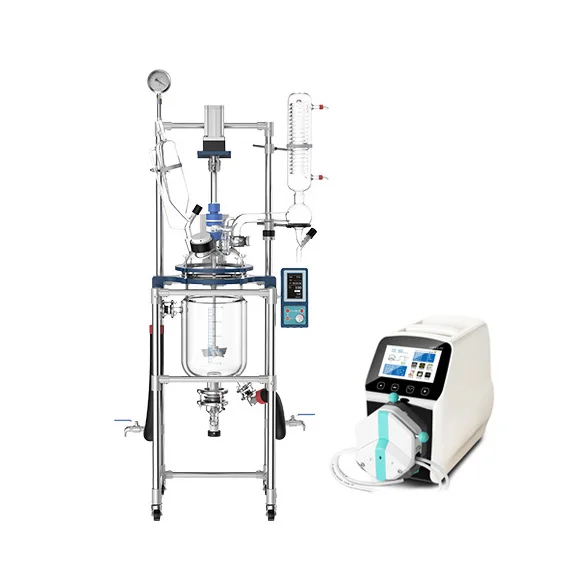
Double Glass Walled Reactor with Dosing System | Temperature Control | For Lab Synthesis & Catalysis
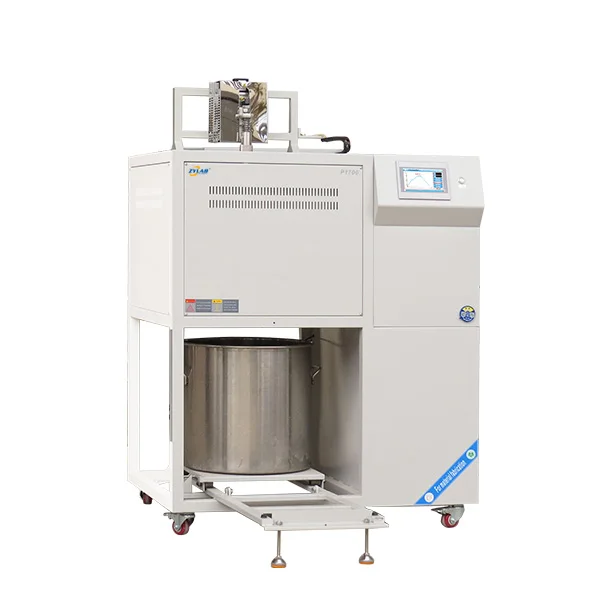
Automatic Glass & Material Melting Furnace up to 1700°C
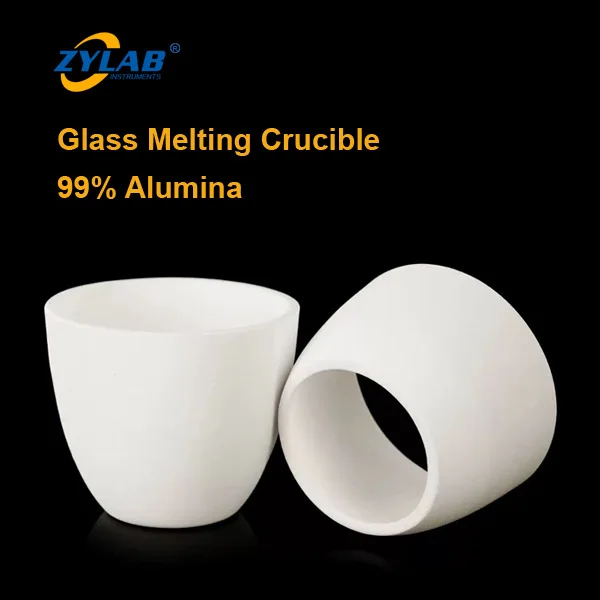
Glass Melting Crucible for Laboratory Experiments – High Thermal Stability and Chemical Resistance
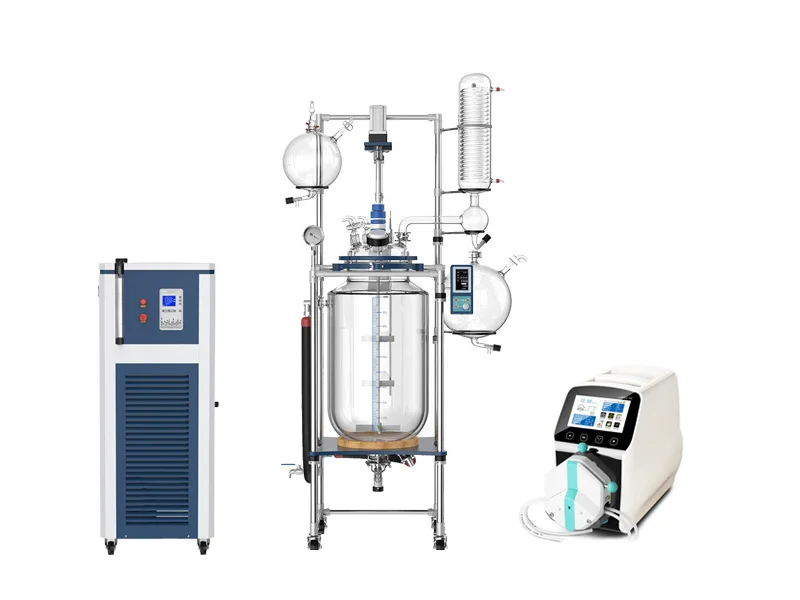
Pilot Scale 100L Baffled Glass Lined Reactor With Feeding and Cleaning Function
Working With ZYLAB On A Project Like This
Can Laboratory Glass Reactor Feed Pump be customised for our process?
Yes. Chamber or tube size, temperature profile, atmosphere, gas path, control system and data recording can all be adapted. Send us your process conditions and sample details and our engineers work out a configuration with you.
What warranty comes with Laboratory Glass Reactor Feed Pump?
Most ZYLAB products carry a 2-year warranty, glass components excluded; the exact term for this model is the one printed in its specification table and repeated on the quotation. Within the warranty period any part that fails through no misuse of your own is replaced free of charge.
How can we pay for Laboratory Glass Reactor Feed Pump?
Bank (wire) transfer, letter of credit for larger orders, major credit and debit cards, and PayPal. Bank details are printed on the invoice; send us the transfer confirmation and we start processing straight away.
How is Laboratory Glass Reactor Feed Pump packed for export?
Packing is chosen for the safety of the machine against freight cost, typically a plywood or wooden crate with internal padding and vacuum-sealed accessories. Export documents such as Form A, Form E and Form F can be issued to help you save duty.
Have A Similar Requirement
Describe the material, the temperature and the throughput you need and an engineer will answer with a workable configuration.