
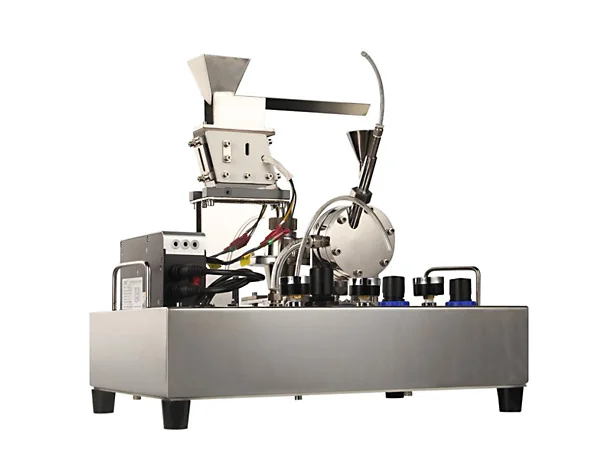
Lab Scale Jet Mill vs. Other Milling Techniques: A Practical Comparison for Researchers
Lab scale jet mills have become essential in modern laboratories where high-purity, ultra-fine powders are required. Compared to traditional milling methods such as ball mills and planetary mills, they offer contamination-free milling, precise particle size control, and efficient small-batch operati
- Powder Processingcontamination-free millingJet Mill vs Ball Milllab scale jet milllaboratory jet milling2025-08-26
Ultra-Fine Powder Production, Contamination-Free Milling, and Particle Size Control Explained
Introduction
In modern laboratory and research environments, producing ultra-fine powders with precise particle size distribution is critical for pharmaceuticals, advanced ceramics, battery materials, and chemical industries. Lab scale jet mills have emerged as a preferred solution for these applications due to their ability to produce submicron powders, maintain high purity, and process small batches efficiently.
Traditional milling techniques such as ball milling, planetary milling, and vibratory milling are widely used, but they present certain limitations when it comes to fine particle control and contamination. In this article, we provide a practical comparison between lab scale jet mills and other milling techniques, highlighting the advantages, limitations, and practical considerations for researchers selecting milling equipment.
For researchers interested in exploring high-purity milling solutions, ZYLAB Lab Scale Jet Mill offers a compact, contamination-free design suitable for a variety of materials.
1.What Is a Lab Scale Jet Mill?
A lab scale jet mill is a small-scale milling device that uses high-speed gas streams—commonly compressed air or inert gas—to accelerate particles inside a milling chamber. The particles collide with one another and with the chamber walls, resulting in size reduction through particle-particle collision and shear forces.
Key Advantages:
Contamination-free milling: No moving mechanical parts contact the material, ensuring high purity.
Ultra-fine particle production: Capable of achieving D50 ≤ 0.5 µm depending on the material.
Compact and desktop-friendly: Ideal for laboratories with limited space.
Inert gas operation available: Suitable for oxidation-sensitive or flammable materials.
For more details about the technical specifications and configurations, you can view the ZYLAB Lab Scale Jet Mill product page.
2.Typical Applications
Lab scale jet mills are widely used in:
Pharmaceuticals: For producing APIs and excipients with controlled particle size.
Advanced Ceramics: Such as alumina, zirconia, and silicon carbide powders.
Battery Materials: Including lithium-ion cathode and anode powders for research and development.
Chemical & Pigments: High-purity chemicals, coatings, and pigments.
Food & Biotechnology: Heat-sensitive or hygroscopic powders that require gentle processing.
The small-batch and high-purity capability of lab scale jet mills makes them ideal for research, pilot studies, and R&D laboratories.
1.Ball Mills
Ball mills use rotating cylinders filled with grinding media—typically steel or ceramic balls—to pulverize materials. They are suitable for coarse to fine powder production.
Advantages:
Simple design and widely used.
Effective for producing larger quantities of powder.
Limitations:
Possible contamination from the grinding media.
Limited ability to achieve submicron particle sizes.
Generally larger footprint and not ideal for small-scale laboratory experiments.
2.Planetary Mills
Planetary mills feature high-speed rotation of jars in opposite directions for intensive mechanical impact. They are often used for milling hard or brittle materials.
Advantages:
High-energy milling suitable for tough materials.
Can achieve smaller particle sizes than conventional ball mills.
Limitations:
Complex operation and maintenance.
Potential contamination from jar and grinding balls.
Less efficient for producing ultra-fine powders in small batches.
3.Vibratory Mills
Vibratory mills use vertical or horizontal vibration to move the grinding media and pulverize materials.
Advantages:
Energy-efficient for certain materials.
Simple operation for moderate particle size reduction.
Limitations:
Limited control over particle size distribution.
Contamination from grinding media possible.
Not suitable for ultra-fine submicron powders.
Head-to-Head Comparison: Jet Mill Vs. Ball Mill Vs. Planetary Mill
| Feature | Lab Scale Jet Mill | Ball Mill | Planetary Mill |
|---|---|---|---|
| Particle Size Range | Submicron (D50 ≤ 0.5 µm) | Micron scale (≥1 µm) | Micron to submicron |
| Contamination Risk | Minimal (no moving parts) | Medium (media wear) | Medium-High (jar & media wear) |
| Batch Size | Small (5–500 g/h) | Large (grams to kilograms) | Small-medium (grams) |
| Energy Efficiency | Moderate | Lower for fine powders | High for short runs |
| Material Suitability | Heat-sensitive, high-purity | Hard, brittle | Hard, brittle |
Key Takeaways:
Jet mills are ideal for ultra-fine powders and high-purity applications.
Ball mills suit bulk powder production with less strict purity requirements.
Planetary mills are best for high-energy milling of very hard or brittle materials but need careful contamination management.
For researchers needing ultra-fine powders, ZYLAB Lab Scale Jet Mill provides a compact and high-precision solution.
1.Optimizing Particle Size
Adjust gas pressure and feed rate to achieve desired D50.
Multiple passes can help achieve ultra-fine consistency.
2.Avoiding Contamination
Use ceramic or stainless steel liners based on material hardness.
Clean the milling chamber and collection system regularly.
3.Material-Specific Tips
Heat-sensitive powders: Use inert gas and avoid overheating.
Hygroscopic powders: Dry the material prior to milling to prevent agglomeration.
4.Maintenance & Safety
Inspect nozzles and cyclone separators routinely.
Ensure proper pressure control and ventilation when handling fine powders.
1.Define Experimental Goals
Are you producing submicron powders or reducing particle size to micron scale?
2.Consider Material Characteristics
Evaluate hardness, brittleness, thermal sensitivity, and chemical reactivity.
3.Evaluate Batch Size and Frequency
Small, frequent experiments: Lab Scale Jet Mill preferred.
Large batch production: Ball Mill more suitable.
Conclusion
Lab scale jet mills have become essential in modern laboratories where high-purity, ultra-fine powders are required. Compared to traditional milling methods such as ball mills and planetary mills, they offer contamination-free milling, precise particle size control, and efficient small-batch operation.
Researchers should carefully assess their experimental goals, material properties, batch sizes, and budget to select the most suitable milling technique. For small-scale experiments demanding submicron particle sizes and high purity, the ZYLAB Lab Scale Jet Mill is an optimal choice.
Share this entry
You might also like
Related ZYLAB Products
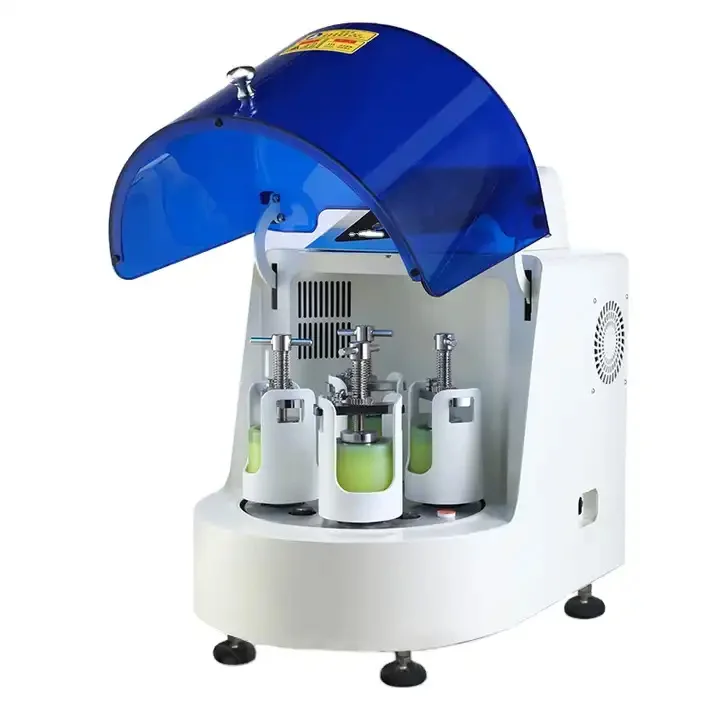
Laboratory Pulverized Ball Mill for Powder Milling and Sample Preparation
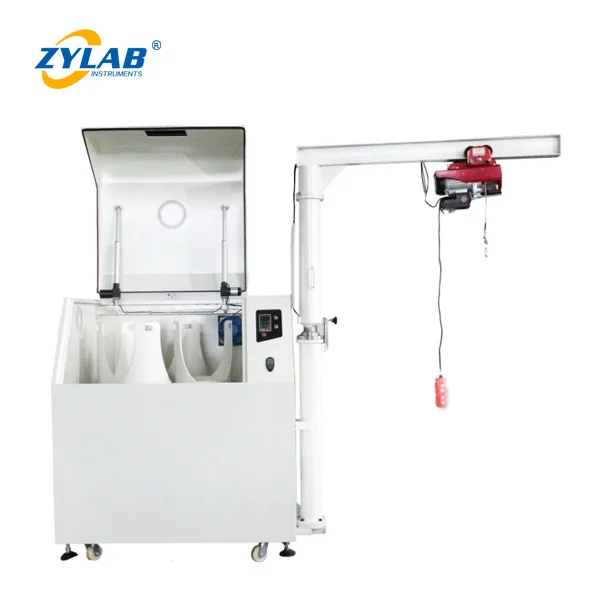
40L Pilot-Scale Planetary Ball Mill with Lifting and Discharging Trolley
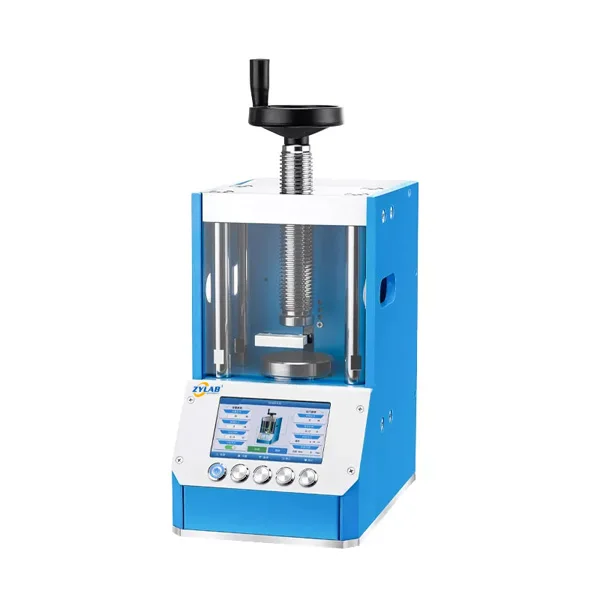
Lab-Scale 12 Ton Bench-Top Automatic Hydraulic Pellet Press for Powder Compaction & Dry Granulation Processing
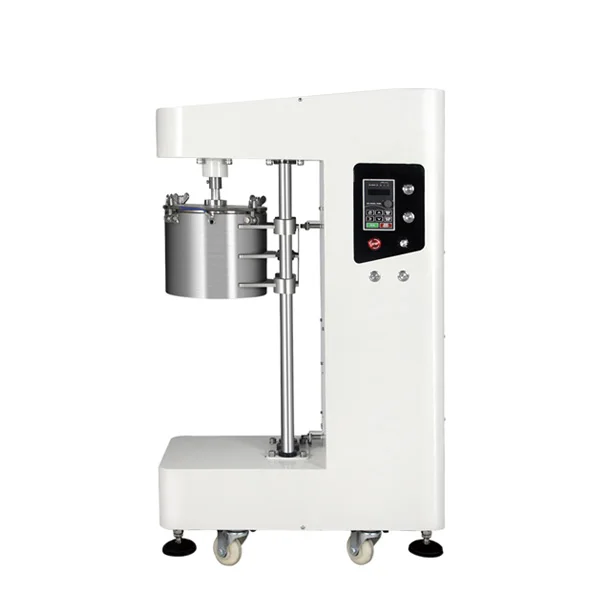
High Energy Dispersed Powder Uniform Mixing and Grinding Stirred Ball Mill
Working With ZYLAB On A Project Like This
Can Lab Scale Jet Mill vs. Other Milling Techniques: A Practical Compariso be customised for our process?
Yes. Chamber or tube size, temperature profile, atmosphere, gas path, control system and data recording can all be adapted. Send us your process conditions and sample details and our engineers work out a configuration with you.
How quickly can Lab Scale Jet Mill vs. Other Milling Techniques: A Practical Compariso be shipped?
Most standard ZYLAB models are held in stock. After testing and packing we normally ship Lab Scale Jet Mill vs. Other Milling Techniques: A Practical Compariso within 3 to 7 days. Customised builds are scheduled after the drawing is confirmed, and we give you the date in writing before the order is placed.
How is Lab Scale Jet Mill vs. Other Milling Techniques: A Practical Compariso packed for export?
Packing is chosen for the safety of the machine against freight cost, typically a plywood or wooden crate with internal padding and vacuum-sealed accessories. Export documents such as Form A, Form E and Form F can be issued to help you save duty.
Can you supply items that are not on this page?
Yes. We have access to the complete lines of most of our suppliers and build custom equipment in our own factory, so tell us what the experiment needs and we will source or make it.
Have A Similar Requirement
Describe the material, the temperature and the throughput you need and an engineer will answer with a workable configuration.