Jet Milling Solutions for Binder-Free Dry Electrode Powder Preparation
Jet milling offers an efficient and contamination-controlled solution for preparing dry electrode powders at laboratory scale. In this article, we explore how a lab scale jet mill supports binder-free dry electrode development, improves powder uniformity, and enhances electrochemical performance.
- GrindingPowder ProcessingBinder-Free Dry Electrode PowderDry Electrode Powder PreparationJet Milling for Battery Materials2026-03-04
Introduction
Binder-free dry electrode technology is rapidly gaining attention in advanced lithium-ion battery research due to its potential for higher energy density, simplified processing, and reduced environmental impact. However, achieving uniform particle size distribution and maintaining material purity are critical challenges during powder preparation.
Jet milling offers an efficient and contamination-controlled solution for preparing dry electrode powders at laboratory scale. In this article, we explore how a lab scale jet mill supports binder-free dry electrode development, improves powder uniformity, and enhances electrochemical performance.
Why Binder-Free Dry Electrode Processing Matters
Traditional wet electrode fabrication relies on binders and solvents, which introduce several limitations:
Residual solvent contamination
Complex drying steps
Higher energy consumption
Environmental concerns
Reduced electrode density
Binder-free dry electrode processing eliminates solvent systems and enables direct powder compaction. However, this approach requires:
Precise particle size control
Narrow particle size distribution (PSD)
Minimal contamination
Stable morphology preservation
This is where jet milling technology becomes essential.
What Is Jet Milling?
Jet milling is a particle size reduction process that uses high-velocity compressed gas instead of mechanical grinding media. Unlike ball milling, there is no direct contact between moving grinding components and the material.
Key characteristics:
No metal contamination
Low heat generation
Excellent micronization capability
Adjustable particle size via air pressure and classifier speed
For battery material research, these advantages are particularly important when working with sensitive cathode and anode powders.
Role of Lab Scale Jet Mill in Dry Electrode Powder Preparation
A lab scale jet mill is specifically designed for R&D environments, pilot studies, and small-batch material optimization.
1. Precise Particle Size Control
Uniform particle size is critical for:
Improved electrode packing density
Better conductive network formation
Enhanced lithium-ion diffusion
Jet milling allows researchers to control D50 and PSD range by adjusting:
Grinding pressure
Feed rate
Internal classifier speed
This flexibility supports rapid formulation optimization during early-stage development.
2. Contamination-Free Processing
Binder-free dry electrodes are highly sensitive to impurities. Traditional mechanical milling methods can introduce:
Fe contamination
Wear particles
Surface oxidation
Jet mills eliminate mechanical contact surfaces, making them ideal for high-purity battery materials such as:
Lithium iron phosphate (LFP)
NMC cathode materials
Graphite anodes
Silicon-carbon composites
3. Low Thermal Impact
Many active battery materials are sensitive to temperature increases during grinding. Excessive heat can:
Alter crystal structure
Increase surface defects
Reduce electrochemical stability
Jet milling relies on gas expansion cooling, significantly reducing thermal stress during micronization.
4. Ideal for Binder-Free Electrode Architecture
Dry electrode fabrication requires:
Controlled particle surface area
Optimized particle-to-particle contact
Consistent mechanical interlocking
Jet milling enables fine-tuning of surface morphology without aggressive mechanical deformation, supporting stable dry electrode compaction.
Typical Laboratory Applications
A lab scale jet mill is commonly used in:
Lithium-ion battery material development
Solid-state battery research
Dry electrode process validation
Conductive additive micronization
Silicon-based anode powder refinement
Its compact design and flexible parameter control make it suitable for university labs, battery R&D centers, and pilot-scale material research facilities.
Conclusion
Binder-free dry electrode technology represents a significant advancement in next-generation battery manufacturing. However, its success depends heavily on precise powder engineering.
A lab scale jet mill provides:
Contamination-free micronization
Adjustable particle size distribution
Low thermal impact
Excellent repeatability for research optimization
For laboratories developing advanced lithium-ion and solid-state battery systems, jet milling is a critical step in achieving high-performance dry electrode powders.
Share this entry
You might also like
Applications of CVD Process in Porous Material Synthesis: Exploring MOFs and Nanocoating Technologies
MOFs Synthesis and High-Temperature Treatment: Which Laboratory Furnace is More Suitable?
How to Choose the Right PECVD Furnace?
Thermal Treatment Processes for Porous Materials: How to Use Muffle Furnace, Tube Furnace, and CVD Furnace for MOFs and Silica Preparation?
Related ZYLAB Products
Laboratory Pulverized Ball Mill for Powder Milling and Sample Preparation
Lab-Scale 12 Ton Bench-Top Automatic Hydraulic Pellet Press for Powder Compaction & Dry Granulation Processing
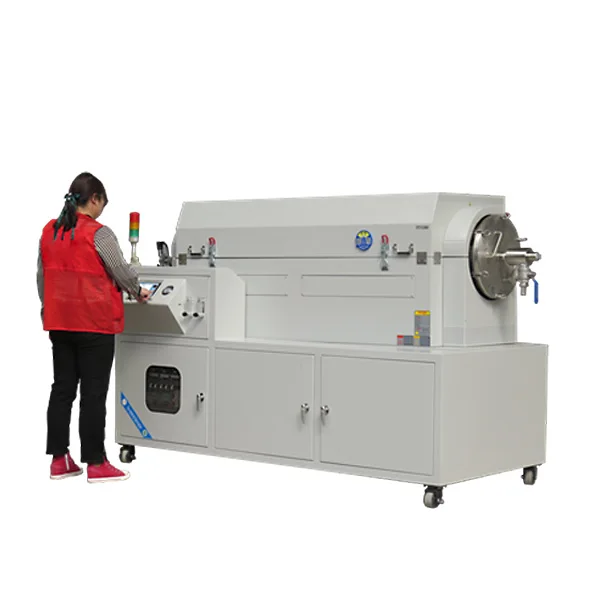
Rotary Powder Calcination Furnace for Battery Material Processing
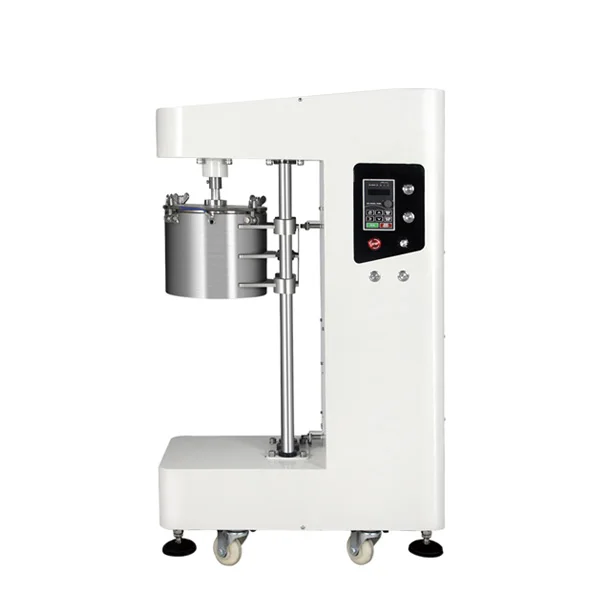
High Energy Dispersed Powder Uniform Mixing and Grinding Stirred Ball Mill
Working With ZYLAB On A Project Like This
What warranty comes with Jet Milling Solutions for Binder-Free Dry Electrode Powder Preparation?
Most ZYLAB products carry a 2-year warranty, glass components excluded; the exact term for this model is the one printed in its specification table and repeated on the quotation. Within the warranty period any part that fails through no misuse of your own is replaced free of charge.
Can we get technical help before ordering Jet Milling Solutions for Binder-Free Dry Electrode Powder Preparation?
Yes, and it is free. Our technical staff help with model selection, troubleshooting, manuals and application questions whether or not you have ordered from us before. Write to [email protected] or message us on WhatsApp.
Which shipping methods do you use?
Sea freight for consignments over about 60 kg (11-30 days to North America, 25-33 days to Europe, 7-20 days to Southeast Asia), air freight to airport in roughly 7-10 days, and DHL, FedEx or UPS door to door in about 5-7 days for small urgent items.
How can we pay for Jet Milling Solutions for Binder-Free Dry Electrode Powder Preparation?
Bank (wire) transfer, letter of credit for larger orders, major credit and debit cards, and PayPal. Bank details are printed on the invoice; send us the transfer confirmation and we start processing straight away.
Have A Similar Requirement
Describe the material, the temperature and the throughput you need and an engineer will answer with a workable configuration.