
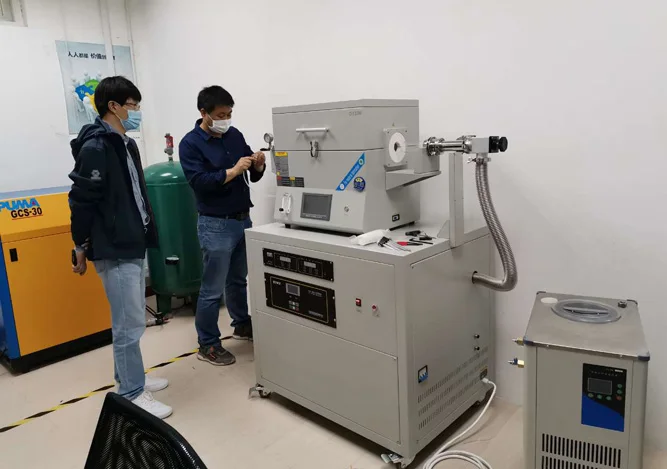
Advanced SiC Coating with High Vacuum CVD Furnaces: A Complete Guide
Achieving high-quality SiC coatings requires advanced deposition technologies, and among them, High Vacuum Chemical Vapor Deposition (CVD) Furnaces stand out as a preferred solution. In this article, we explore how high vacuum CVD furnaces are used for SiC coating preparation and why they are crucia
- LaboratoryThermal ProcessingChemical Vapor Deposition FurnaceCVD Furnace for SiC CoatingHigh purity SiC coatings using vacuum CVD systems2025-03-18
Introduction
Silicon carbide (SiC) coatings are widely used in aerospace, semiconductor, nuclear, and photovoltaic industries due to their exceptional properties, such as high hardness, thermal stability, and corrosion resistance. Achieving high-quality SiC coatings requires advanced deposition technologies, and among them, High Vacuum Chemical Vapor Deposition (CVD) Furnaces stand out as a preferred solution.
In this article, we explore how high vacuum CVD furnaces are used for SiC coating preparation and why they are crucial in modern material science.
1. Superior Coating Purity
A high vacuum environment significantly reduces contamination from oxygen, moisture, and other impurities. This ensures that the deposited SiC layer maintains high purity and optimal chemical properties, which is essential for demanding applications such as semiconductor processing and nuclear reactors.
2. Uniform and Dense Coating
High vacuum CVD furnaces offer precise temperature and gas flow control. This capability enables the formation of uniform, dense, and defect-free SiC coatings, even on complex geometries or large workpieces.
3. Enhanced Adhesion and Mechanical Properties
The controlled deposition environment improves the adhesion between the SiC coating and the substrate. As a result, the coatings exhibit excellent wear resistance, thermal shock resistance, and mechanical strength, extending the service life of components.
Typical Applications of SiC Coatings Prepared by High Vacuum CVD Furnace
| Application | Benefit |
|---|---|
| Aerospace Components | High-temperature stability, oxidation resistance |
| Nuclear Fuel Cladding | Radiation tolerance, chemical inertness |
| Semiconductor Process Equipment | Protection against corrosion and particle contamination |
| Optical Mirrors & IR Windows | Scratch resistance, thermal conductivity |
1. Substrate Preparation
The substrate material is cleaned and pre-treated to ensure proper adhesion of the SiC layer.
2. Vacuum Pumping
The CVD furnace is evacuated to a high vacuum level, typically below 10⁻³ Pa, minimizing contamination.
3. Heating Phase
The substrate is heated to the required process temperature, usually between 1000°C and 1600°C.
4. Gas Introduction and Deposition
Precursor gases such as silane (SiH₄), methane (CH₄), or methyltrichlorosilane (MTS) are introduced. Under high temperature and vacuum, these gases decompose and react to form a uniform SiC coating on the substrate.
5. Cooling and Venting
After the deposition process, the system cools down under controlled conditions before being vented to atmospheric pressure.
1. Precise Temperature Control
Multi-zone heating elements allow for accurate temperature gradients and uniform heat distribution.
2. Efficient Gas Utilization
Integrated mass flow controllers (MFCs) ensure accurate delivery of process gases.
3. Customizable Chamber Designs
Tailored furnace chambers accommodate various substrate sizes, from small components to large workpieces.
4. Automated Process Control
PLC-based systems and touchscreen interfaces offer user-friendly operation and process monitoring.
Conclusion
High vacuum CVD furnaces are essential for producing high-performance silicon carbide (SiC) coatings. Whether for aerospace, semiconductor, or nuclear applications, these systems ensure exceptional purity, precision, and consistent quality to meet the demands of advanced industries.
If your project requires reliable and high-quality SiC coating solutions, a high vacuum CVD furnace is the ideal choice.
Share this entry
You might also like
Case Study: Supplying a 50×50 mm Square Split Pressing Die Set to Tallinn University, Estonia
Case Study: Supplying Custom Ceramic Settle Plate with Grooves to a Leading U.S. Insulation & Sealing Technology Company
Custom Rotary Hydrogen Furnace for Metal Oxide Powder Research at a Leading Asian Technical University
High-Temperature Sintering under Reducing Atmosphere: Principles, Advantages and Best Practices
Related ZYLAB Products
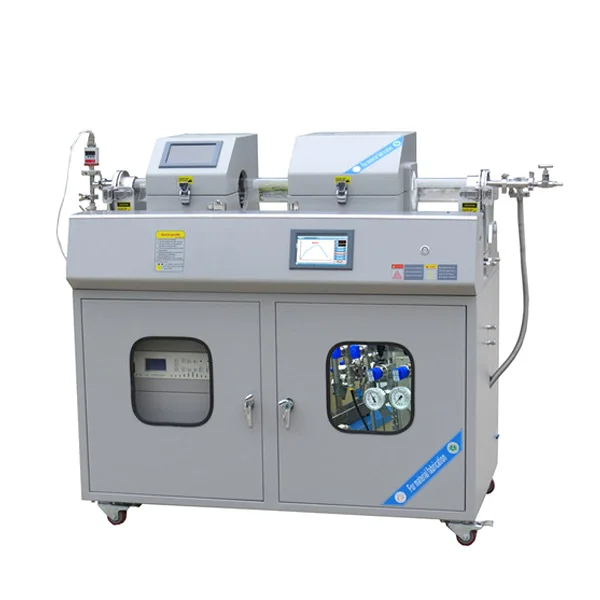
Advanced Plasma-Enhanced Chemical Vapor Deposition PECVD Furnace System
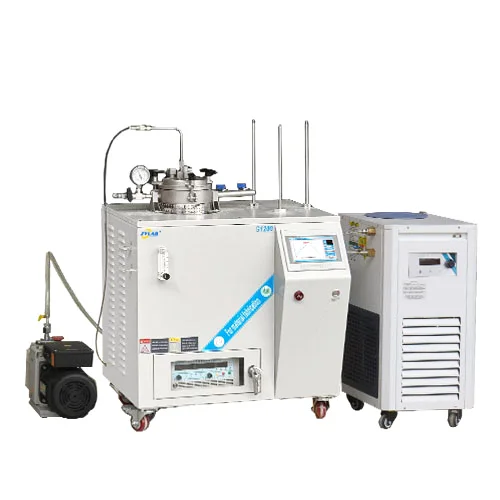
Vacuum Molten Salt Electroplating Furnace for High-Temperature Metal Coating
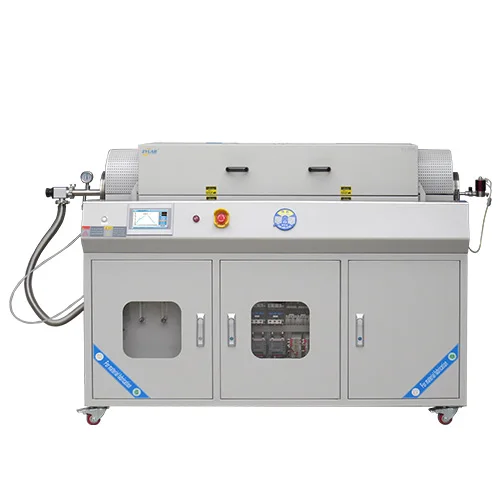
Multi-Zone High Temperature Quartz Tube Annealing Furnace for Wafer Processing
Vacuum Molten Salt Electrolysis Furnace for High-Temperature Electrochemical Research
Working With ZYLAB On A Project Like This
How quickly can Advanced SiC Coating with High Vacuum CVD Furnaces: A Complete Guide be shipped?
Most standard ZYLAB models are held in stock. After testing and packing we normally ship Advanced SiC Coating with High Vacuum CVD Furnaces: A Complete Guide within 3 to 7 days. Customised builds are scheduled after the drawing is confirmed, and we give you the date in writing before the order is placed.
Can Advanced SiC Coating with High Vacuum CVD Furnaces: A Complete Guide be customised for our process?
Yes. Chamber or tube size, temperature profile, atmosphere, gas path, control system and data recording can all be adapted. Send us your process conditions and sample details and our engineers work out a configuration with you.
What warranty comes with Advanced SiC Coating with High Vacuum CVD Furnaces: A Complete Guide?
Most ZYLAB products carry a 2-year warranty, glass components excluded; the exact term for this model is the one printed in its specification table and repeated on the quotation. Within the warranty period any part that fails through no misuse of your own is replaced free of charge.
Can we get technical help before ordering Advanced SiC Coating with High Vacuum CVD Furnaces: A Complete Guide?
Yes, and it is free. Our technical staff help with model selection, troubleshooting, manuals and application questions whether or not you have ordered from us before. Write to [email protected] or message us on WhatsApp.
Have A Similar Requirement
Describe the material, the temperature and the throughput you need and an engineer will answer with a workable configuration.