How Does an Automatic Feeding and Discharging Tube Furnace Synthesize Hydrogen Storage Materials Under High-Pressure Oxygen-Free Conditions?
In this article, we explore the role of an automatic feeding and discharging tube furnace in the efficient synthesis of hydrogen storage materials, and how manufacturers like ZYLAB are contributing to advancing this technology.
- LaboratoryThermal ProcessingAutomatic Feeding and Discharging Oxygen-Free Sintering Furnace Hydrogen Storage Materials SynthesisAutomatic Feeding and Discharging Tube FurnaceAutomatic tube furnace for high vacuum and oxygen-free environment2025-03-12
Table of Contents
As the world shifts towards clean energy, hydrogen storage materials are gaining widespread attention. From renewable energy systems to fuel cell vehicles, hydrogen plays a critical role as an efficient and clean energy carrier.
However, storing hydrogen safely and efficiently is a major challenge. This is where solid-state hydrogen storage materials such as metal hydrides come into play.
But how are these sensitive materials synthesized, especially under high-pressure and oxygen-free conditions?
In this article, we explore the role of an automatic feeding and discharging tube furnace in the efficient synthesis of hydrogen storage materials, and how manufacturers like ZYLAB are contributing to advancing this technology.
Why Hydrogen Storage Materials Matter
Hydrogen is often called the fuel of the future, but its storage and transportation remain complex. Conventional hydrogen storage methods, like compressed gas tanks or cryogenic liquid hydrogen, face issues such as:
- High energy consumption
- Safety concerns
- Low volumetric efficiency
Solid-state hydrogen storage materials—like magnesium hydride (MgH₂), sodium alanate (NaAlH₄), and titanium-iron hydride (TiFeH₂)—offer higher hydrogen densities, safer storage, and reversibility, making them ideal candidates for next-generation energy solutions.
However, synthesizing these materials requires strict environmental controls, typically involving high-pressure hydrogen gas and oxygen-free atmospheres.
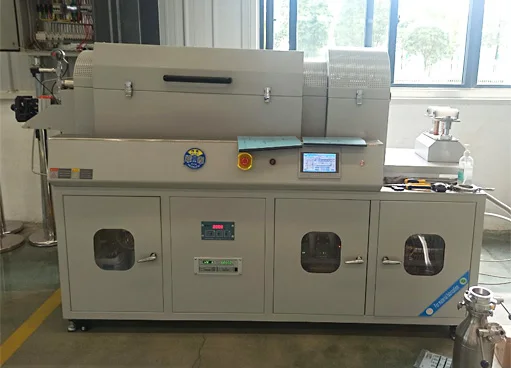
What Is an Automatic Feeding and Discharging Tube Furnace?
A tube furnace is a high-temperature heating device used for material synthesis and heat treatment. When equipped with automatic feeding and discharging systems, it allows for continuous material processing without interrupting the controlled atmosphere inside the furnace.
Key Functions in Hydrogen Storage Material Synthesis
- Maintains a high-purity inert or reducing atmosphere (typically hydrogen or argon).
- Supports high-pressure conditions to improve reaction kinetics.
- Provides precise temperature control, critical for hydride formation.
- Allows for automated feeding and discharging, reducing contamination risk.
Why High-Pressure Oxygen-Free Conditions Are Essential
Hydrogen storage materials are extremely reactive to oxygen and moisture. Exposure can lead to:
- Oxidation, reducing storage capacity.
- Decomposition, causing material degradation.
- Safety hazards, due to hydrogen release or explosions.
By using a high-pressure oxygen-free environment, you can:
- Prevent oxidative damage.
- Achieve cleaner material phases.
- Enhance hydrogen absorption/desorption performance.
1. Loading the Precursors
The raw materials (like magnesium, titanium, or sodium-based compounds) are loaded into the automatic feeding system. With ZYLAB’s solution, the feeding process is sealed, ensuring no air contact.
2. Establishing an Oxygen-Free Atmosphere
The tube furnace chamber is evacuated and purged with high-purity inert gas or hydrogen, achieving ultra-low oxygen levels, often below 1 ppm.
3. Heating Under Pressure
The furnace heats the materials to temperatures between 300°C and 800°C, depending on the hydride being synthesized. Simultaneously, high-pressure hydrogen gas can be introduced to promote hydride formation.
4. Continuous or Batch Processing
Thanks to the automatic discharging system, materials can be removed or cycled continuously without breaking the atmosphere, ensuring consistent quality and high throughput.
Benefits of Using an Automatic Tube Furnace for Hydrogen Storage Material Synthesis
| Benefit | Explanation |
|---|---|
| Oxygen-Free Processing | Avoids contamination, ensuring high-purity products. |
| High-Pressure Capability | Promotes efficient hydride formation. |
| Consistent Temperature Control | Delivers uniform heating, essential for material quality. |
| Automated Operation | Reduces manual handling risks and increases safety. |
| Scalable for Lab and Industry | Suitable for research and industrial-scale production. |
What Makes ZYLAB’s Automatic Tube Furnaces Stand Out?
While several brands offer tube furnaces, ZYLAB has established itself as a trusted partner in high-precision hydrogen storage material synthesis. ZYLAB’s automatic feeding and discharging tube furnaces are designed for:
- High-pressure applications, ideal for hydrogen processing.
- Sealed automatic feeding and discharging, reducing oxygen ingress risks.
- Customizable temperature control zones, offering precise heat management.
Whether you’re working in R&D labs or industrial production, ZYLAB furnaces provide the flexibility and reliability needed for complex hydrogen storage material development.
Conclusion
The move towards hydrogen energy is unstoppable, but safe and efficient storage remains a key challenge. Using an automatic feeding and discharging tube furnace under high-pressure oxygen-free conditions allows for the high-purity synthesis of hydrogen storage materials.
Share this entry
You might also like
The Role of Vacuum Box Furnaces in High-Temperature Preparation of Oxidation-Sensitive Materials like Titanium Alloys and High-Purity Alumina Ceramics
Powder Metallurgy Part 3 — From Powder to Shape: Forming Techniques Explained
How to Measure Sample Surface Temperature in a Tube Furnace Using a Handheld Thermometer
Powder Metallurgy Part 2 – Chemical Methods for Powder Production
Related ZYLAB Products
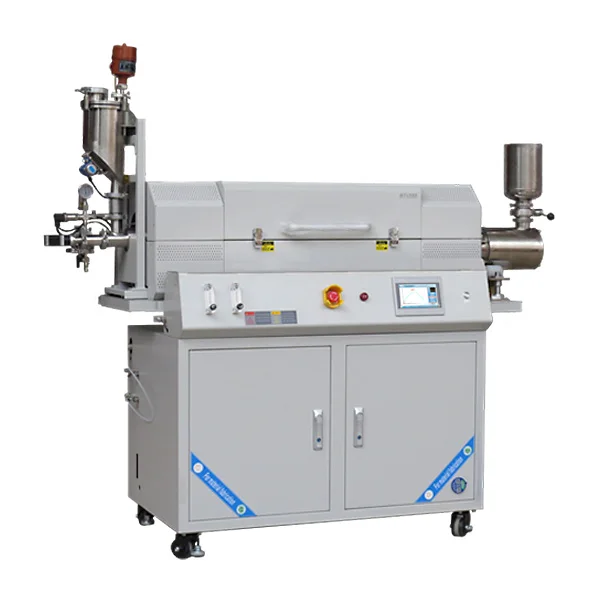
Automatic Feeding and Discharging Oxygen-Free Sintering Furnace
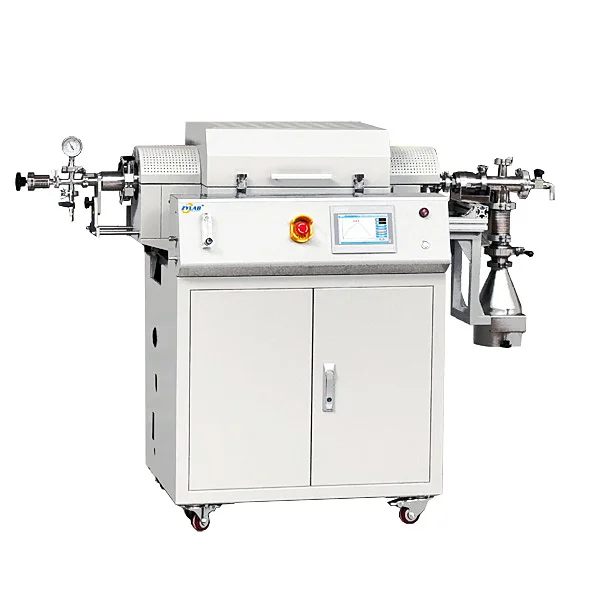
Laboratory Rotary Tilting Tube Furnace with Automatic Material Collection System
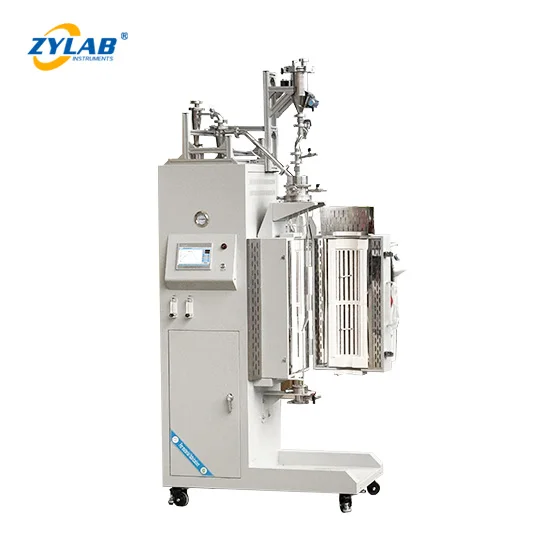
1200°C Dual-Zone Vertical Fluidized Bed CVD (FBCVD) Furnace with Automatic Feeding and Discharging System
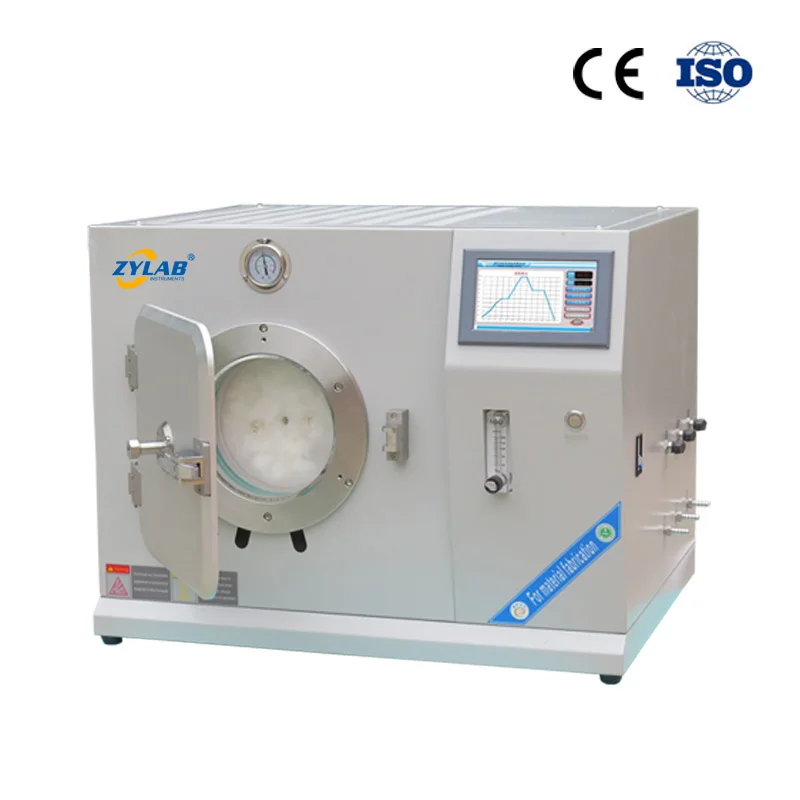
Laboratory Vacuum Atmosphere Tube Furnace for Wafer Processing
Working With ZYLAB On A Project Like This
Can How Does an Automatic Feeding and Discharging Tube Furnace Synthesize be customised for our process?
Yes. Chamber or tube size, temperature profile, atmosphere, gas path, control system and data recording can all be adapted. Send us your process conditions and sample details and our engineers work out a configuration with you.
How quickly can How Does an Automatic Feeding and Discharging Tube Furnace Synthesize be shipped?
Most standard ZYLAB models are held in stock. After testing and packing we normally ship How Does an Automatic Feeding and Discharging Tube Furnace Synthesize within 3 to 7 days. Customised builds are scheduled after the drawing is confirmed, and we give you the date in writing before the order is placed.
How is How Does an Automatic Feeding and Discharging Tube Furnace Synthesize packed for export?
Packing is chosen for the safety of the machine against freight cost, typically a plywood or wooden crate with internal padding and vacuum-sealed accessories. Export documents such as Form A, Form E and Form F can be issued to help you save duty.
Can you supply items that are not on this page?
Yes. We have access to the complete lines of most of our suppliers and build custom equipment in our own factory, so tell us what the experiment needs and we will source or make it.
Have A Similar Requirement
Describe the material, the temperature and the throughput you need and an engineer will answer with a workable configuration.