
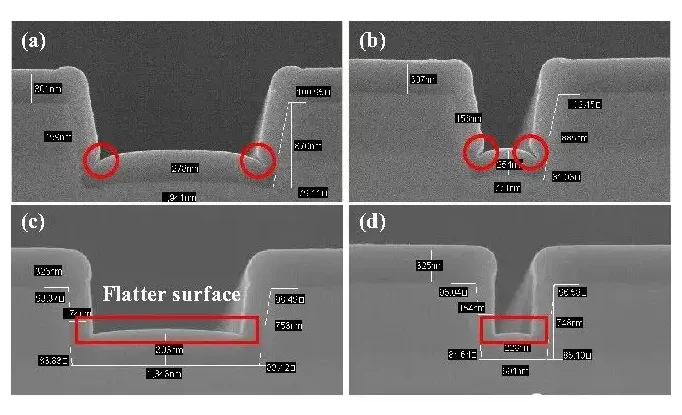
Why Does CVD Have Better Step Coverage Than PVD?
CVD (Chemical Vapor Deposition) offers superior step coverage compared to PVD (Physical Vapor Deposition) due to differences in their deposition mechanisms and physical properties.
- LaboratoryThermal ProcessingBest deposition method for step coverageCVD step coverage advantageCVD vs PVD deposition uniformity2025-02-04
Table of Contents
CVD (Chemical Vapor Deposition) offers superior step coverage compared to PVD (Physical Vapor Deposition) due to differences in their deposition mechanisms and physical properties.
CVD Deposition Mechanism
CVD is a chemical reaction-based deposition process:
- Reactive gases diffuse to the substrate surface, where a chemical reaction forms a solid film.
- Since the precursor gases diffuse as molecules or atoms, they exhibit fluidity and permeability, effectively reaching all areas of the substrate, including steps and trenches.
- The gas diffusion path is isotropic, enabling uniform coverage of complex 3D structures.
PVD Deposition Mechanism
PVD is a physical process-based deposition method:
- Material is ejected as high-energy particles via evaporation (evaporation deposition) or sputtering (sputter deposition), traveling in straight-line trajectories to the substrate.
- Since deposition occurs anisotropically, film formation is direction-dependent.
- In shadowed areas such as step corners and trench bottoms, straight-line particle motion struggles to reach, causing poor step coverage (known as the shadowing effect).
Step Coverage Comparison
| Feature | Chemical Vapor Deposition (CVD) | Physical Vapor Deposition (PVD) |
|---|---|---|
| Particle Motion | Molecular gas diffusion, isotropic | High-energy straight-line motion, anisotropic |
| Step Coverage | Uniform deposition on steps and inside trenches | Deposition challenges in shadowed areas |
| Surface Geometry Adaptation | Excellent | Moderate, requires process adjustments (e.g., substrate rotation) |
Why Is CVD Better for Complex Structures?
- High gas molecule mobility: CVD precursor gases can navigate around steps and penetrate narrow areas, ensuring deposition inside trenches.
- Chemically driven film formation: Unlike PVD, which relies on directional particle motion, CVD film growth is governed by surface chemical reactions, eliminating shadowing effects.
- Self-regulating deposition: Deposition rate depends on local surface temperature and reactivity, naturally filling step features and trench bottoms.
How to Improve PVD Step Coverage?
Although PVD inherently faces step coverage limitations, optimization techniques can enhance its performance:
- Substrate Rotation or Tilting: Continuously adjusting the substrate angle during deposition improves uniformity.
- Bias-Enhanced Deposition: Applying a negative bias to the substrate attracts particles to hard-to-reach areas.
- Multi-Angle Sputtering: Adjusting the target angle ensures deposition from multiple directions.
CVD achieves superior step coverage due to its gas diffusion-based and chemical reaction-driven deposition, while PVD’s step coverage is limited by its physical motion characteristics. However, PVD performance can be improved with optimized process design.
For more information or technical support, feel free to contact ZYLAB.
ZYLAB offers free quotes for all CVD furnaces and customized solutions!
Share this entry
You might also like
Ultimate Guide to Glass Reactors: Types, Features, and Applications
Rotary Evaporator
Pouch Cell Preparation
Vacuum Filter
Related ZYLAB Products
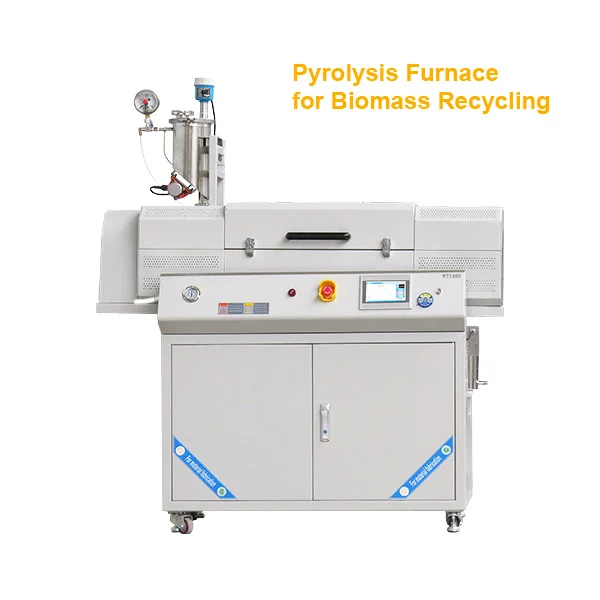
Advanced Continuous Pyrolyzers for Biomass and Organic Solid Waste Thermal Processing & Sintering
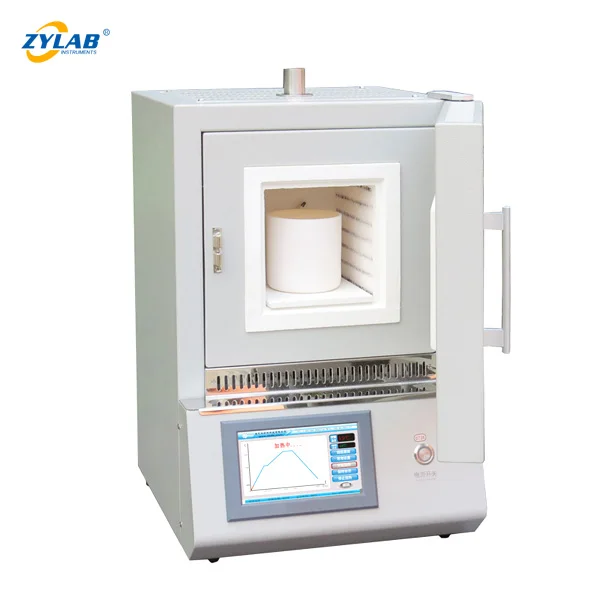
4.5L Muffle Furnace – Precision 1200°C Laboratory Furnace for Thermal Processing
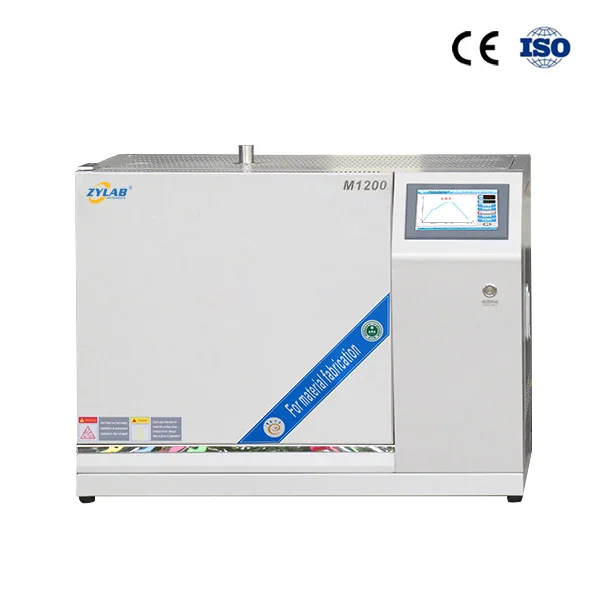
Economy Muffle Furnace | 1200°C Lab Furnace for Routine Thermal Processing
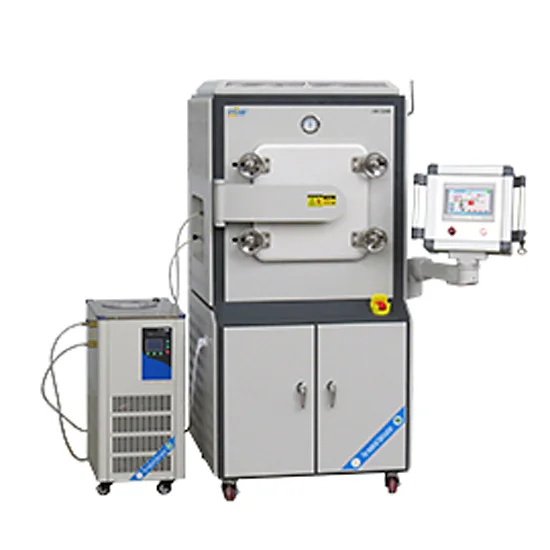
Debinding Furnace for Thermal Post-Processing in Additive Manufacturing
Working With ZYLAB On A Project Like This
Can Why Does CVD Have Better Step Coverage Than PVD? be customised for our process?
Yes. Chamber or tube size, temperature profile, atmosphere, gas path, control system and data recording can all be adapted. Send us your process conditions and sample details and our engineers work out a configuration with you.
How quickly can Why Does CVD Have Better Step Coverage Than PVD? be shipped?
Most standard ZYLAB models are held in stock. After testing and packing we normally ship Why Does CVD Have Better Step Coverage Than PVD? within 3 to 7 days. Customised builds are scheduled after the drawing is confirmed, and we give you the date in writing before the order is placed.
How is Why Does CVD Have Better Step Coverage Than PVD? packed for export?
Packing is chosen for the safety of the machine against freight cost, typically a plywood or wooden crate with internal padding and vacuum-sealed accessories. Export documents such as Form A, Form E and Form F can be issued to help you save duty.
Can you supply items that are not on this page?
Yes. We have access to the complete lines of most of our suppliers and build custom equipment in our own factory, so tell us what the experiment needs and we will source or make it.
Have A Similar Requirement
Describe the material, the temperature and the throughput you need and an engineer will answer with a workable configuration.