CVD Furnace, PECVD Furnace, and FBCVD Furnace: Which One is Right for Your Application?
Chemical Vapor Deposition (CVD) technology is widely used in semiconductor manufacturing, optics, thin-film coatings, and material science. Within this technology, different types of CVD furnaces exist, including CVD, PECVD (Plasma-Enhanced CVD), and FBCVD (Fluidized Bed CVD).
- LaboratoryThermal ProcessingChemical Vapor Deposition FurnaceCustom CVD Furnace SupplierCVD Coating System2025-02-26
Introduction
Chemical Vapor Deposition (CVD) technology is widely used in semiconductor manufacturing, optics, thin-film coatings, and material science.
Within this technology, different types of CVD furnaces exist, including CVD, PECVD (Plasma-Enhanced CVD), and FBCVD (Fluidized Bed CVD). Choosing the right furnace for your application depends on factors such as deposition temperature, material compatibility, and film uniformity.
In this article, we compare these three CVD methods to help you determine the best choice for your needs.
What Is a CVD Furnace?
A CVD furnace is a high-temperature system that deposits thin films onto a substrate through chemical reactions of gaseous precursors. It is commonly used for:
- Semiconductor device fabrication (e.g., silicon wafers)
- Optical coatings
- Protective layers for aerospace and industrial applications
- Carbon nanotube and graphene growth
Advantages of CVD Furnace:
- High-purity and high-density film deposition
- Excellent adhesion and film uniformity
- Suitable for a wide range of materials, including dielectrics, metals, and semiconductors
Limitations:
- Requires high processing temperatures (typically above 800°C)
- Some materials may not tolerate extreme heat
- Slower deposition rates compared to plasma-enhanced methods
What Is a PECVD Furnace?
A Plasma-Enhanced Chemical Vapor Deposition (PECVD) furnace introduces plasma energy to accelerate chemical reactions at lower temperatures. It is widely used in:
- Semiconductor and microelectronics industries
- Photovoltaic (solar panel) production
- Optical and protective coatings
- MEMS (Micro-Electro-Mechanical Systems) manufacturing
Advantages of PECVD Furnace:
- Low-temperature processing (typically 200-400°C), ideal for temperature-sensitive substrates
- Faster deposition rates due to plasma activation
- Better step coverage and uniformity on complex structures
- Enhanced film adhesion and quality
Limitations:
- Plasma interactions can introduce impurities if not controlled properly
- Requires more complex equipment and maintenance compared to standard CVD
What Is an FBCVD Furnace?
A Fluidized Bed Chemical Vapor Deposition (FBCVD) furnace uses fluidized particles to enhance mass transfer and improve coating uniformity. It is commonly applied in:
- Coating powders, fibers, and small particles
- Catalysis and fuel cell applications
- Advanced ceramic coatings
- Large-scale industrial applications
Advantages of FBCVD Furnace:
- Excellent uniformity for particle and powder coatings
- High surface area utilization, leading to efficient material usage
- Suitable for batch processing
Limitations:
- Not ideal for wafer-based or planar substrates
- Requires precise control of fluidization parameters
- More complex reactor design compared to traditional CVD
Which Furnace Should You Choose?
| Feature | CVD Furnace | PECVD Furnace | FBCVD Furnace |
|---|---|---|---|
| Deposition Temperature | High (800-1100°C) | Low (200-400°C) | Moderate (varies by material) |
| Film Quality | High-purity, dense films | High-quality, but potential plasma impurities | High uniformity on powders/particles |
| Substrate Compatibility | Wafers, thin films, optics | Sensitive substrates, MEMS, solar cells | Powders, fibers, high-surface-area materials |
| Deposition Rate | Moderate | Faster due to plasma activation | High for bulk coatings |
| Complexity & Cost | Moderate | Higher due to plasma system | Higher due to fluidization system |
| Best Applications | Semiconductors, optics, protective films | Solar panels, MEMS, flexible electronics | Powder coatings, catalysis, fuel cells |
ZYLAB CVD Furnace Solutions
At ZYLAB, we provide advanced CVD, PECVD, and FBCVD furnaces tailored to various applications. Our furnaces are designed with:
- High-precision temperature control for stable and reliable deposition
- Customizable gas delivery and plasma systems for specific material requirements
- Scalability for research and industrial production
- User-friendly automation and monitoring systems to enhance efficiency
Whether you need a standard CVD furnace for high-temperature deposition, a PECVD furnace for plasma-enhanced thin films, or an FBCVD furnace for powder coatings, ZYLAB offers custom solutions to meet your exact requirements.
Conclusion
Selecting the right CVD furnace depends on your substrate type, temperature constraints, deposition quality, and production scale.
CVD furnaces are ideal for high-purity films, PECVD furnaces offer low-temperature processing with enhanced control, and FBCVD furnaces excel in coating powders and high-surface-area materials.
For expert guidance on choosing the best system for your application, contact ZYLAB today!
Share this entry
You might also like
PECVD Furnace: Working Principle and Advantages
CVD Furnace, PECVD Furnace, and FBCVD Furnace: Which One is Right for Your Application?
How to Produce High-Quality Biochar Using a Muffle Furnace: A Detailed Guide
Muffle Furnaces and Tube Furnaces: Which One Suits Your Needs?
Related ZYLAB Products
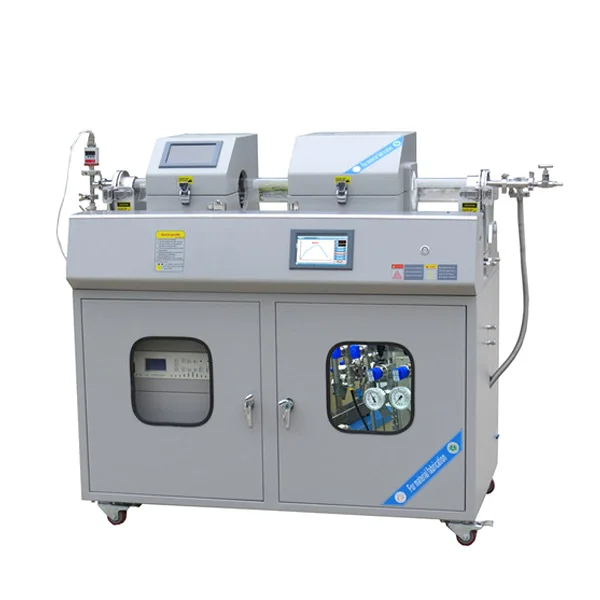
Advanced Plasma-Enhanced Chemical Vapor Deposition PECVD Furnace System
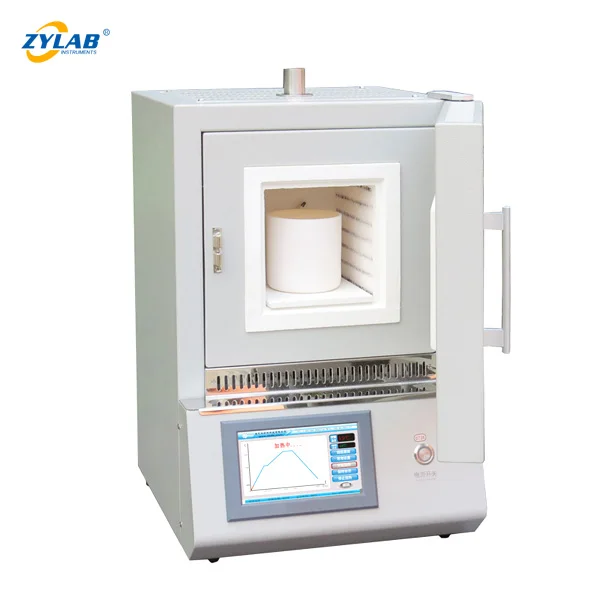
4.5L Muffle Furnace – Precision 1200°C Laboratory Furnace for Thermal Processing
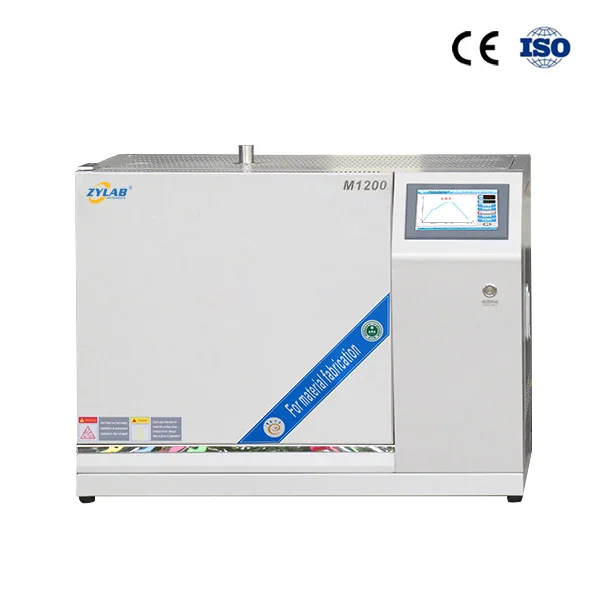
Economy Muffle Furnace | 1200°C Lab Furnace for Routine Thermal Processing
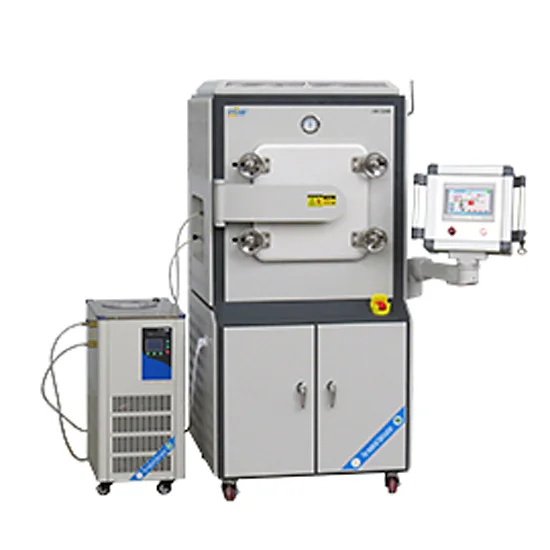
Debinding Furnace for Thermal Post-Processing in Additive Manufacturing
Working With ZYLAB On A Project Like This
Can CVD Furnace, PECVD Furnace, and FBCVD Furnace: Which One is Right for be customised for our process?
Yes. Chamber or tube size, temperature profile, atmosphere, gas path, control system and data recording can all be adapted. Send us your process conditions and sample details and our engineers work out a configuration with you.
How quickly can CVD Furnace, PECVD Furnace, and FBCVD Furnace: Which One is Right for be shipped?
Most standard ZYLAB models are held in stock. After testing and packing we normally ship CVD Furnace, PECVD Furnace, and FBCVD Furnace: Which One is Right for within 3 to 7 days. Customised builds are scheduled after the drawing is confirmed, and we give you the date in writing before the order is placed.
How is CVD Furnace, PECVD Furnace, and FBCVD Furnace: Which One is Right for packed for export?
Packing is chosen for the safety of the machine against freight cost, typically a plywood or wooden crate with internal padding and vacuum-sealed accessories. Export documents such as Form A, Form E and Form F can be issued to help you save duty.
Can you supply items that are not on this page?
Yes. We have access to the complete lines of most of our suppliers and build custom equipment in our own factory, so tell us what the experiment needs and we will source or make it.
Have A Similar Requirement
Describe the material, the temperature and the throughput you need and an engineer will answer with a workable configuration.