
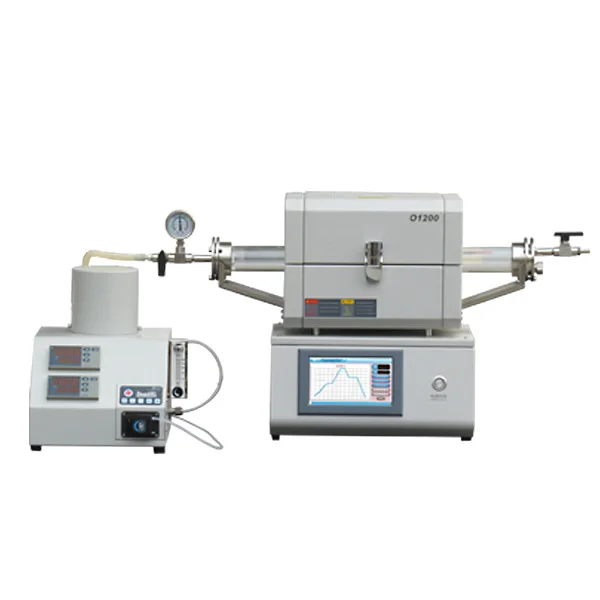
Applications of Water Vapor Generator Paired with Tube Furnace
A steam generator heats liquid water and adjusts the input of both liquid and gas to produce a stable and uniform steam output. This steam is then introduced into the tube furnace, where by controlling the steam flow rate and temperature, different environments and conditions can be simulated within
- LaboratoryThermal ProcessingAdjustable Temperature Steam GeneratorCatalytic Hydrothermal Aging Steam GeneratorControlled Steam Environment Equipment2024-09-06
Tube Furnace
A device used for high-temperature thermal processing, typically consisting of a ceramic or quartz tube, capable of precise temperature gradient control. It is commonly used in materials science, chemical research, and other fields.
Water Vapor Generator
Produces controllable pure steam, typically including a heater and an evaporator unit, capable of adjusting the output temperature and flow rate of the steam.
Tube Furnace
Equipped with high-temperature-resistant ceramic or quartz tubing and a precise temperature control system to ensure stability during the experiment.
Gas Delivery System
Includes high-temperature, corrosion-resistant piping, flow controllers, and valves to uniformly introduce steam into the tube furnace.
Condensation System (Optional)
In some experiments, a condensation system is used to recover unreacted steam or handle by-products.
Operation Procedure
1.Set Temperature: Adjust the temperature of the tube furnace according to the experimental requirements, typically within the range of 800°C to 1200°C for high-temperature experiments.
2.Start the Steam Generator: Set the temperature and flow rate of the steam. Ensure that the steam generation matches the experimental requirements.
3.Introduce Steam: Use the gas delivery system to introduce the generated steam into the heating zone of the tube furnace. Ensure even distribution of the steam.
4.Conduct Experiment: Perform the necessary thermal treatments, chemical reactions, or surface treatments, carefully controlling reaction time and temperature.
5.Cool and Recover: After the experiment, gradually lower the temperature of the tube furnace and handle any unused steam or condensate.
Hydrothermal Synthesis
Application Scenario: Hydrothermal synthesis is a common material preparation method that uses steam under high temperature and pressure to promote crystallization and growth. A tube furnace equipped with a steam generator can simulate hydrothermal conditions to synthesize materials with specific structures or properties.
Typical Materials: Oxides, sulfides, phosphates, and crystal materials like nanoparticles, nanowires, and thin films.
Experimental Advantage: Allows precise control of temperature, pressure, and steam quantity to optimize material structure and morphology.
Chemical Vapor Deposition (CVD)
Application Scenario: Chemical vapor deposition (CVD) is a material deposition technique that creates thin films or coatings on a substrate through gas-phase reactions. Steam, as part of the reaction gases, participates in the chemical reactions at high temperatures to deposit specific material layers.
Typical Materials: Silica, alumina, silicon nitride, and other oxide and nitride films.
Experimental Advantage: Enables precise control of steam flow and reaction time to fine-tune film thickness and uniformity.
Oxidation and Reduction Treatments
Application Scenario: During material heat treatments, steam can act as an oxidizing or reducing agent, altering the chemical composition or surface state of the material by adjusting atmospheric conditions. For example, steam can form stable oxide layers through oxidation at high temperatures.
Typical Materials: Metal oxides, semiconductor materials.
Experimental Advantage: Allows precise control of oxidation or reduction levels, enhancing material properties such as corrosion resistance and electrical conductivity.
Surface Treatment and Modification
Application Scenario: Steam can be used for surface treatment and modification of materials, such as promoting surface oxidation to form protective layers or improve adhesion. This method is often used for modifying the surfaces of semiconductors, ceramics, and metals.
Typical Materials: Silicon wafers, metal alloys, ceramic substrates.
Experimental Advantage: Provides gentle and controlled treatment, suitable for fine surface processing without introducing excessive impurities or damaging the substrate.
Humidity Aging Testing
Application Scenario: In environmental science and materials research, simulating high-temperature and high-humidity environments is used for aging tests to assess long-term durability and performance stability. A tube furnace equipped with a steam generator can precisely control humidity and temperature for accelerated aging tests.
Typical Materials: Polymers, composites, coatings.
Experimental Advantage: Rapidly simulates material aging under extended use conditions, predicting material lifespan.
Gas Treatment and Purification
Application Scenario: In gas treatment and purification processes, steam can react with pollutants to facilitate their decomposition or transformation. For instance, steam can react with certain gases at high temperatures to produce harmless substances, thus purifying the gas.
Typical Materials: Catalysts, adsorbents.
Experimental Advantage: Combines high-temperature conditions with steam to efficiently catalyze reactions and improve gas purification.
Pyrolysis and Decomposition Reactions
Application Scenario: Steam-assisted pyrolysis or decomposition of organic or inorganic materials at high temperatures is used to study decomposition products and mechanisms. For example, steam can be used to pyrolyze biomass to generate gases or carbon materials.
Typical Materials: Biomass, organic polymers, silicon-based materials.
Experimental Advantage: Adjusts reaction atmosphere during pyrolysis to optimize the yield and quality of products.
High-Purity Material Preparation
Application Scenario: High-temperature treatments assisted by steam can remove impurities from materials to produce high-purity materials. For example, steam can help remove impurities during the preparation of high-purity silicon wafers.
Typical Materials: Semiconductor materials, ultra-pure metals.
Experimental Advantage: Provides an efficient and controlled purification process to enhance material purity.
Related ZYLAB Products
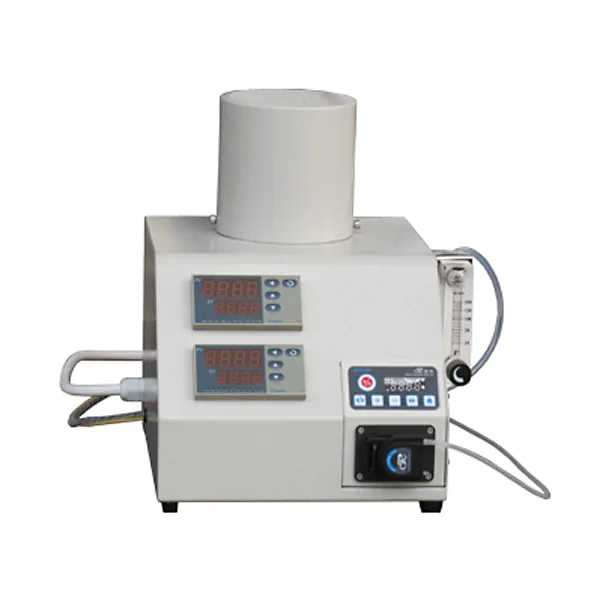
Laboratory Water Vapor Generator for Tube Furnace
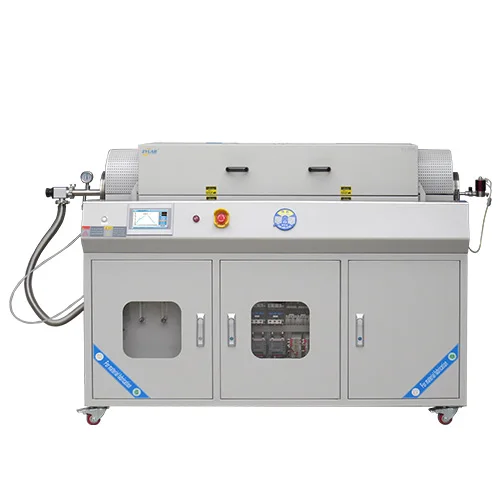
Multi-Zone High Temperature Quartz Tube Annealing Furnace for Wafer Processing
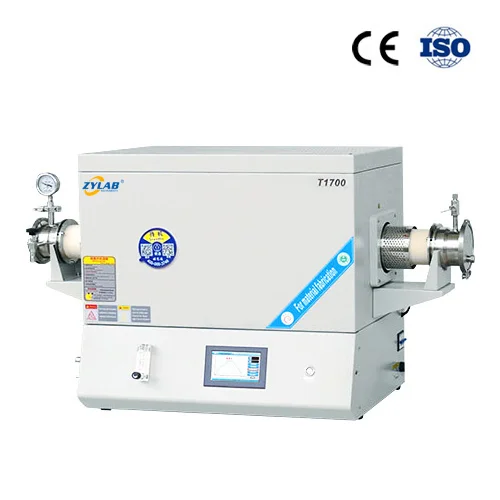
1700°C Two Zone Tube Furnace for Precision Thermal Processing
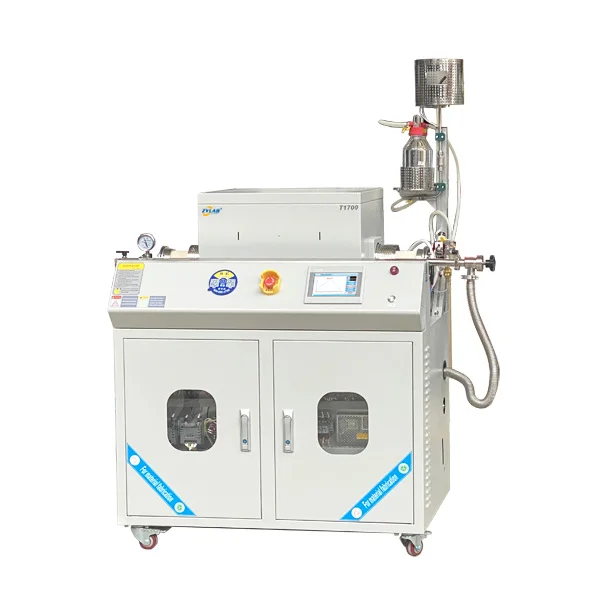
1700℃ High Temperature Hydrogen Tube Furnace
Working With ZYLAB On A Project Like This
Can Applications of Water Vapor Generator Paired with Tube Furnace be customised for our process?
Yes. Chamber or tube size, temperature profile, atmosphere, gas path, control system and data recording can all be adapted. Send us your process conditions and sample details and our engineers work out a configuration with you.
What warranty comes with Applications of Water Vapor Generator Paired with Tube Furnace?
Most ZYLAB products carry a 2-year warranty, glass components excluded; the exact term for this model is the one printed in its specification table and repeated on the quotation. Within the warranty period any part that fails through no misuse of your own is replaced free of charge.
How can we pay for Applications of Water Vapor Generator Paired with Tube Furnace?
Bank (wire) transfer, letter of credit for larger orders, major credit and debit cards, and PayPal. Bank details are printed on the invoice; send us the transfer confirmation and we start processing straight away.
How is Applications of Water Vapor Generator Paired with Tube Furnace packed for export?
Packing is chosen for the safety of the machine against freight cost, typically a plywood or wooden crate with internal padding and vacuum-sealed accessories. Export documents such as Form A, Form E and Form F can be issued to help you save duty.
Have A Similar Requirement
Describe the material, the temperature and the throughput you need and an engineer will answer with a workable configuration.