
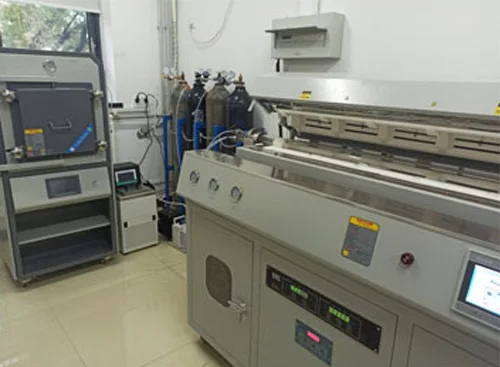
Applications of Vacuum Furnaces in Materials Preparation: An In-Depth Guide
Vacuum furnaces have become indispensable tools in modern material preparation, offering high-purity environments and accurate temperature control. From advanced ceramics to semiconductor wafers, vacuum furnaces play a vital role in producing high-quality materials that meet the demanding standards
- LaboratoryThermal ProcessingApplications of Vacuum FurnacesBuy Laboratory Vacuum FurnaceCustomizable Laboratory Vacuum Furnaces2025-03-11
Introduction
In the rapidly evolving field of materials science and engineering, achieving superior material performance often depends on precise and controlled processing environments. Vacuum furnaces have become indispensable tools in modern material preparation, offering high-purity environments and accurate temperature control.
From advanced ceramics to semiconductor wafers, vacuum furnaces play a vital role in producing high-quality materials that meet the demanding standards of today’s industries.
But why are vacuum furnaces so crucial in materials preparation, and how do they outperform traditional thermal processing methods? This article explores the applications, advantages, and future trends of vacuum furnaces in material preparation.
What Is a Vacuum Furnace?
A vacuum furnace is an advanced thermal processing system that operates under a vacuum or controlled atmosphere to heat-treat materials at high temperatures, typically ranging from 600°C to 3000°C. By eliminating oxygen and other reactive gases, vacuum furnaces prevent oxidation, contamination, and unwanted chemical reactions during heat treatment processes.
Types of Vacuum Furnaces
- Vacuum Sintering Furnace
- Vacuum Annealing Furnace
- Vacuum Calcination Furnace
- Vacuum Brazing Furnace
Each type serves specific purposes in materials preparation, from improving material density to enhancing structural properties.
1. Lithium Battery Materials
The rise of electric vehicles and energy storage systems has driven demand for high-performance lithium-ion batteries. Vacuum furnaces are extensively used for:
- Cathode and Anode Material Sintering: Achieving precise control over particle size and morphology.
- Solid-State Electrolyte Preparation: Ensuring high purity and uniform phase formation.
Vacuum sintering significantly improves electrochemical properties by minimizing impurities and enhancing material consistency.
2. Semiconductor Wafer Processing
Vacuum furnaces are vital in the semiconductor industry, where ultra-clean environments are mandatory:
- Vacuum Annealing: Reduces defects in silicon wafers and improves electrical properties.
- Gettering Processes: Removes impurities and enhances wafer quality.
Their role in achieving defect-free crystalline structures ensures higher performance in integrated circuits and microelectronics.
3. Advanced Ceramic Materials
Vacuum furnaces enable the production of dense, high-purity ceramics with superior mechanical properties:
- Sintering of Silicon Nitride (Si₃N₄) and Silicon Carbide (SiC): Used in aerospace, automotive, and biomedical applications.
- Reduction of Porosity: Increases material strength and thermal resistance.
Vacuum sintering helps achieve near-theoretical density, crucial for advanced ceramics used in extreme environments.
4. Powder Metallurgy and Metal Alloys
Vacuum furnaces are essential for processing metal powders and alloys:
- Vacuum Sintering of Powder Metallurgy Components: Ensures uniform grain structures and mechanical properties.
- Processing Superalloys and Titanium Alloys: Reduces contamination during melting and solidification, producing components for aerospace, medical implants, and high-performance engines.
5. Additive Manufacturing (3D Printing) Post-Processing
With the growth of metal 3D printing, vacuum furnaces are increasingly used for:
- Heat Treatment of Printed Metal Parts: Relieves residual stresses and enhances mechanical properties.
- Densification and Debinding: Removes binders and improves the final density of metal parts.
1. Enhanced Purity and Quality
Operating in a vacuum eliminates oxygen and contaminants, resulting in:
- Improved material purity
- Prevention of oxidation and decarburization
- Higher product consistency
2. Superior Mechanical Properties
Vacuum heat treatment and sintering enable:
- Increased material density and reduced porosity
- Enhanced strength, hardness, and fatigue resistance
- Uniform microstructures
3. Energy Efficiency and Environmental Benefits
- Lower energy consumption due to better insulation and process efficiency
- Minimal emissions and waste, contributing to cleaner manufacturing processes
4. Precise Process Control
Advanced automation and PID temperature control systems ensure:
- Accurate temperature profiles
- Repeatable and reliable results
- Easy integration into automated production lines
1. What Materials Are Suitable for Sintering in a Vacuum Furnace?
Vacuum furnaces are ideal for sintering a wide range of materials, including:
- Advanced ceramics (e.g., silicon carbide, silicon nitride, alumina)
- Metal powders (e.g., titanium alloys, superalloys, stainless steel)
- Semiconductor materials (e.g., silicon wafers, gallium arsenide)
- Lithium battery materials (e.g., solid-state electrolytes, cathode/anode materials)
2. What Is the Difference Between Vacuum Sintering and Atmosphere Sintering?
- Vacuum Sintering: Conducted under high vacuum conditions to eliminate oxygen and other reactive gases. It prevents oxidation and ensures high material purity, ideal for sensitive materials like titanium alloys and advanced ceramics.
- Atmosphere Sintering: Takes place in a controlled gas environment (e.g., argon, nitrogen, hydrogen). While it can protect materials from oxidation, it may introduce slight impurities compared to vacuum sintering. Atmosphere sintering is often used for less sensitive metals or when specific atmospheres are required for chemical reactions.
3. How Does a Vacuum Furnace Improve Material Purity?
A vacuum furnace removes air, moisture, and reactive gases from the heating chamber. This vacuum environment:
- Eliminates the risk of oxidation, decarburization, or contamination
- Prevents unwanted chemical reactions during high-temperature processing
- Ensures cleaner surfaces and higher-purity final products
- This is particularly important in industries like semiconductors, aerospace, and medical implants, where purity is critical.
4. How Do I Choose the Right Vacuum Furnace Model?
When selecting a vacuum furnace, consider the following factors:
- Material Type: Metals, ceramics, battery materials, etc.
Maximum Operating - Temperature: Common ranges are 1200°C, 1500°C, and 1700°C.
- Chamber Size: Based on batch size and sample dimensions.
- Vacuum Level: High vacuum or ultra-high vacuum depending on purity needs.
- Atmosphere Control: Requirements for inert gas backfilling or reactive gases.
- Process Automation and Controls: PID controllers, PLC systems, or AI-driven automation for precise operation.
ZYLAB offers a wide range of customizable vacuum furnaces tailored to meet different industry needs—feel free to contact us for expert guidance on model selection!
Conclusion
Vacuum furnaces are at the heart of modern materials preparation, offering unparalleled purity, precision, and performance. Whether you are developing lithium battery components, semiconductor devices, or advanced ceramics, vacuum furnaces ensure consistent quality in the most demanding applications.
At ZYLAB, we are committed to providing high-performance vacuum furnace solutions designed to meet the evolving needs of material science and industrial applications. Our customizable systems, advanced control technology, and exceptional customer support make us a trusted partner in your materials processing journey.
Contact ZYLAB today to explore our full range of vacuum furnaces and find the right solution for your materials preparation process!
Share this entry
You might also like
Case Study: Supplying Square Dry Pellet Pressing Mold to University of Technical Malaysia Malacca
Heat Treatment Part 4: Tempering — The Gentle Care After Quenching
Heat Treatment Series, Part 3: Quenching – Harnessing the Power of Rapid Cooling
Heat Treatment Series, Part 2: Normalizing – Stronger Steel through Air Cooling
Related ZYLAB Products
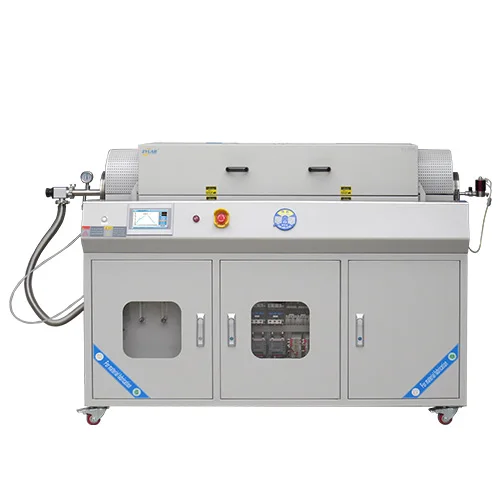
Multi-Zone High Temperature Quartz Tube Annealing Furnace for Wafer Processing
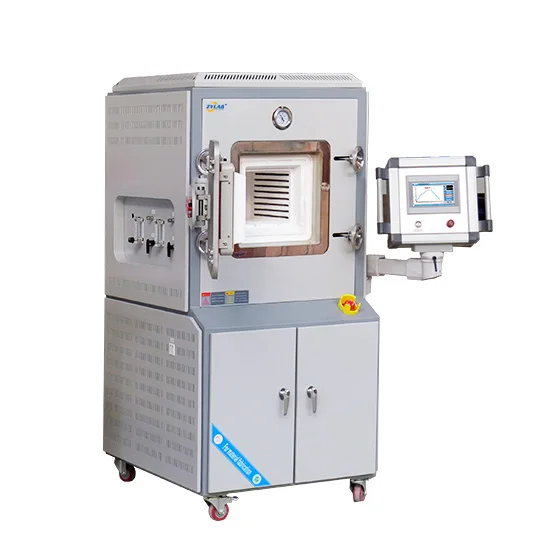
1200°C Vacuum Atmosphere Box Furnace with Oxygen Sensor for Laboratory Applications
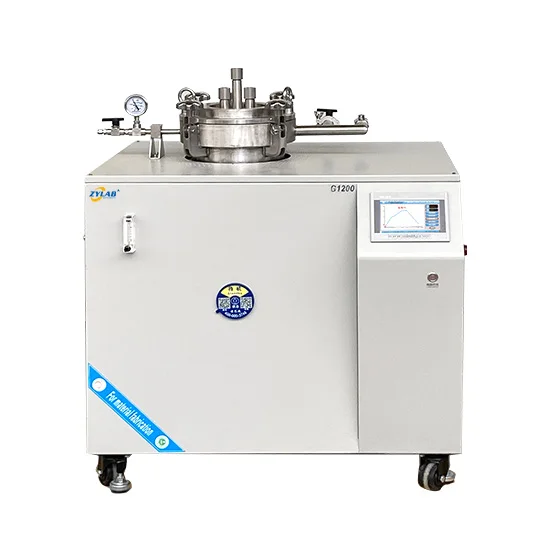
Vacuum Molten Salt Electrolysis Furnace for High-Temperature Electrochemical Research
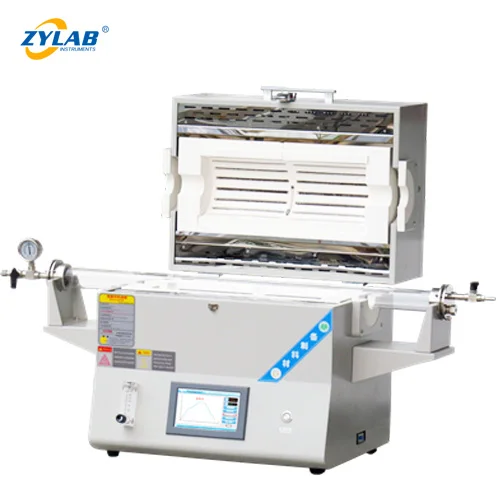
Customizable Tube Furnace with Gas Control System – Precision Atmosphere Processing
Working With ZYLAB On A Project Like This
How quickly can Applications of Vacuum Furnaces in Materials Preparation: An In-Depth be shipped?
Most standard ZYLAB models are held in stock. After testing and packing we normally ship Applications of Vacuum Furnaces in Materials Preparation: An In-Depth within 3 to 7 days. Customised builds are scheduled after the drawing is confirmed, and we give you the date in writing before the order is placed.
Is there a minimum order quantity for Applications of Vacuum Furnaces in Materials Preparation: An In-Depth ?
No. ZYLAB has no minimum order requirement, so a single unit of Applications of Vacuum Furnaces in Materials Preparation: An In-Depth is a normal order. Occasionally a component supplier imposes a minimum quantity of their own, and we tell you as soon as we are notified.
Can we get technical help before ordering Applications of Vacuum Furnaces in Materials Preparation: An In-Depth ?
Yes, and it is free. Our technical staff help with model selection, troubleshooting, manuals and application questions whether or not you have ordered from us before. Write to [email protected] or message us on WhatsApp.
What if Applications of Vacuum Furnaces in Materials Preparation: An In-Depth is damaged in transit?
Contact your ZYLAB sales engineer immediately with photographs. We arrange a substitute delivery promptly and handle the claim with the carrier.
Have A Similar Requirement
Describe the material, the temperature and the throughput you need and an engineer will answer with a workable configuration.