
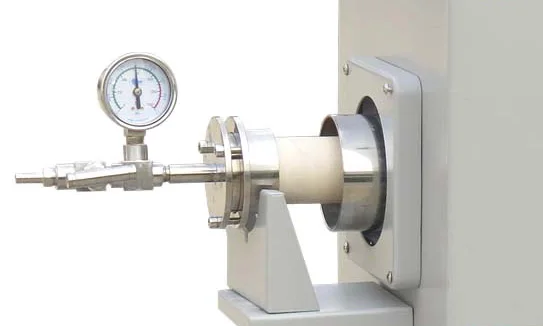
Alumina Tube Furnace
Alumina tube furnaces are used for materials processing, heat treatment, and various research applications.
- LaboratoryThermal ProcessingAlumina ceramic tube furnaceAlumina heating elements furnaceAlumina Tube Furnace2023-10-25
Overview
An alumina tube furnace is a specialized high-temperature heating device commonly used in laboratory and industrial settings.
These furnaces are designed for applications requiring high-temperature heating and a chemically inert environment. It is a type of tube furnace specifically constructed with an alumina tube and refractory heating elements,which provide excellent thermal stability and resistance to high temperatures.
Alumina tube furnaces are used for materials processing, heat treatment, and various research applications.
Features
Alumina Construction: Alumina materials provide excellent resistance to high temperatures and are chemically inert, making them ideal for high-temperature processes.
High-Temperature Capability: Alumina tube furnaces can reach temperatures exceeding 1,500°C (2,732°F) depending on the model.
Precise Temperature Control: These furnaces offer accurate temperature control for consistent results.
Uniform Heating: They provide even temperature distribution along the length of the alumina tube.
Compact Design: Alumina tube furnaces are often designed with a compact footprint suitable for laboratory and small-scale industrial applications.
Work Process
1. Samples or materials are placed inside an alumina tube within the furnace.
2. The heating elements are activated, and the temperature is gradually increased to the desired level.
3. The materials undergo the required processes, with precise temperature control and uniform heating.
4. After the process is complete, the furnace is allowed to cool down before samples are removed.
Applications
Materials Processing: Alumina tube furnaces are used for sintering, annealing, and heat treatment of ceramics, metals, and semiconductors.
Chemical Reactions: They facilitate chemical vapor deposition (CVD), thermal decomposition, and other chemical processes.
Materials Research: These furnaces are employed for materials characterization, crystal growth, and catalyst testing.
Sample Preparation: Used for ashing, drying, and pre-processing of samples for analytical techniques.
Benefits
1. Excellent thermal stability and high-temperature resistance due to alumina construction.
2. Precise temperature control for consistent and repeatable results.
3. Suitable for a wide range of laboratory and industrial applications.
4. Chemically inert, making them ideal for processes involving reactive substances.
Price
The price of an alumina tube furnace can vary significantly based on factors such as temperature range, size, and additional features. Basic models can start at a few thousand dollars, while more advanced and larger furnaces can cost tens of thousands of dollars or more.
Considerations When Purchasing
Temperature Range: Ensure the furnace can achieve the required temperature for your specific applications.
Tube Size and Capacity: Choose an appropriate tube size and capacity that can accommodate your samples.
Temperature Control System: Evaluate the precision and ease of use of the temperature control system.
Safety Features: Consider safety features like over-temperature protection and emergency shut-off systems.
Atmosphere Control: Determine if you need the furnace to operate in a controlled atmosphere, such as inert gas or vacuum.
Supplier Reputation: Research and select a reputable supplier with professional knowledge.
FAQ
1. Can I use an alumina tube furnace for controlled atmosphere experiments?
Yes, many models can be equipped with controlled atmosphere capabilities, such as inert gas or vacuum.
2. What are common maintenance requirements for alumina tube furnaces?
Regular cleaning and inspection are necessary. Follow the manufacturer’s guidelines for maintenance procedures.
3. Is it possible to observe the sample inside the alumina tube furnace during heating?
Observation is typically not possible, as the alumina tube is not transparent. Some models may offer viewports for monitoring.
4. How do I clean an alumina tube furnace?
Cleaning methods may include brushing or scraping away residue, as well as regular cleaning of heating elements. Always follow the manufacturer’s guidelines for cleaning procedures.
5. What’s the difference between an alumina tube furnace and a quartz tube furnace?
Alumina tube furnaces use an alumina tube that is not transparent, while quartz tube furnaces use a transparent quartz tube for observation. The choice depends on the specific application and temperature requirements.
Related ZYLAB Products
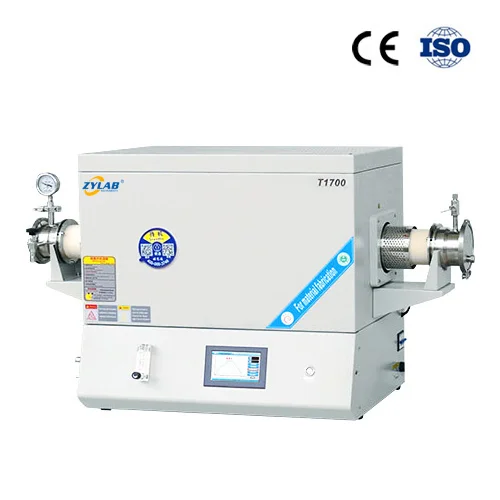
1700°C Two Zone Tube Furnace for Precision Thermal Processing
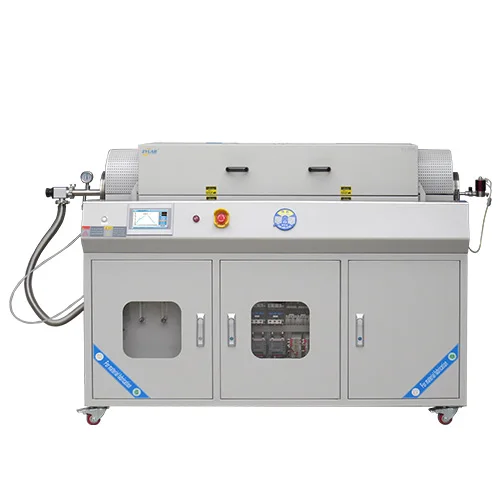
Multi-Zone High Temperature Quartz Tube Annealing Furnace for Wafer Processing
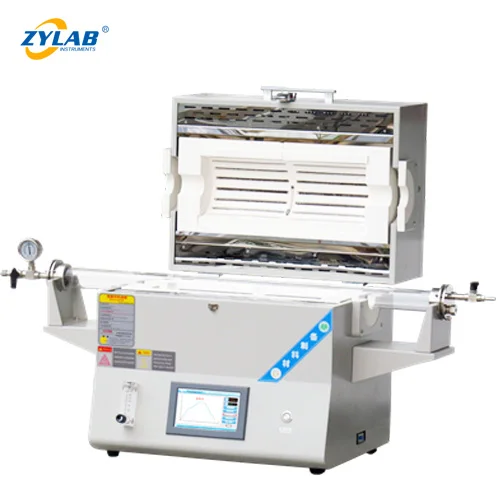
Customizable Tube Furnace with Gas Control System – Precision Atmosphere Processing
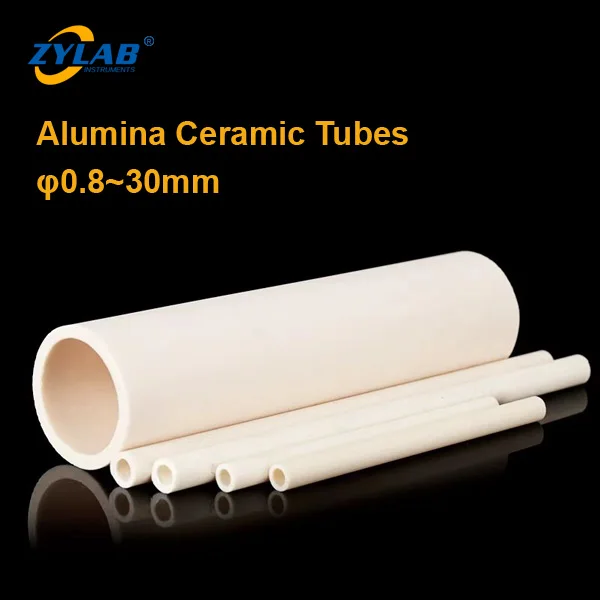
Alumina Ceramic Tube | High Purity, High Temperature Resistant
Working With ZYLAB On A Project Like This
How quickly can Alumina Tube Furnace be shipped?
Most standard ZYLAB models are held in stock. After testing and packing we normally ship Alumina Tube Furnace within 3 to 7 days. Customised builds are scheduled after the drawing is confirmed, and we give you the date in writing before the order is placed.
Can Alumina Tube Furnace be customised for our process?
Yes. Chamber or tube size, temperature profile, atmosphere, gas path, control system and data recording can all be adapted. Send us your process conditions and sample details and our engineers work out a configuration with you.
What warranty comes with Alumina Tube Furnace?
Most ZYLAB products carry a 2-year warranty, glass components excluded; the exact term for this model is the one printed in its specification table and repeated on the quotation. Within the warranty period any part that fails through no misuse of your own is replaced free of charge.
Can we get technical help before ordering Alumina Tube Furnace?
Yes, and it is free. Our technical staff help with model selection, troubleshooting, manuals and application questions whether or not you have ordered from us before. Write to [email protected] or message us on WhatsApp.
Have A Similar Requirement
Describe the material, the temperature and the throughput you need and an engineer will answer with a workable configuration.