Why warm-weather knit programmes live or die on wash-tested measurements.
Spring and Summer knitwear fails in a specific way: the garment grows. It leaves the factory on spec, arrives on spec, and then relaxes on the hanger or in the first wash. Cotton and viscose are the fibres involved, and measurement control is the answer.
Cotton has very little elastic recovery compared with wool or acrylic. A knitted cotton structure is a series of loops, and loops under their own weight lengthen over time.
Viscose and rayon drape rather than spring back, which is exactly why buyers choose them for fluid summer tops, and exactly why they need conservative care labelling. Both lose strength when wet.
None of this is a defect. It is the behaviour of the fibre, and it has to be designed and specified around rather than discovered at inspection.
Measure the counter sample at every point on your chart, not only chest and length.
Wash the sample the way your customer will wash it, then measure again and record the change. This is the number that should drive your production chart.
Agree the tolerance in writing before bulk. A tolerance that exists only in the buyer's head is not a tolerance.
Re-measure at final inspection against the post-wash chart, not the pre-wash one.
A small polyester percentage stabilises a cotton ground and cuts shrinkage, at the cost of some breathability.
Nylon in a fine viscose blend raises tensile strength and protects the seams on a lightweight top.
Pairing viscose with rayon keeps the drape and the colour depth while keeping the fabric light. That combination appears in this catalogue.
SS knitwear is usually confirmed in the second half of the previous year, which means sampling questions land in a busy period.
Raise the wash test and the measurement chart early. They take calendar time rather than production time, and they are the two things that cannot be compressed at the end.
Every style in this catalogue publishes its fibre content, which is the input all of the above depends on. Start from the full catalogue or from a section such as Women's Autumn/Winter Knitwear, then ask for the points the catalogue does not publish.
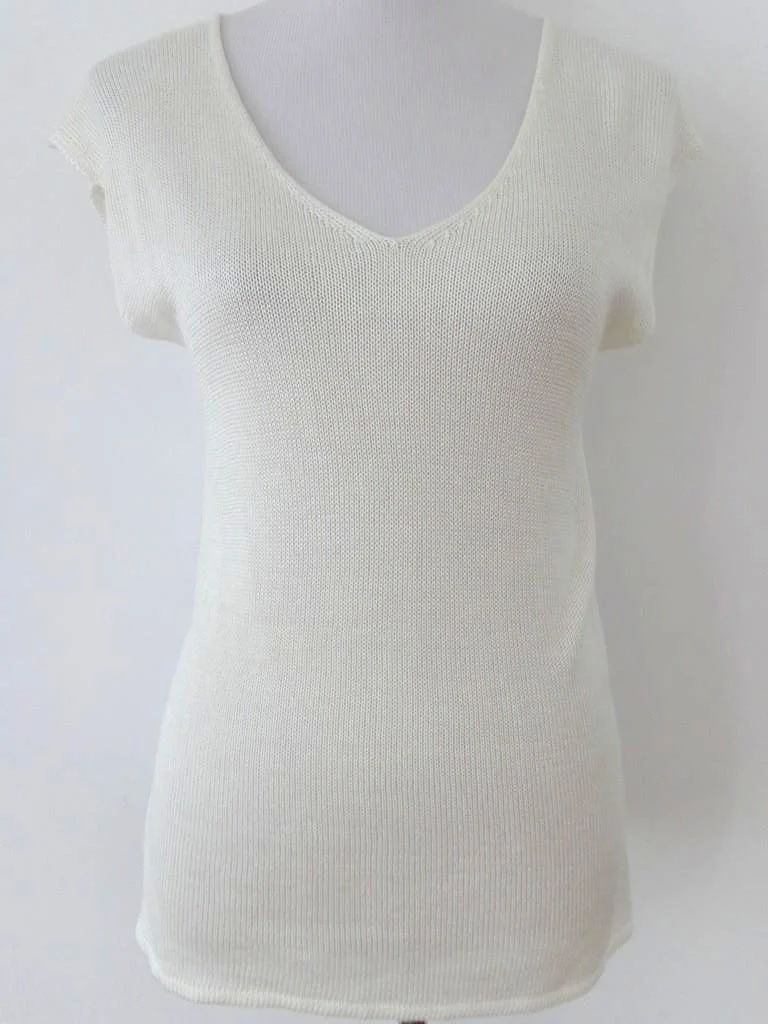
65% Viscose, 35% Rayon
All season · View style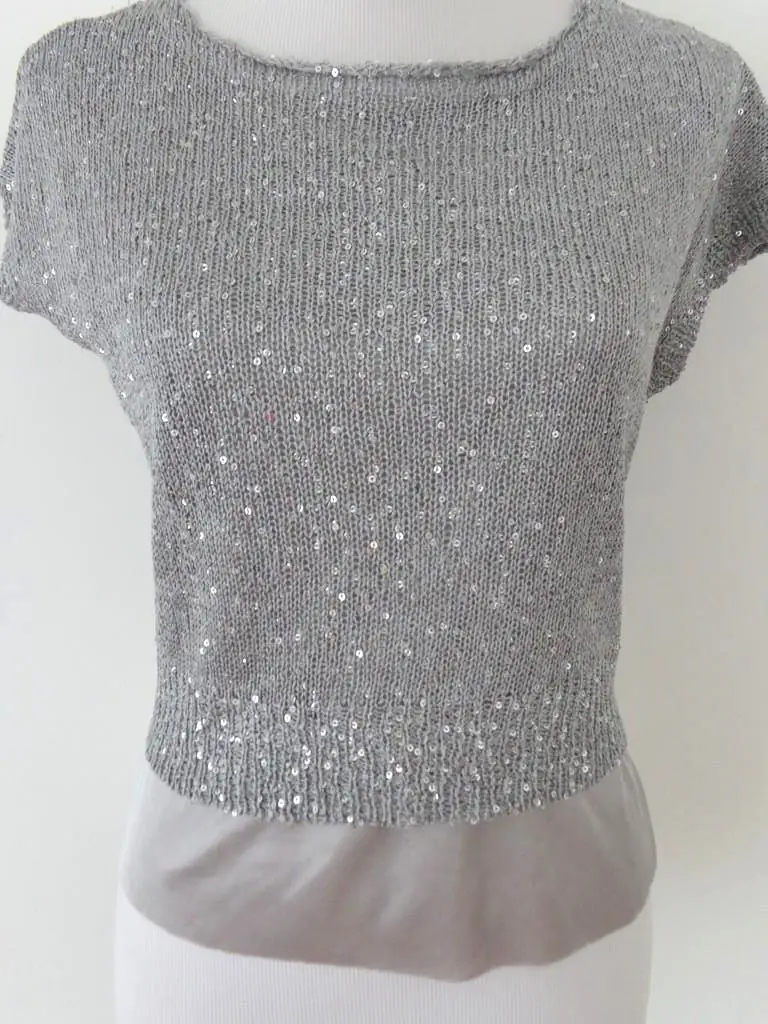
80% Rayon, 20% Sequins
Spring/Summer · View style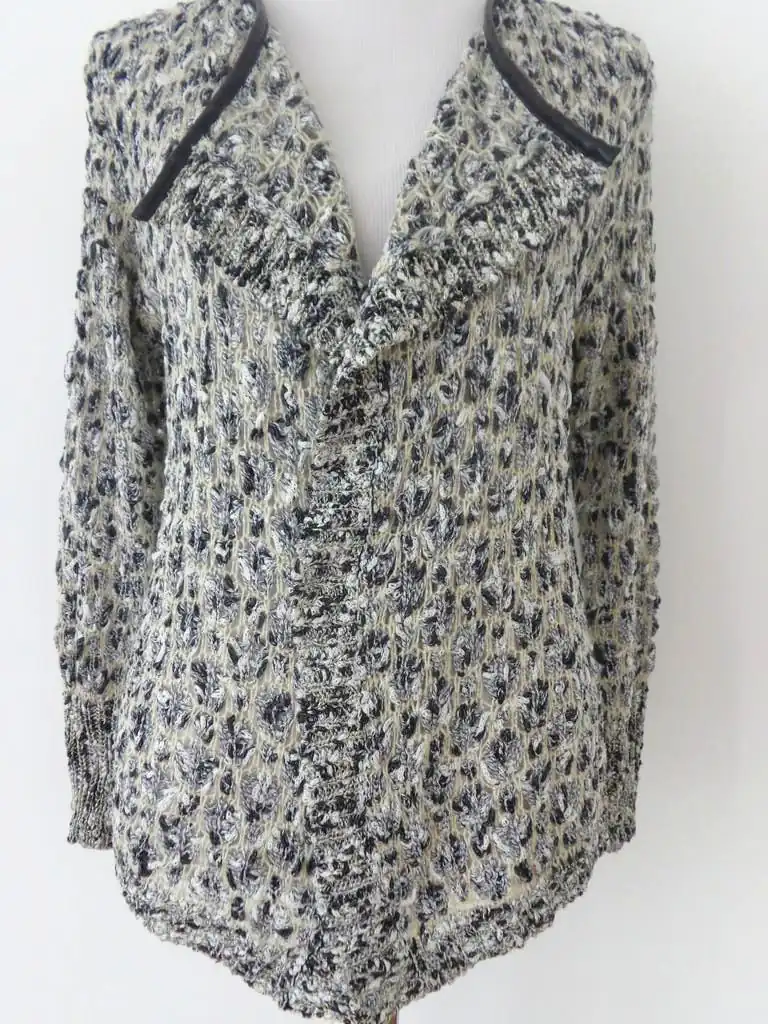
60% Acrylic, 20% Cotton, 10% Lurex
Autumn/Winter · View style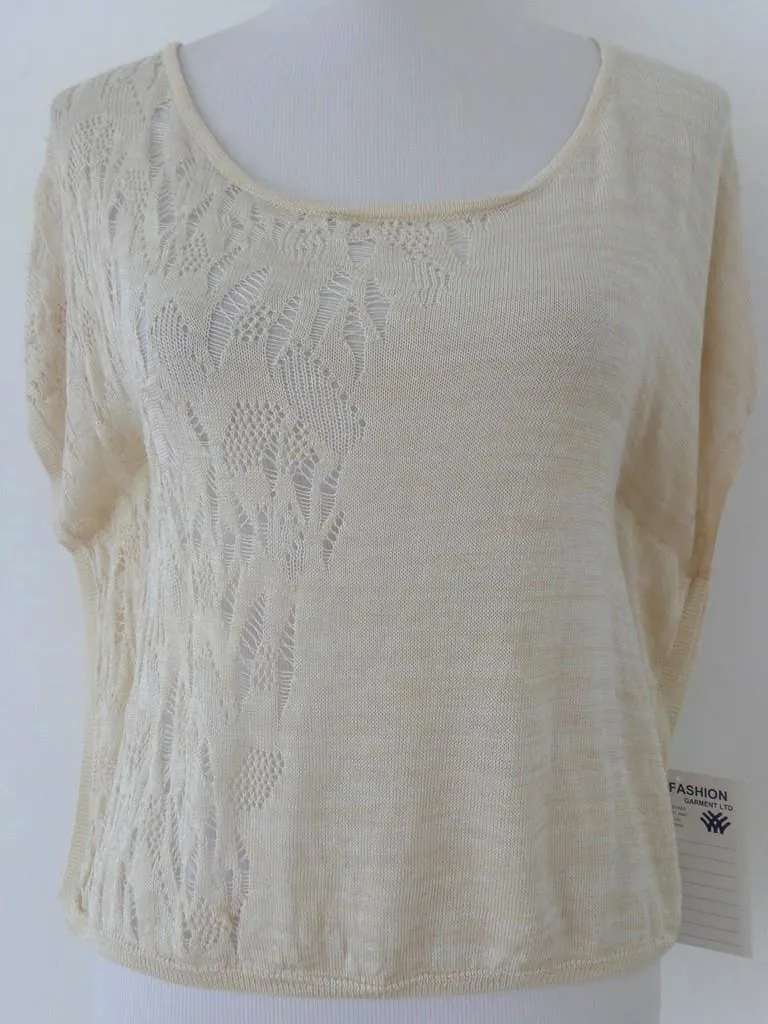
100% Viscose
Spring/Summer · View styleThere is no universal figure. What matters is that you measure it on the counter sample and write the accepted range into the order.
Follow the supplier's care recommendation for the specific yarn. Viscose is weak when wet, so the care label has to be conservative.
Not at low percentages. It trades a little breathability for dimensional stability, which many retailers accept.
Send the item number and the question together. Concrete questions get concrete answers.