
Kraft Paper Properties and Packaging Applications
Kraft paper has a 80–120g/m2 weight, high tensile strength, and is used in food, beverage, and industrial packaging. Color variation between batches is common.
Kraft Paper Characteristics and Variability
Kraft paper rolls vary in color due to raw material sources, production batches, seasons, and machinery. Consistency within a batch is typically 98%, but color differences between batches are unavoidable and cannot be fully controlled.
Common Uses of Kraft Paper
Kraft paper is used in cement bags, envelopes, glue sealing, asphalt paper, cable protection, insulation, and food packaging. Its high tensile strength makes it suitable for carrying loads and resisting tearing during handling.
Material Properties and Performance
Kraft paper has a fracture length above 6000 meters, high tear strength, rupture work, and dynamic strength. It is made from softwood pulp on a Fourdrinier paper machine and is typically supplied as roll paper, though flat sheets are also available.
Printing on Kraft Paper
Kraft paper can be printed using flexo, gravure, offset, or screen printing. Success depends on mastering printing technology, selecting appropriate inks, and controlling equipment parameters to achieve optimal results.
Color and Finish Variations
The base color is typically yellowish-brown. Semi-bleached or fully bleached kraft pulp produces light brown, cream, or white paper. The choice of finish depends on the end-use application and surface requirements.
Moisture Resistance in Packaging
For beverage packaging, kraft paper must resist moisture and maintain shape. Frozen food packaging requires materials that do not degrade under low temperatures and retain structural integrity.
Why Kraft Paper Is Used in Protective Packaging
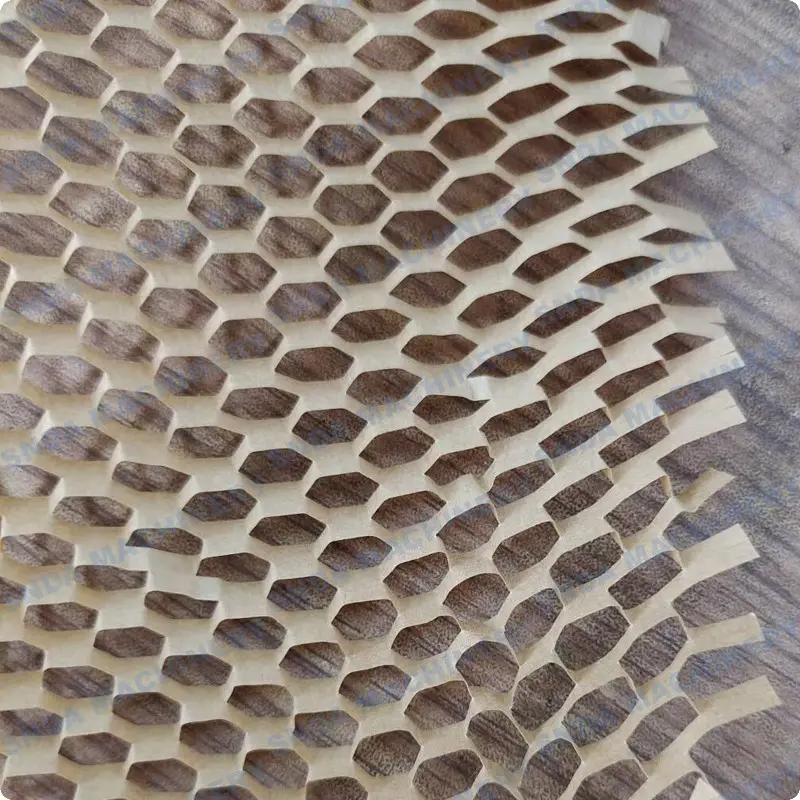
Its high strength and ability to be formed into structured cushioning materials like honeycomb or crinkle paper make kraft paper a practical base for in-house protective packaging solutions.
Related Questions
Can kraft paper color vary between batches?
Yes, color variation between batches is common and unavoidable due to differences in raw materials, production batches, seasons, and machinery.
What is the typical weight range of kraft paper?
Kraft paper has a quantitative range of 80 to 120 grams per square meter.
Is kraft paper suitable for food packaging?
Yes, kraft paper is suitable for food packaging due to its high tensile strength and ability to maintain integrity under load.
How is kraft paper made?
It is made from softwood pulp using a Fourdrinier paper machine, with the pulp beaten during the process.
Can kraft paper be printed on?
Yes, kraft paper can be printed using flexo, gravure, offset, or screen printing methods with proper ink selection and process control.
Does kraft paper resist moisture?
Standard kraft paper is not moisture-resistant. For beverages or wet environments, additional coating or treatment is required.
Is kraft paper recyclable?
Yes, kraft paper is recyclable and can be processed in standard paper recycling streams.
Put This Into Practice
If you are costing a paper cushioning line, send your volumes and the kraft width you can buy. We will work out what machine that needs.