
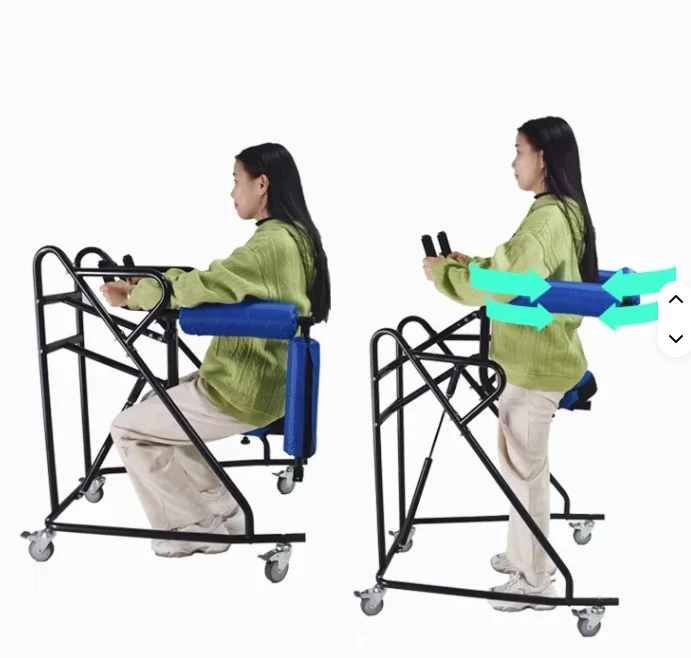
Standing and Gait Training Frame for Hemiplegia Rehabilitation
A rehabilitation standing and gait training frame that mechanically supports and maintains an upright position for patients with lower limb dysfunction, including hemiplegic children. Standing therapy is used to improve...
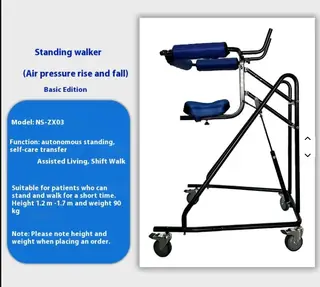
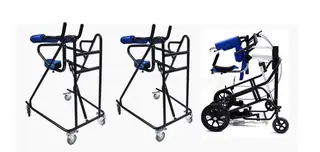
Product overview
What This Product Is And Who It Is For
A rehabilitation standing and gait training frame that mechanically supports and maintains an upright position for patients with lower limb dysfunction, including hemiplegic children. Standing therapy is used to improve abnormal muscle tone and skeletal development, prevent muscle atrophy, maintain bone density, improve cardiopulmonary and digestive function, and build psychological adaptability through posture transition training. Three configurations are available: forward-leaning, upright and supine, selected by the degree of functional impairment.
Problems It Solves
- Long-term sitting causes muscle atrophy and bone density loss, which standing therapy counters
- Abnormal muscle tone and skeletal development in children need mechanically maintained posture
- Patients with severe impairment cannot tolerate an upright frame, so a supine configuration exists
- Extensor antigravity training requires a controlled tilt, which the 30 to 40 degree forward-leaning type provides
- Cardiopulmonary and digestive function decline with prolonged sitting, which upright posture helps
Who It Is For
- Rehabilitation hospitals and departments
- Paediatric rehabilitation centres
- Special education and therapy centres
- Rehabilitation equipment distributors
- Nursing homes running standing therapy programmes
Key benefits
Why Buyers Choose It
- Three configurations of forward-leaning, upright and supine let a rehabilitation unit match the frame to the impairment level
- The forward-leaning type applies a 30 to 40 degree tilt for extensor antigravity training, which a plain standing frame cannot do
- Supine configuration serves children with more severe impairment who cannot tolerate upright standing
- Standing therapy addresses bone density and cardiopulmonary function, not only mobility
- Posture transition training supports psychological adaptability alongside physical rehabilitation
Application scenarios
Where It Is Used
Scenarios
- Paediatric rehabilitation for cerebral palsy and hemiplegia
- Stroke rehabilitation programmes restoring standing tolerance
- Prevention of muscle atrophy in long-term wheelchair users
- Bone density maintenance in patients with lower limb dysfunction
- Gait training in rehabilitation hospitals
- Special education and therapy centres
Technical features
How It Is Built
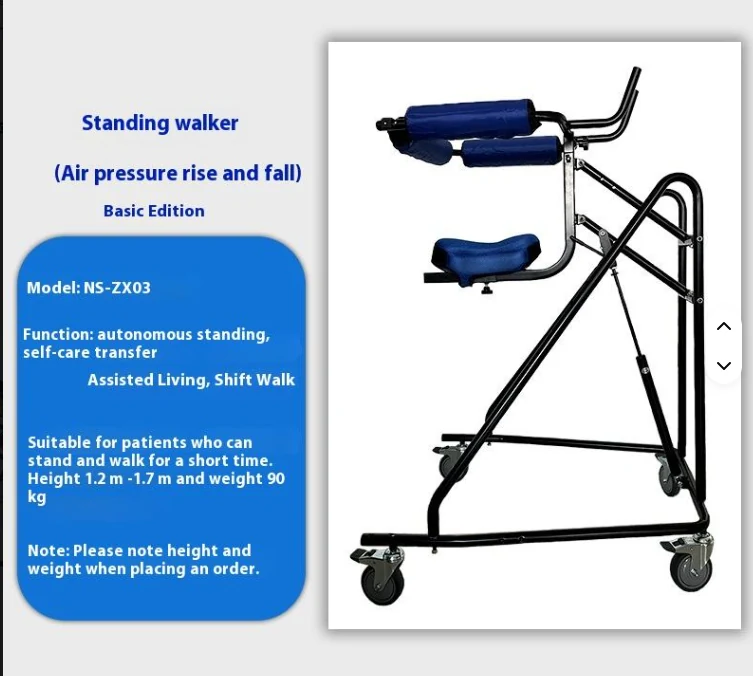
- Mechanical support that maintains an upright position
- Three configurations: forward-leaning, upright and supine
- Forward-leaning type with a 30 to 40 degree tilt angle for extensor antigravity training
- Supine type for rehabilitation of children with greater impairment
- Used for gait training and standing activity training
Specifications
Technical Data
| Product Type | Standing and gait training frame, walking aid stand |
|---|---|
| Configurations | Forward-leaning, upright, supine |
| Forward-Leaning Tilt Angle | 30 to 40 degrees |
| Clinical Aims | Improve muscle tone, support skeletal development, prevent muscle atrophy, maintain bone density, improve cardiopulmonary and digestive function |
| User Group | Patients with lower limb dysfunction including hemiplegic children |
Materials
- Steel frame
- Padded supports and straps
- Adjustable positioning hardware
Manufacturing Process
- Frame welding
- Powder coating
- Assembly
- Function testing
Quality and compliance
Quality Control And Certification
Quality Control
- Tilt angle is verified against the 30 to 40 degree specification on forward-leaning frames
- Strap and support attachment strength are tested
- Frame welds and coating are inspected
- Adjustment mechanisms are cycle-tested before packing
Customisation and comparison
Options And Alternatives
Customisation Options
- Configuration selection between forward-leaning, upright and supine
- Frame size for paediatric or adult patients
- Padding and strap colour
- Manual language for your market
- Export carton and container loading plan
Compared With Other Options
- Standard walking frames
- A standing frame maintains posture mechanically for therapy, where a walking frame only assists movement
- Tilt tables
- These frames are configured for active standing and gait training rather than passive tilt only
- Single-configuration standing frames
- Three configurations let one supplier cover different impairment levels in the same department
Use guide
How To Use It Correctly
Step
Select the configuration by the degree of functional impairment before fitting the patient
Step
Set the forward-leaning tilt within the 30 to 40 degree range for extensor antigravity training
Step
Fasten the trunk and knee supports before raising the patient
Step
Increase standing time gradually across sessions
Step
Monitor the patient during posture transition and stop if distress appears
Step
Check straps and adjustment hardware before each session
Related products
Other Products In Rehabilitation Therapy Equipment
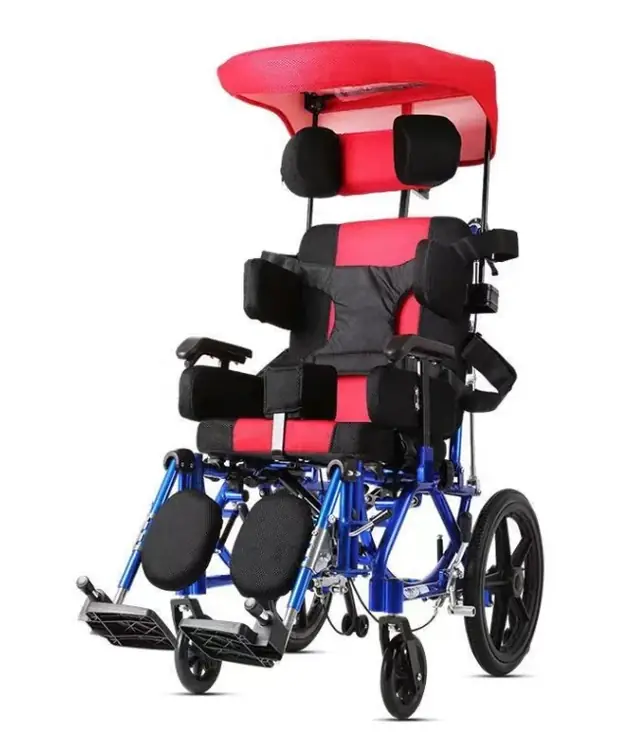
High Back Aluminium Wheelchair for Children With Cerebral Palsy
A high-back aluminium alloy wheelchair built for children with cerebral palsy and other disabilities, supplied under...
View product →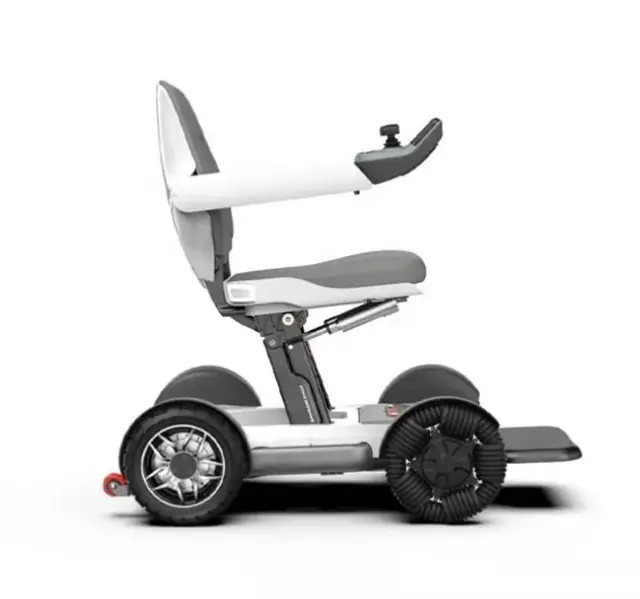
Electric Folding Wheelchair With Mid-Wheel Drive
A portable electrically folding aluminium alloy wheelchair with a memory foam seat and remote control. Mid-wheel drive...
View product →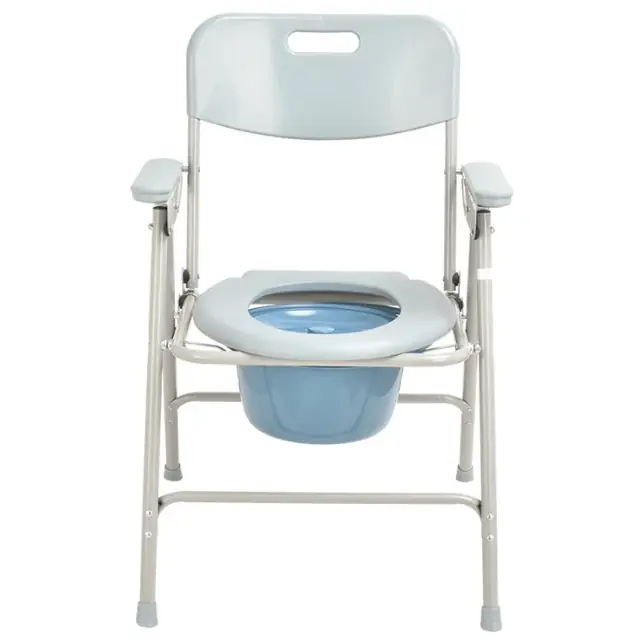
Medical Folding Commode Chair With Adjustable Height
A folding commode chair for elderly users, post-operative patients and pregnant women, built on a thickened integrally...
View product →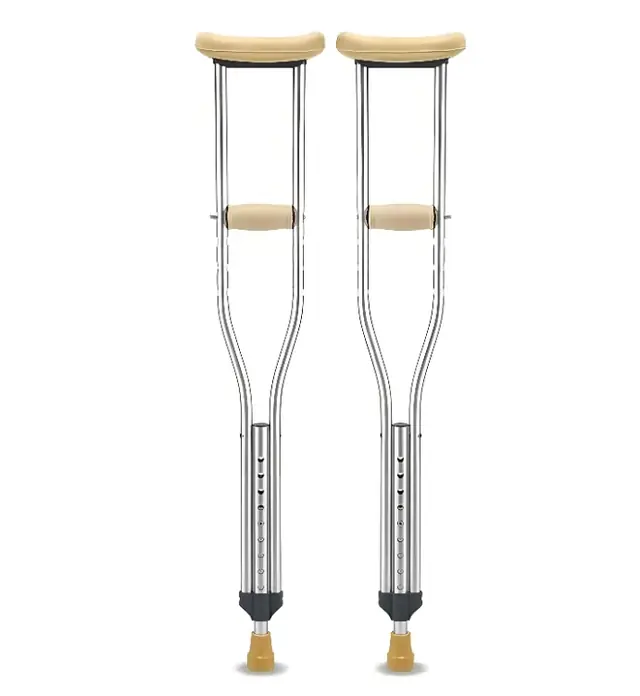
Aluminium Alloy Underarm Crutches With Height Adjustment
Lightweight underarm crutches formed from one-piece aviation aluminium alloy tubing for post-fracture rehabilitation,...
View product →Related reading
Industries Solutions And Guides
Rehabilitation and Physiotherapy Centres
A rehabilitation centre buys equipment that has to survive continuous use by patients who are not careful...
Nursing Homes and Elderly Care
In elderly care the cost that matters is staff time, not unit price. A diaper that leaks overnight costs a...
Rehabilitation Centre Equipping
Rehabilitation equipment is bought once and used every day by patients who are unsteady, in pain, or too...
Distributor and Private Label Sourcing
Building an own-brand medical or personal care range fails in two places: the compliance file for the...
When a China Sourcing Agency Is Worth Using
A sourcing agency sits between a foreign buyer and Chinese manufacturers, bridging language and process gaps....
What to Expect From a Chinese Manufacturer
China's manufacturing sector is built on scale, supply chain depth and adaptability. Understanding where...
FAQ
Standing and Gait Training Frame for Hemiplegia Rehabilitation FAQ
Which configuration should a department order
Forward-leaning for extensor antigravity training, upright for patients who tolerate standing, and supine for children with greater impairment. Many departments order more than one.
What tilt angle does the forward-leaning type use
A 30 to 40 degree tilt angle, which is what drives the extensor antigravity training effect.
What are the clinical aims of standing therapy
Preventing muscle atrophy, maintaining bone density, improving cardiopulmonary and digestive function, improving abnormal muscle tone and supporting psychological adaptability through posture transition.
Are paediatric sizes available
Yes. Frame size can be specified for paediatric or adult patients with your order.
How are the frames shipped
Frames ship in export cartons with your shipping marks. Container loading quantity is confirmed with your order.
Can the frames be supplied under our brand
Yes. Frame finish, padding colour, packaging and manual language can be produced to your specification.
Request A Quote For This Product
Send your quantity, destination market and any labelling requirement. We confirm stock, lead time and the documentation that travels with the goods.