
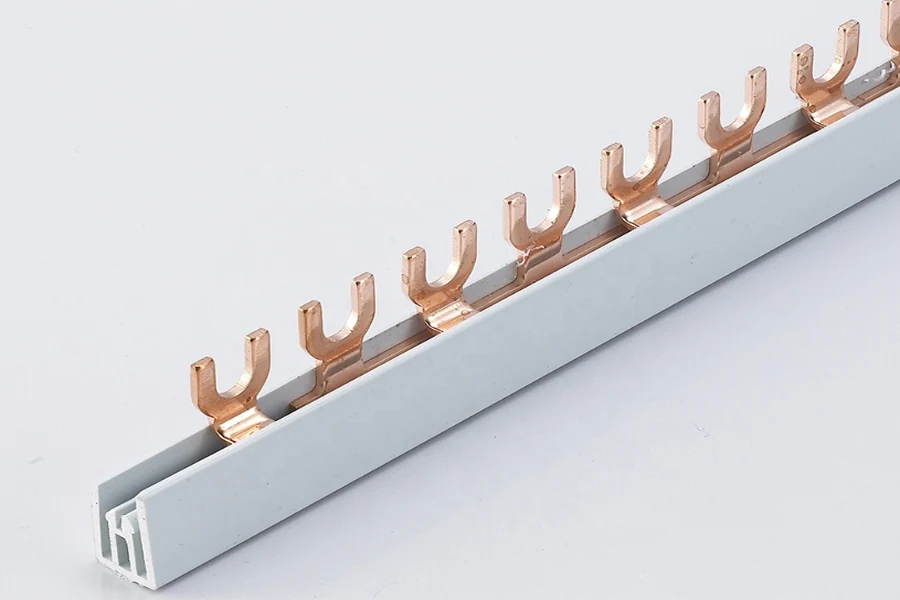
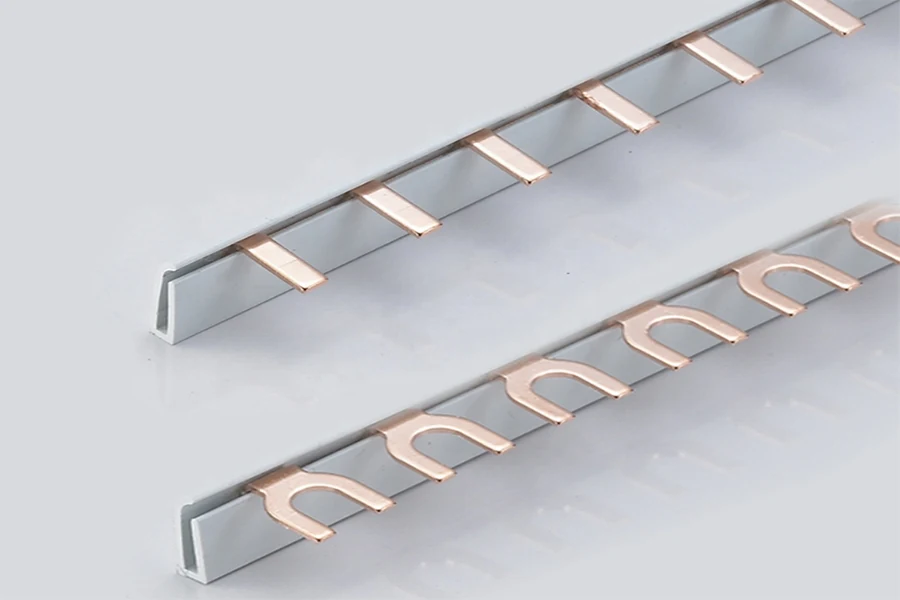
Bus Bar Pin Type Fork Type
A pin-type and fork-type bus bar terminal for connecting copper busbars in electrical distribution systems. Used in distribution boards, switchgear and panel assemblies where reliable, low-resistance connections are required. Can be branded with a buyer's own logo for private-label programmes.
- Pin and fork types allow flexible connection options for different busbar orientations
- Multiple current ratings from 32A to 125A support a range of distribution panel applications
- Sheet thicknesses from 1.0 mm to 1.8 mm provide mechanical strength and current-carrying capacity
- Standard widths of 5 mm, 7 mm, and 9 mm match common busbar dimensions in panel builds
- Suitable for use in distribution boards and switchgear where reliable electrical contact is essential
Key Benefits
- Pin and fork types allow flexible connection options for different busbar orientations
- Multiple current ratings from 32A to 125A support a range of distribution panel applications
- Sheet thicknesses from 1.0 mm to 1.8 mm provide mechanical strength and current-carrying capacity
- Standard widths of 5 mm, 7 mm, and 9 mm match common busbar dimensions in panel builds
- Suitable for use in distribution boards and switchgear where reliable electrical contact is essential
- Available for private-label printing, enabling importers and distributors to sell under their own brand
Where It Is Used
- Connecting copper busbars in distribution boards during panel assembly
- Installing terminals in switchgear where both pin and fork connections are needed
- Building custom electrical panels for industrial control cabinets and commercial distribution
- Replacing worn or damaged terminals in existing panel systems with matched specifications
- Supplying components for OEM electrical assemblies where branding is required
Who It Is For
- Electrical panel builders and switchgear manufacturers
- Wholesalers and importers of electrical distribution components
- Contractors installing or maintaining distribution boards and switchgear
- OEM buyers needing branded terminals for their own product lines
- Distributors stocking terminal blocks for industrial and commercial electrical work
Problems It Solves
- A mismatched terminal can cause high resistance and overheating; this range offers multiple thicknesses and widths to match the busbar
- Lack of connection flexibility in panels can delay assembly; pin and fork types allow different orientation options
- Buyers need to stock multiple terminal types; this range covers 32A to 125A in common sizes
- Private-label buyers cannot brand standard components; this product supports custom printing
- Existing terminals may not match new busbars; the variety of thicknesses and widths helps with retrofitting
Technical Features
- Pin-type terminal for vertical or horizontal busbar connection
- Fork-type terminal for clamping onto a busbar with a bolt or screw
- Designed for use with copper busbars in power distribution systems
- Rated for current from 32A to 125A, depending on model
- Sheet thicknesses available in 1.0 mm, 1.2 mm, 1.4 mm, 1.5 mm, 1.7 mm, and 1.8 mm
- Busbar widths of 5 mm, 7 mm, and 9 mm for compatibility with standard busbar sizes
Specifications
| Reference Current | 32A, 50A, 63A, 80A, 100A, 125A |
|---|---|
| Busbar Thickness | 1.0 mm, 1.2 mm, 1.4 mm, 1.5 mm, 1.7 mm, 1.8 mm |
| Busbar Width | 5 mm, 7 mm, 9 mm |
| Terminal Type | Pin type, Fork type |
| Material | Copper or copper alloy (standard for busbar terminals) |
| Application | Power distribution equipment, terminal blocks |
Materials
- Copper or copper alloy used for the terminal body to ensure good conductivity
- Plated or treated surface to resist oxidation and maintain low contact resistance
Customisation Options
- Custom printed brand for private-label and OEM programmes
- Option to specify thickness, width, and current rating to match panel design
- Custom packaging and carton marking for importers and distributors
Compared With The Alternatives
| Compared With | How This Product Differs |
|---|---|
| Flat busbar connector | Flat connectors are simpler but less flexible in orientation; pin and fork types allow more connection options in tight panel spaces |
| Screw terminal block | Screw terminals are for wire, not busbars; this product is designed for direct busbar-to-busbar or busbar-to-device connection |
| Insulated busbar terminal | Insulated terminals are used for safety in exposed areas; this product is for internal panel use where insulation is not required |
Use Guide
- Select the terminal type (pin or fork) based on the orientation and mounting method of the busbar
- Match the sheet thickness and width to the existing busbar dimensions to ensure proper fit
- Ensure the current rating matches the circuit load to prevent overheating
- Use appropriate torque on mounting screws to maintain low contact resistance
- Inspect for oxidation or damage before installation; clean if necessary
Related Industries And Guides
Panel Building And Industrial Control
Panel builders buy the parts that go inside the enclosure as much as the enclosure itself. Busbars, terminals and contactors decide whether a panel passes inspection and stays tight in service.
How To Specify A Distribution Board For Your Market
Way count, mounting type, material and rating decide whether a distribution board sells or sits. A walk through the specification points that actually differ between markets.
Busbars And Connecting Terminals Explained For Panel Builders
Pin type or fork type, what the thickness and width figures mean, and why the terminal is where panels fail.
Bus Bar Pin Type Fork Type FAQ
Can we have our own brand printed on these bus bar terminals?
Yes. The product supports custom printing of your brand logo for private-label and OEM orders. Send us your artwork and we will confirm feasibility.
What current ratings are available?
Available ratings are 32A, 50A, 63A, 80A, 100A, and 125A. Choose the one that matches your circuit load.
What sheet thicknesses and widths are stocked?
Sheet thicknesses: 1.0 mm, 1.2 mm, 1.4 mm, 1.5 mm, 1.7 mm, 1.8 mm. Widths: 5 mm, 7 mm, 9 mm.
Can I mix different types in one container?
Yes. You can mix pin and fork types, different current ratings, thicknesses and widths in a single container for efficient shipping.
Do you provide dimensions and a datasheet before ordering?
Yes. Exact dimensions and a technical datasheet can be confirmed upon request before placing an order.
What is the best way to choose between pin and fork types?
Use pin type for vertical or horizontal busbar connections where the terminal is mounted on a post. Use fork type when clamping onto a busbar with a bolt or screw.
Get A Quote For Bus Bar Pin Type Fork Type
Tell us the quantity, the destination port and whether you need your own brand on it. We will come back with what is workable.