
How To Specify A Distribution Board For Your Market
Way count, mounting type, material and rating decide whether a distribution board sells or sits. A walk through the specification points that actually differ between markets.
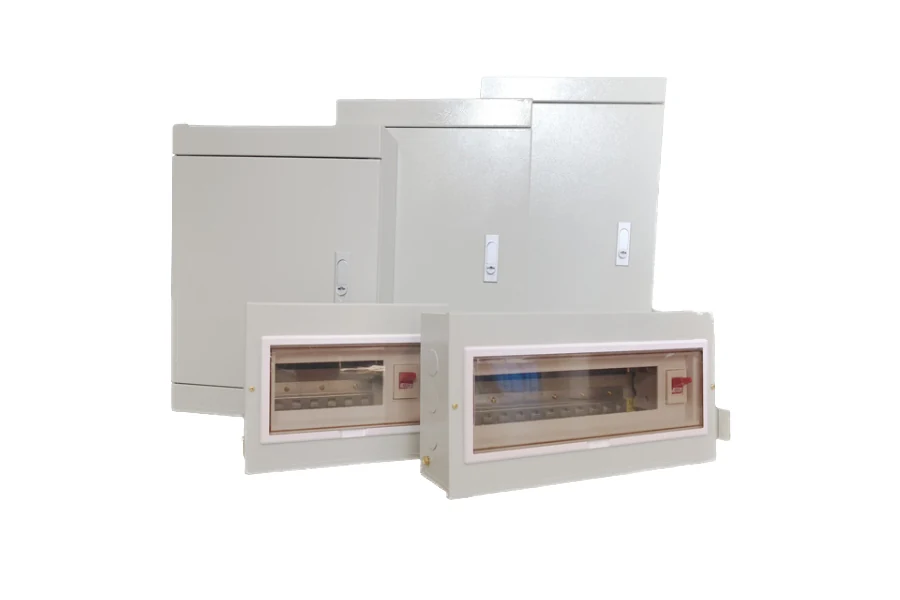
Start With The Way Count Your Market Installs
The way count is the first thing a counter customer asks and the first thing an importer gets wrong. The metal distribution board in this range is built in 4, 6, 8 and 12 way, with other counts available as a customised run. Stocking only the middle of that range looks efficient until a customer needs a 4 way for a small unit or a 12 way for a house rewire and goes elsewhere for both. Way count is also the cheapest variable to hold, since the rest of the specification stays the same.
Distribution Board Electrical Boxes 4/6/8/12Ways
Confirm The Voltage And Current The Board Is Built For
The MDB-6 series board is designed for safe distribution and control of electrical power as service equipment in residential, commercial and light industrial premises, in DIN rail designs for indoor applications. It is stated as suitable for three phase, 230/415 V, with branch ratings of 6 A to 60 A and a main switch up to 100 A, and rated voltages of 120/240 V and 230/415 V AC. Check that against your local supply before ordering, because a board specified for one system does not simply adapt to another.
Metal Or Plastic Is A Market Question Not A Quality Question
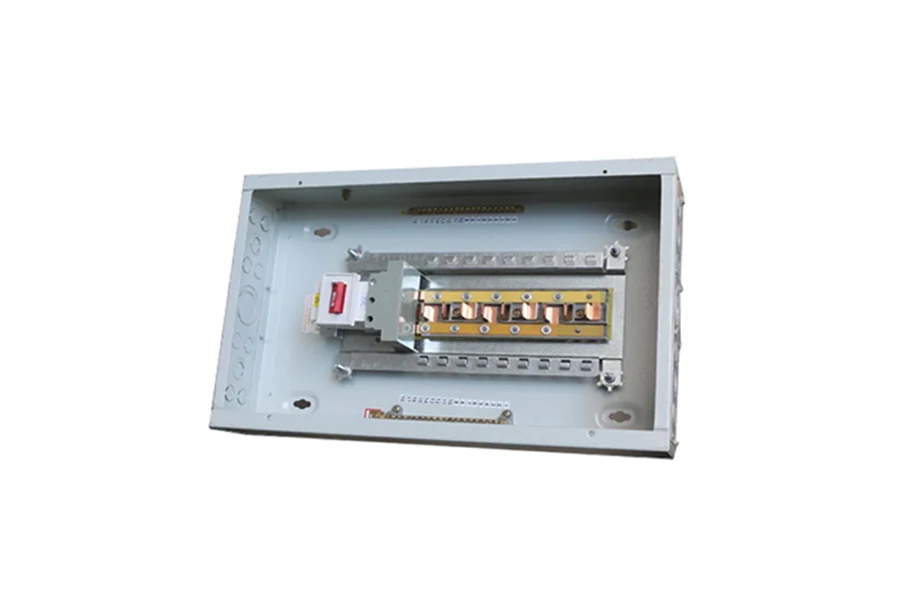
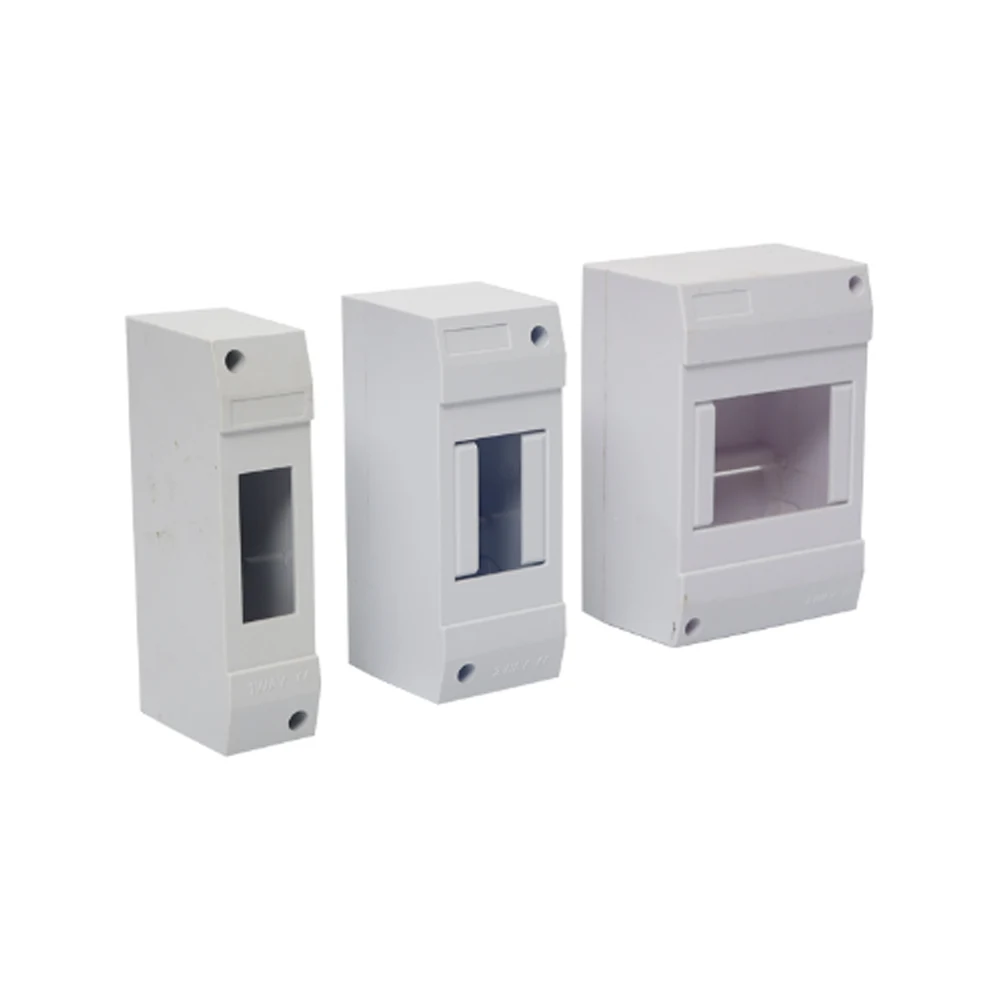
Metal boards in this range are made from steel sheet with a polyester powder coated finish, knockouts on all sides, copper neutral and earth bars and a copper busbar at the bottom. Plastic enclosures exist alongside them in the S, MS, MF and HT series because some markets and some installations prefer a non-metallic box. Neither is a better product in the abstract. What matters is which one your electricians expect to see and which one your local standard accepts.
Mounting Type Changes Where The Board Can Be Sold
The metal board is listed as surface and flush universal, so a single stocked item covers both installation methods. That is worth more than it sounds: a wholesaler holding separate surface and flush lines carries twice the stock to serve the same trade, and inevitably runs out of the one the customer wants. Where a supplier offers a universal design, it simplifies the shelf.
Distribution Board Electrical Boxes 4/6/8/12Ways
Where The OEM Options Actually Are
For an importer building an own brand, the metal distribution board is the most configurable item in the range. Sheet thickness is offered at 0.8, 1.0 and 1.2 mm, the front cover can be a different colour or an open class window, a logo or brand can be curved or printed on the enclosure, knockouts can be reduced, increased, resized or relocated, and powder painting colour is grey by default or any other colour. That is a specification sheet you can build a private-label range around rather than a token logo print.
Do Not Forget What Goes Inside
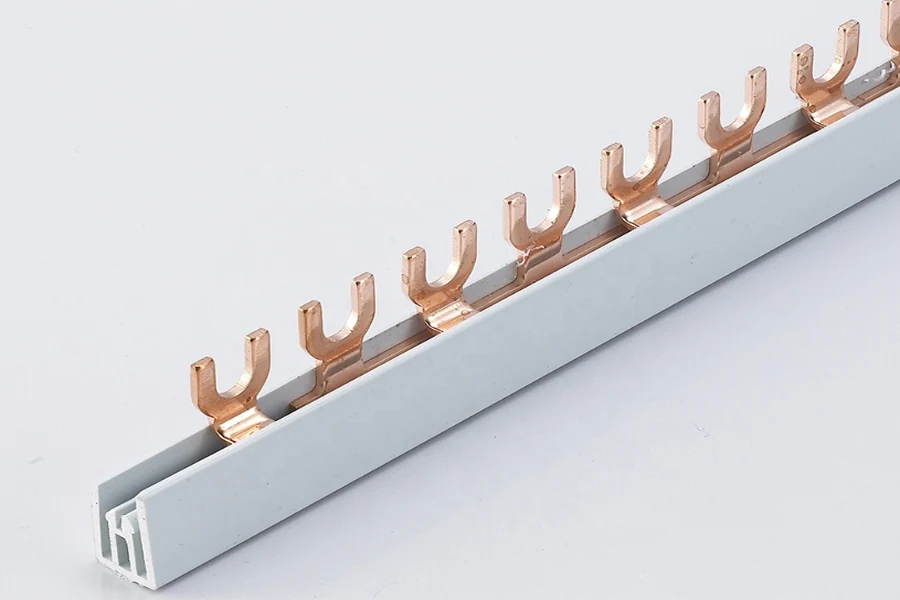
A board is sold with the parts that fit it. Pin and fork type busbars are listed at reference currents of 32 to 125 A, in thicknesses of 1.0 to 1.8 mm and widths of 5, 7 and 9 mm. Brass neutral links, connecting terminals and crimping lugs come from the same range. Buying the enclosure from one supplier and the internals from another is how panel builders end up with a busbar pitch that does not match the breakers they stock.
Related Pages
Electrical Wholesale And Retail
Wholesalers and retail chains do not buy a product, they buy a shelf. The question is whether one supplier can fill the electrical aisle end to end and put your brand on it.
Panel Building And Industrial Control
Panel builders buy the parts that go inside the enclosure as much as the enclosure itself. Busbars, terminals and contactors decide whether a panel passes inspection and stays tight in service.
Own Brand And Private Label Program
Most importers who work with us are not reselling our brand, they are building their own. This is what that process actually involves, stage by stage, and where it usually goes wrong.
Questions On This Topic
What way counts are available?
4, 6, 8 and 12 way as listed, with other counts available as a customised run.
Can the enclosure carry our brand?
Yes. The distribution board lists logo or brand curving or printing on the enclosure, along with cover colour, powder painting colour, sheet thickness and knockout changes.
Is the board suitable for outdoor installation?
The MDB-6 series is described as being available in DIN rail designs for indoor applications. For outdoor and damp positions, look at the waterproof junction box and waterproof product lines instead.
Want This Applied To Your Own Range
Tell us what you sell and where, and we will say which of these choices actually matters for you.