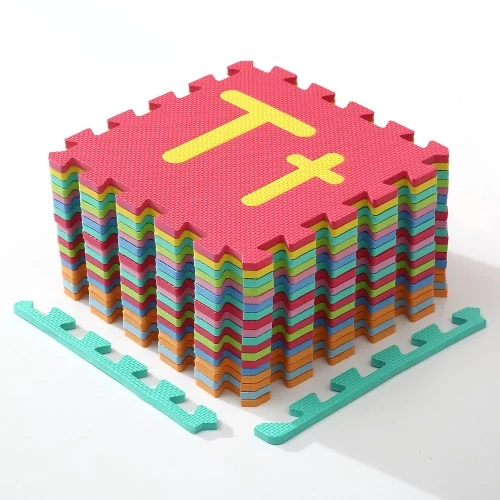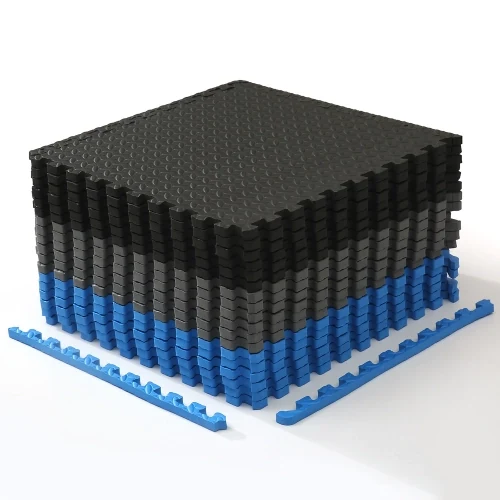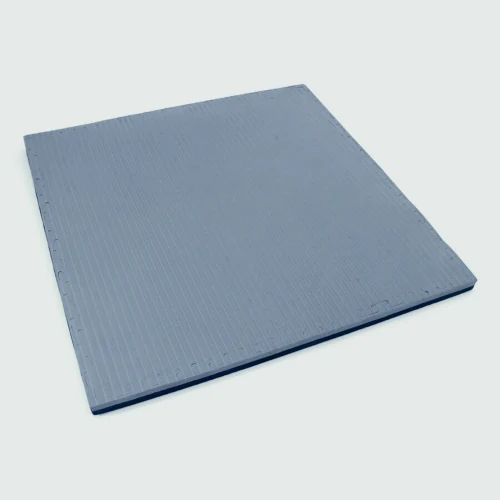
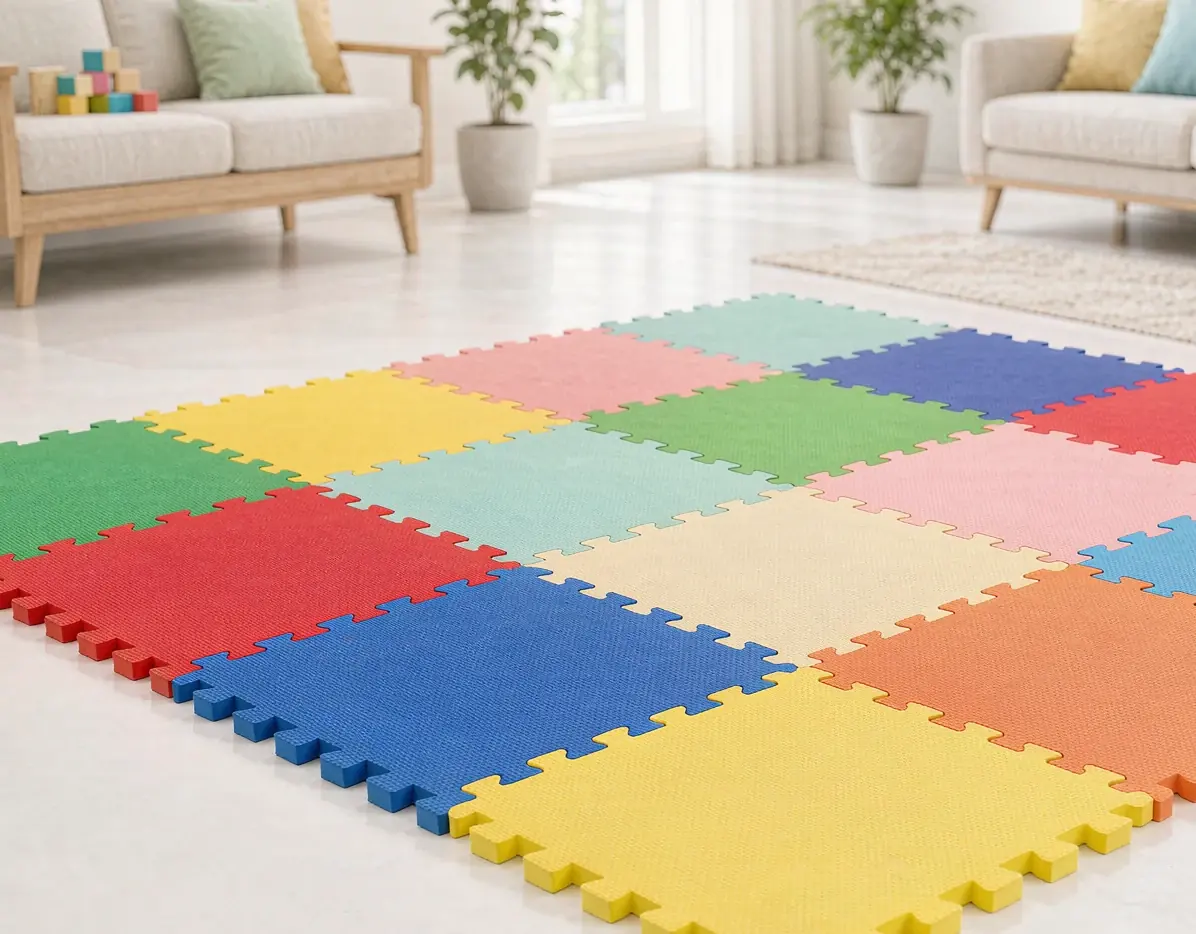
EVA foam mats are one of the most common floor surfaces in homes, gyms, kindergartens and play areas - yet the question of whether they are truly safe comes up in almost every inquiry. The short answer is: a properly manufactured EVA mat is non-toxic and safe for babies, children and adults. The longer answer, the one that matters for buyers, is in the chemistry, the test reports and the production discipline behind the mat.
This guide breaks down what is actually inside an EVA foam mat, which substances get people worried, and which certifications and lab reports you should ask a supplier for before you import or resell.
What is EVA foam, chemically?
EVA stands for ethylene-vinyl acetate . It is a copolymer of ethylene and vinyl acetate (VA), typically 5-40% VA. The higher the VA content, the softer and more rubber-like the foam. The foaming process uses a chemical blowing agent (often azodicarbonamide) under heat and pressure, then the bun is washed, cut and often post-cured in a ventilated oven to remove residual blowing-agent byproducts.
Because EVA is a closed-cell foam , it does not absorb water and does not host dust mites or mold the way open-cell foams do. This is one of the main reasons it is used in baby play mats, medical orthotics and food-grade film.
The four substances people worry about
1. Formamide
Formamide is a residual solvent most associated with low-quality EVA production. It is classified as a Category 1B reproductive toxin in the EU. The Toy Safety Directive limits formamide emission to 200 mg/kg in toy foam. Post-curing at 60-80°C for 12-24 hours typically brings residuals well below 30 mg/kg.
2. BPA and phthalates
Pure EVA does not use BPA or phthalates as plasticizers. The risk is from recycled EVA, which may contain trace contaminants. A REACH SVHC declaration and a RoHS test (phthalates DEHP, DBP, BBP, DIBP) eliminates this risk.
3. Heavy metals (lead, cadmium)
Lead and cadmium historically appeared in EVA color pigments. EN71-3 and ASTM F963 both cap migration of 19 elements. Modern EVA mat factories use lead-free pigments and can show EN71-3 reports on request.
4. Off-gassing smell
A new EVA mat will have a faint sweet plastic smell that dissipates within 24-72 hours in a ventilated room. This is residual blowing agent, not a hazard. A sharp solvent smell that does not fade in a week is a red flag for cheap, under-cured foam.
Certifications to ask your supplier for
A factory that is serious about safety will have current (within 12 months) test reports from a third-party lab such as SGS, Intertek, Bureau Veritas or TÜV. The most common:
- EN71-1/2/3 - European toy safety, mandatory for any product aimed at children under 14.
- ASTM F963 - US toy safety standard.
- CPSIA - US Consumer Product Safety Improvement Act, including phthalates limits.
- REACH SVHC - EU chemicals regulation, lists substances of very high concern.
- RoHS - Restricts lead, mercury, cadmium and other heavy metals.
- BSCI / Sedex - Social compliance audits, not safety per se, but a sign of mature production control.
- CCC - China Compulsory Certification, required for the Chinese market.
Asking for these reports before you place a production order is standard practice. Any factory that cannot provide them is a factory to walk away from.
Quick checklist: how to choose a non-toxic EVA mat
Use this list before you place any order - it takes ten minutes and screens out most problem suppliers:
- Ask for a third-party test report (SGS, Intertek, TÜV or Bureau Veritas) issued within the last 12 months - not an in-house certificate.
- Match the standards to your market. EU: EN71-1/2/3, REACH SVHC and formamide. US: CPSIA phthalates, ASTM F963 and lead content.
- Check the report matches the product - product name, colour, thickness and batch should be identical to what you are buying.
- Do the smell test on a sample. A light foam odour that fades within 24-72 hours is normal; a sharp solvent smell that persists is not.
- Confirm formamide is undetected or below 0.2% - the internal limit most EU importers apply.
- For baby and toddler mats , choose matte, skin-friendly surfaces with beveled non-slip edges, and no small detachable pieces.
- Buy from a manufacturer that traces raw-material batches. A factory testing every production batch is safer than a trader mixing supply sources.
Frequently asked questions about EVA mat safety
How can I tell if an EVA mat is safe before ordering?
Ask for a third-party test report issued within the last 12 months, covering EN71-1/2/3 and REACH for the European market, or CPSIA and ASTM F963 for the US. For EU orders the report should include formamide results. If a supplier can only offer in-house certificates, order a sample and have it tested locally - a reputable factory will not object.
Is EVA safer than PVC or XPE for kids' play mats?
EVA and XPE are both cross-linked polyolefin foams and are generally safer choices than PVC, which needs plasticisers (phthalates) to stay flexible. That said, quality matters more than material family: a certified EVA mat from a factory that tests every batch is safer than an uncertified XPE mat. For babies and toddlers we recommend avoiding PVC mats entirely.
Do EVA foam mats need to be aired out after unboxing?
Yes - ventilate a new mat for 24-72 hours in a shaded, airy room. A light foam smell right out of the box is residual blowing agent and dissipates quickly; it is not formamide off-gassing. A mat that keeps a strong chemical odour after a week should be returned.
How Newin Best controls safety in production
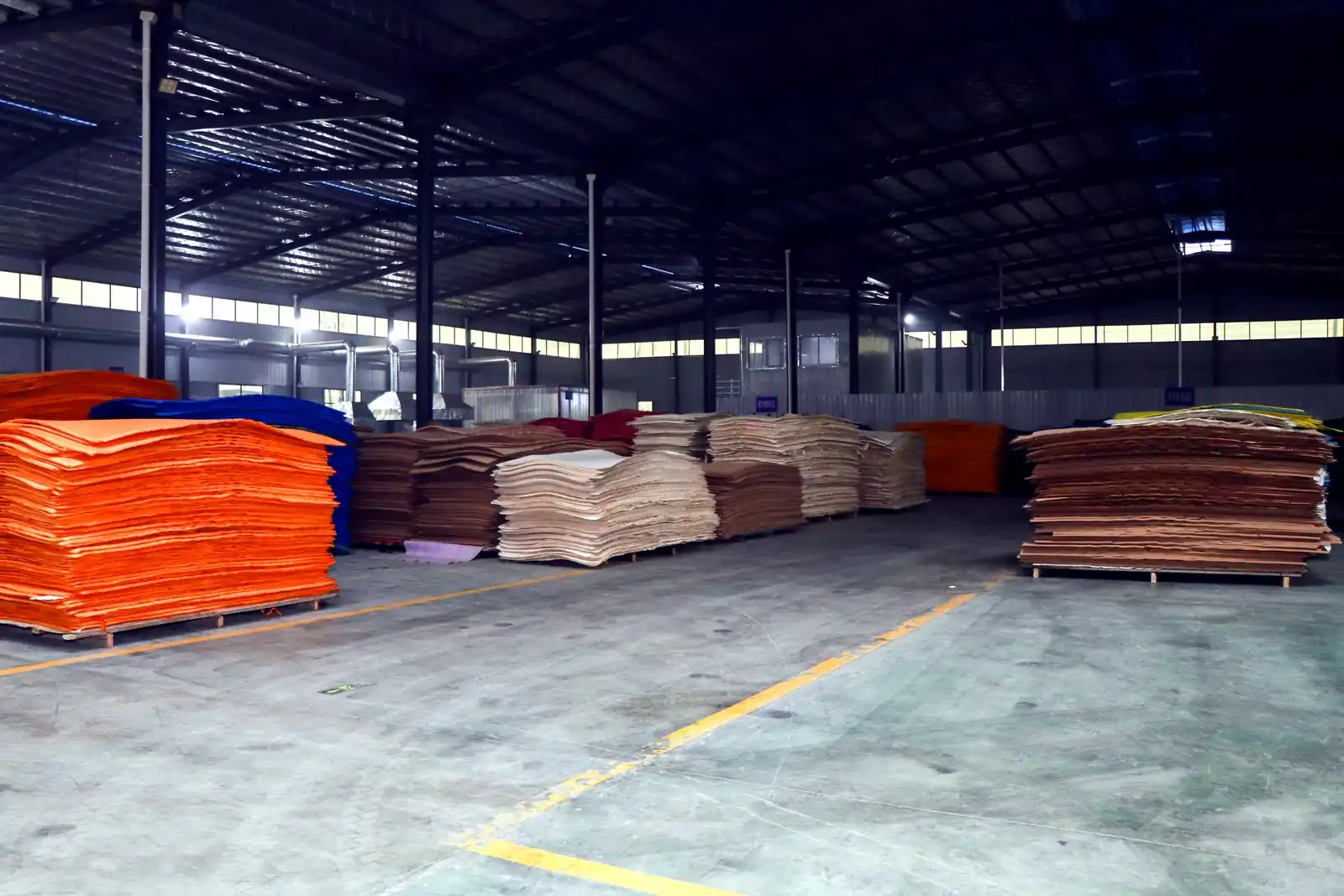
Newin Best has been extruding EVA foam since 2001. Every production batch goes through a 24-hour post-cure in a temperature-controlled oven, and a sample from each batch is tested in our in-house lab for density, hardness and tensile strength. We send samples to SGS for EN71-3, REACH and RoHS on a quarterly basis and can share reports with buyers under NDA.
Our baby play mats carry EN71-3 and ASTM F963 reports, and our full product line is RoHS and REACH compliant. The factory is BSCI audited and GRS certified for recycled EVA. See our certificates page for the latest versions.
Need an EVA foam mat with full documentation? Send us your spec and we will reply within 12 hours with a quote, a current test report and a free sample.
Written by the Newin Best technical sales team. We manufacture the mats described here in our own factory in Suqian, Jiangsu - if a figure on this page matters to your order, ask us for the test report behind it.