SMT Line to Final Test: A Step-by-Step Process
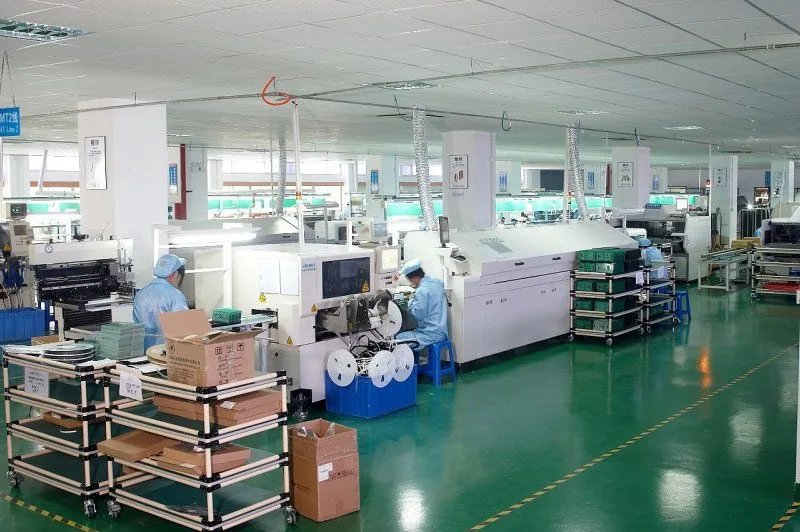
The journey from raw components to a ready-to-ship LED screen begins at the SMT auto line, where high speed SMT machines place components onto PCBs with precision. After placement, the boards go through reflow soldering to secure all connections, followed by soldering inspection to verify joint quality.
Module Quality Control Before Assembly
Before modules are built into cabinets, each one undergoes a module ageing test to detect early failures. An auto drying system removes moisture from the modules to prevent defects during soldering and improve long-term reliability.
See the Indoor Fixed With High Definition specification for the figures quoted above.
Assembly and Full System Testing
Modules are assembled on the full-screen line, where the entire screen is installed and tested for image uniformity, brightness, and pixel integrity. After installation, the screen goes through a full ageing test under controlled conditions to simulate real-world use.
Pre-Shipment Review and Final Check
Before shipping, every screen is reviewed in the in-house showroom. This allows buyers to inspect the display in person, confirm colour accuracy, and verify the final configuration before the container is sealed.
In-House Teams Ensure Process Control
MASTARLED maintains in-house R&D, PMC and QC teams. This allows direct oversight of every stage, from design to delivery, ensuring consistency and adherence to internal quality standards without third-party dependency.
Why This Process Matters for Buyers
Each step reduces the risk of field failures. SMT precision and soldering inspection prevent early short circuits. Module ageing and auto drying reduce moisture-related defects. Full screen testing ensures no dead pixels or brightness mismatches arrive at the job site.