

What is the Soft Start Function of a Variable Frequency Drive?
Variable Frequency Drives (VFDs) have become an indispensable part of modern industrial automation and motor control systems. One of the key features that make VFDs highly valuable is their...
Inverter Knowledge · Published 2025-09-13
Variable Frequency Drives (VFDs) have become an indispensable part of modern industrial automation and motor control systems. One of the key features that make VFDs highly valuable is their soft start function. This article will explore the concept of soft start in VFDs, how it works, its benefits, and its role in protecting equipment and enhancing operational efficiency.
-
Understanding the Soft Start Function
The soft start function refers to the ability of a VFD to gradually accelerate an electric motor from a standstill to its operating speed in a controlled manner. Unlike traditional motor starting methods, which apply full voltage immediately and cause the motor to reach full speed almost instantly, the soft start feature allows for a smooth and progressive increase in speed and torque. This is achieved by gradually ramping up the output frequency and voltage supplied to the motor.
-
The Principle Behind Soft Start
When a motor is started with direct-on-line (DOL) or star-delta starters, it experiences a sudden surge of current—often six to eight times higher than its rated current. This inrush current can cause mechanical stress, excessive wear, and potential damage to both the motor and connected equipment. In contrast, a VFD with soft start capability begins by supplying a low frequency and voltage to the motor, slowly increasing both according to a pre-set acceleration profile. This controlled approach significantly reduces the starting current and mechanical shock.
-
Key Benefits of Soft Start Function
Reduced Mechanical Stress: By gradually increasing the motor speed, soft start minimizes the shock to gears, belts, couplings, and other mechanical components. This leads to longer equipment life and fewer breakdowns.
Lower Electrical Stress: The starting current is kept within safe limits, preventing electrical stress on the motor windings and power supply network.
Energy Savings: Soft starting avoids unnecessary energy spikes and helps optimize power consumption during the start-up phase.
Enhanced Safety: A controlled start reduces the risk of accidents caused by sudden movements of machinery, especially in conveyor systems, pumps, and fans.
Minimized Voltage Drops: Soft start helps prevent voltage sags in the electrical network, which could otherwise affect other sensitive equipment.
-
Typical Applications of Soft Start
Soft start is particularly beneficial in applications where large motors are used to drive heavy loads, such as:
Pumps: Preventing water hammer and pipe stress during startup.
Fans and Blowers: Avoiding sudden airflow surges that can damage ductwork.
Conveyors: Ensuring smooth acceleration to avoid material spillage and belt wear.
Compressors: Reducing pressure spikes and mechanical stress.
Mixers and Crushers: Preventing sudden jolts that can harm both the equipment and the product.
-
Soft Start vs. Dedicated Soft Starters
While dedicated soft starters are devices specifically designed to provide controlled acceleration to motors, VFDs offer a more versatile solution. In addition to soft start, VFDs also enable variable speed operation, torque control, and energy optimization throughout the motor’s operation. As such, VFDs are often preferred in applications where both soft start and speed control are required.
-
Configuring Soft Start in VFDs
Most modern VFDs allow users to configure the soft start parameters, such as:
Acceleration Time: The duration over which the motor ramps up to full speed.
Initial Frequency/Voltage: The starting point for ramping up.
Acceleration Profile: Linear or S-curve ramps to match application requirements.
Proper configuration ensures that the soft start function meets the specific needs of the equipment and process.
The soft start function of a variable frequency drive is a vital feature that enhances the reliability, safety, and efficiency of motor-driven systems. By providing controlled acceleration, VFDs protect both electrical and mechanical components from stress and wear, reduce energy consumption, and improve overall system performance. As industries continue to demand higher standards of automation and operational excellence, the soft start capability of VFDs will remain a key factor in achieving these goals.
Drives That Apply Here
KV600 Series High Performance Vector Inverter
The heavy-load drive in the KEVAN range - closed-loop vector control, expansion cards and torque at near-zero speed for wire drawing, hoists and extruders.
View Specifications →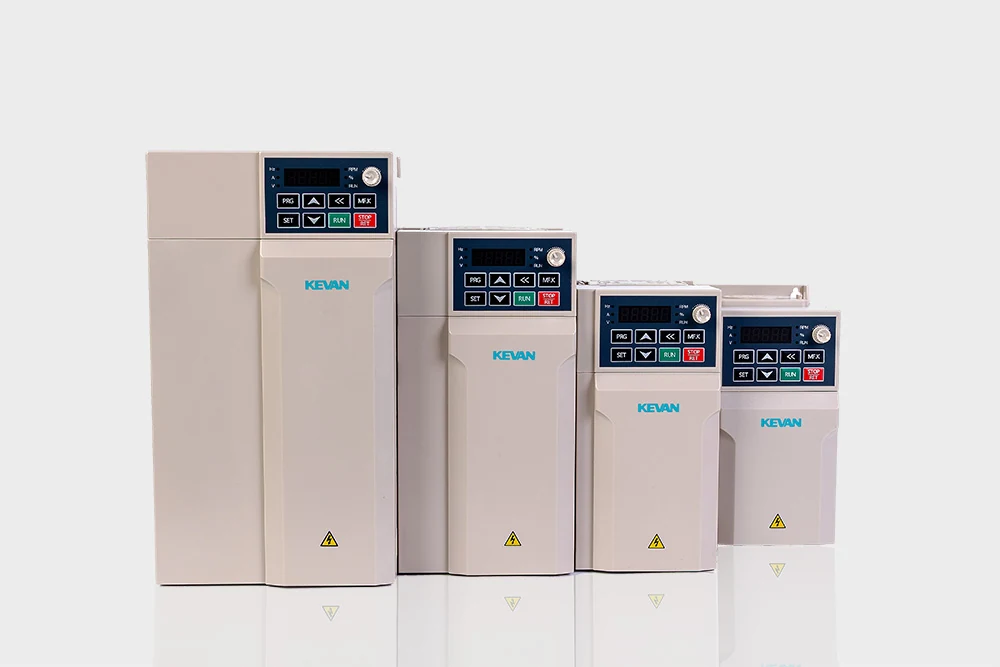
KV100 Series Economic Frequency Inverter
A cost-controlled general-purpose drive for lathe spindles, fans, pumps and conveyor lines, built to hold full output in a 50 C cabinet.
View Specifications →Related Cases
Related Articles
- Choosing Solar Water Pump Inverters for Sustainable Land Management
- The Application of Solar Water Pump Inverters in Automated Irrigation District Management Part Two
- The Application of Solar Water Pump Inverters in Automated Irrigation District Management
- System Integration and Compatibility Considerations for Solar Photovoltaic Power Inverters
Questions About This Topic
Which KEVAN series applies to what this article describes?
How do I pick the right rating for my motor?
Can I test one unit before committing to a batch?
Is the product documentation available?
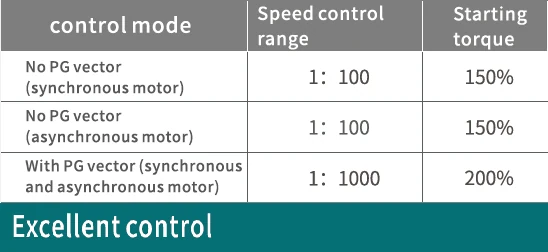
How much starting torque does the KV600 deliver?
What speed control range is achievable?
Turn This Into a Model Number
Send your motor details and we will recommend the series and rating that fits.