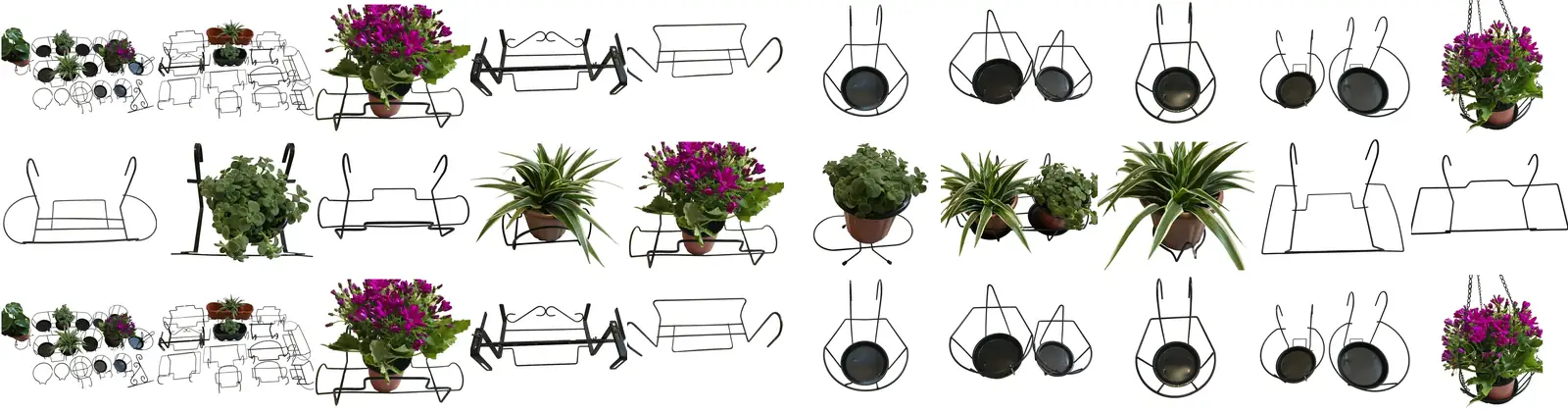
Work Out The Real Load First
A planted pot is much heavier than an empty one, and a watered planted pot is heavier again. Terracotta adds its own weight. Before choosing a fixing, weigh or estimate the pot as it will be when planted and freshly watered, not as it sits in the shop.
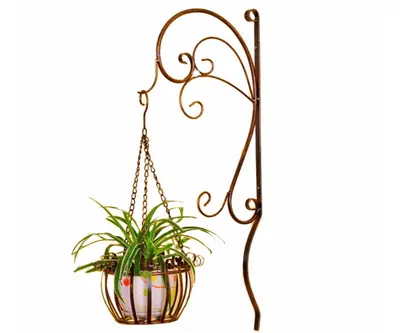
Hanging baskets swing in wind, so a bracket carries a dynamic load rather than a static one.
Match The Fixing To The Wall
Solid brick and concrete take a standard plug and screw. Hollow block, plasterboard and rendered insulation do not — they need a cavity anchor, a toggle, or a fixing that reaches the structure behind.
On timber, fix into the stud rather than the cladding. On a rendered wall, the render is not the structure; the fixing has to pass through it.
Railing and Balcony Mounting
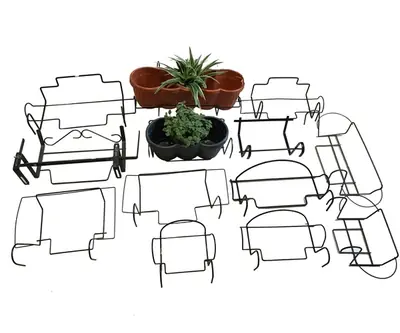
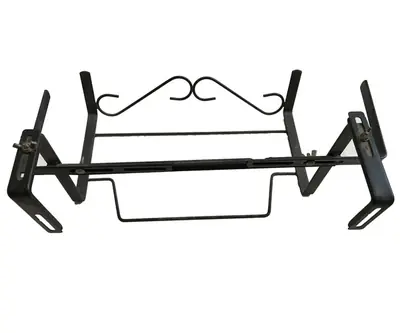
Railing hangers are sized to a rail section. Check the rail width and profile before ordering, and check whether the hanger sits inside or outside the rail — most balconies have a rule about what may overhang.
For a windy balcony, a rail hanger with a screw clamp is more secure than a hook that relies on the weight of the pot.
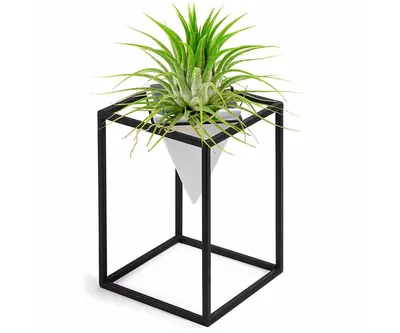
Freestanding and Tiered Stands
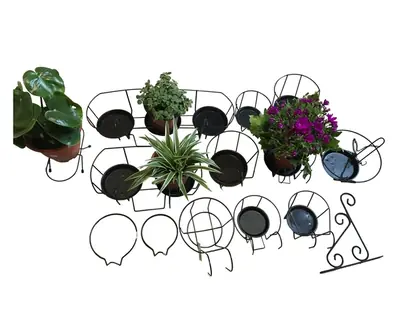
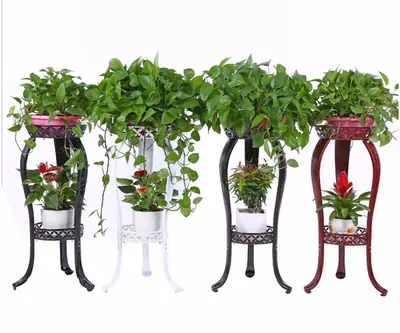
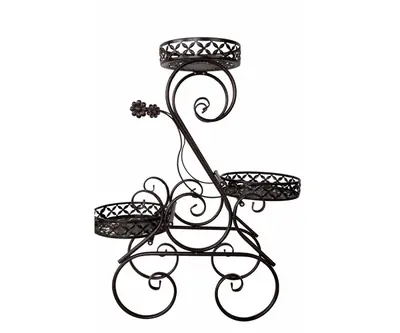
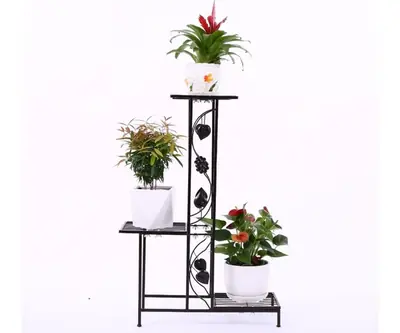
Tiered stands are only stable if the feet all touch. On a patio with a fall or an uneven slab, level the stand before loading it and load the lowest tier first.
Keep the heaviest pot on the bottom tier. A three-tier stand loaded top-heavy will tip long before it reaches its material limit.
Protecting The Finish Outdoors
Powder coated steel resists weather well but is vulnerable where the coating is broken. Do not drag a stand across concrete, and touch up any chips before winter.
Where a stand sits on damp ground all year, plastic or rubber foot caps keep the cut end of the tube out of standing water, which is where corrosion usually starts.