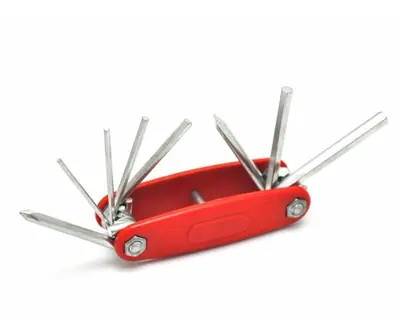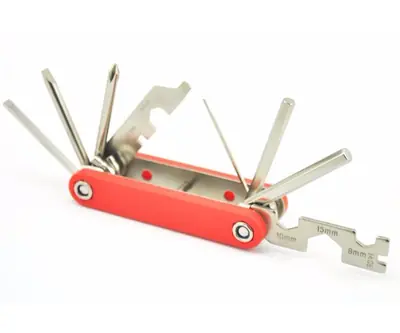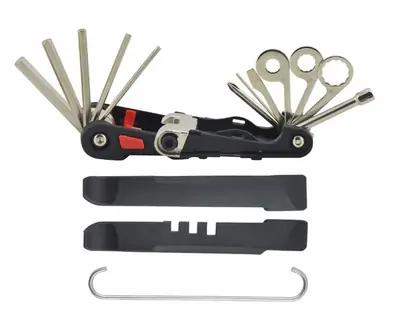
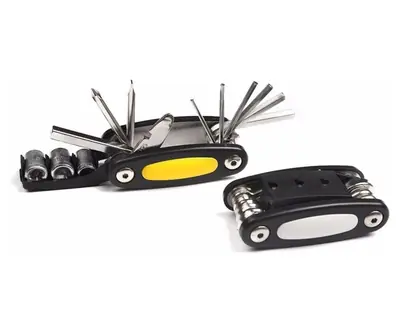

Start With The Bolts On The Bike
A multi-tool is only useful if it fits the fasteners on the bike it travels with. Modern bicycles are dominated by hex sockets in 2, 2.5, 3, 4, 5 and 6 mm, with 8 mm appearing on crank bolts and pedal fittings. Torx T25 has become common on disc rotor bolts and on many stem and chainring fasteners.
Before specifying a tool, list the fasteners on the target bike or fleet. A commuter and a modern trail bike do not need the same bit set, and a tool carrying bits that nothing on the bike uses is dead weight in a jersey pocket.
Decide Whether The Chain Tool Rides Along
An integrated chain rivet extractor turns a multi-tool from an adjustment tool into a get-home tool. It also adds bulk, weight and cost, and it is the part most likely to be abused.
For a range this usually means two tiers: a compact tool without a chain breaker for everyday adjustment, and a larger tool with one for touring, trail and workshop use. Both can sit on the same side-plate platform.
Side Plates Bits and Pivot
The side plates carry the load when a bit is turned. Thin, soft plates flex and let bits twist out of the fastener, which is how heads get rounded. Look for plates that hold the bit square under load and a pivot bolt that stays tight rather than loosening as the tool is opened and closed.
Bit steel matters more than bit count. A tool with eight well-hardened bits will outlast a tool with eighteen soft ones, and it will do less damage to the bike.
Size It For Where It Is Carried
A tool that lives in a saddle bag can be larger than one that lives in a jersey pocket. Check the closed dimensions and the folded profile, not just the open span. Sharp corners on a closed tool wear through a jersey pocket quickly.
For retail programmes, the closed dimensions also determine blister size, which determines how many face on a hook and how the item merchandises.
Specification Points For An OEM Programme
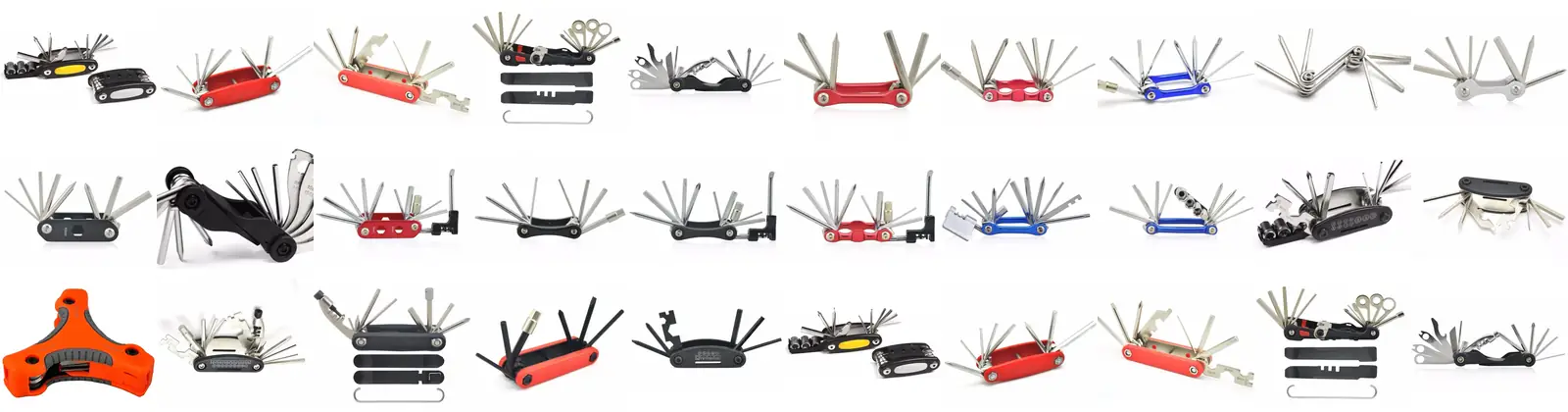
When a bicycle brand puts a folding tool into its own range, the points normally settled before tooling are: bit list and sizes, whether a chain tool is included, side-plate material and finish, handle or plate colour, marking method for the logo, and blister or box artwork.
Because these sit on an existing tool platform, most of them can be changed without new tooling. New geometry is a separate conversation and starts with a drawing.