
Floor Mounted Stops
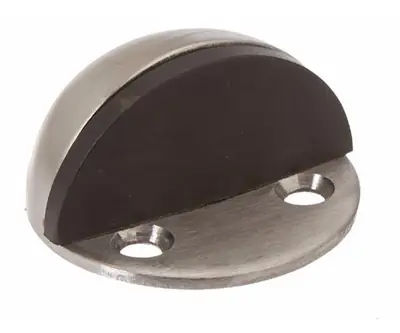
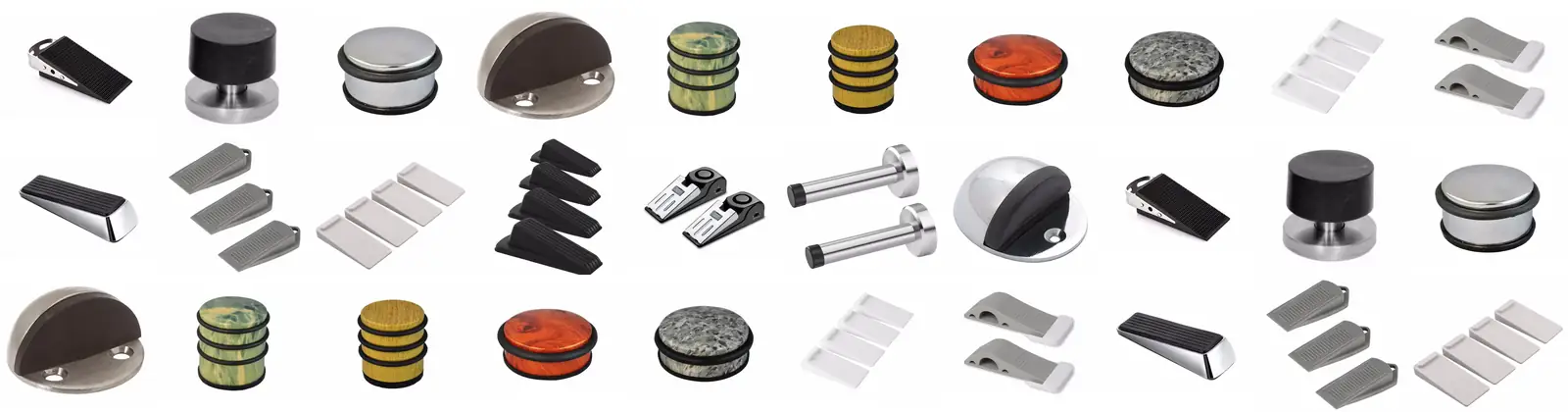
A floor mounted stop takes the impact at the bottom of the door where the leverage is lowest, which is why it is the most common type in commercial fit-out. Half-moon and oval designs sit low enough to clear most floor coverings.
The trade-off is that it sits in the walking line and it needs a floor that can be drilled. Adhesive-based versions avoid the drilling but rely on the floor surface being clean, sound and non-porous.
Wall Mounted Stops
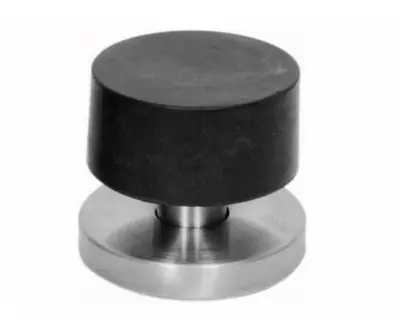
A wall mounted cylinder stop takes the handle or the door edge before it reaches the plaster. It keeps the floor clear, which suits corridors and cleaning routines.
The fixing has to reach something solid. In plasterboard, a wall stop pulled out by a swinging door takes a patch of wall with it, so a cavity anchor or a timber pattress is not optional.
Magnetic Catch Stops
A magnetic stop combines a buffer with a catch, so the door is not just stopped but held open. That is useful in a room with a draught or where a door is regularly propped.
Specify the holding force against the door weight and the likely wind load. Too weak and the door releases in a draught; too strong and it becomes awkward for children and older users.
Wedges and Portable Stops
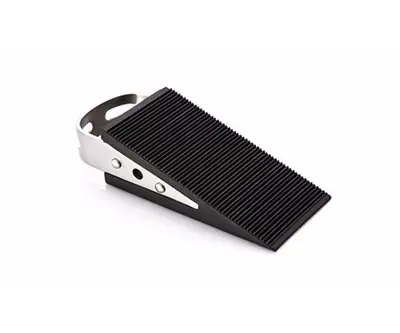
Rubber and plastic wedges need no fixing at all, which makes them the answer for rented property, temporary use and non-drillable floors. Grip depends on the floor: a wedge that holds on vinyl may slide on polished stone.
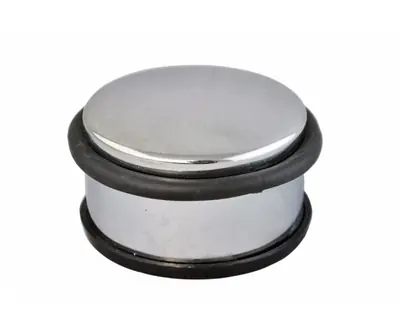
Weighted stops with a stone or metal body sit on the floor and hold by mass. They suit heritage and hotel interiors where a fixed stop is not acceptable.
Finish and Range Consistency
Door hardware is bought in finish families. A satin stainless stop next to a polished chrome handle reads as an error even though both are perfectly good parts.
When specifying a range, settle the finish first, then check that every stop type needed on the project — floor, wall, magnetic and wedge — is available in it.