
How To Size An Eyewear Case To The Frames You Actually Sell
The three measurements that decide whether a case fits, and the one that gets forgotten.
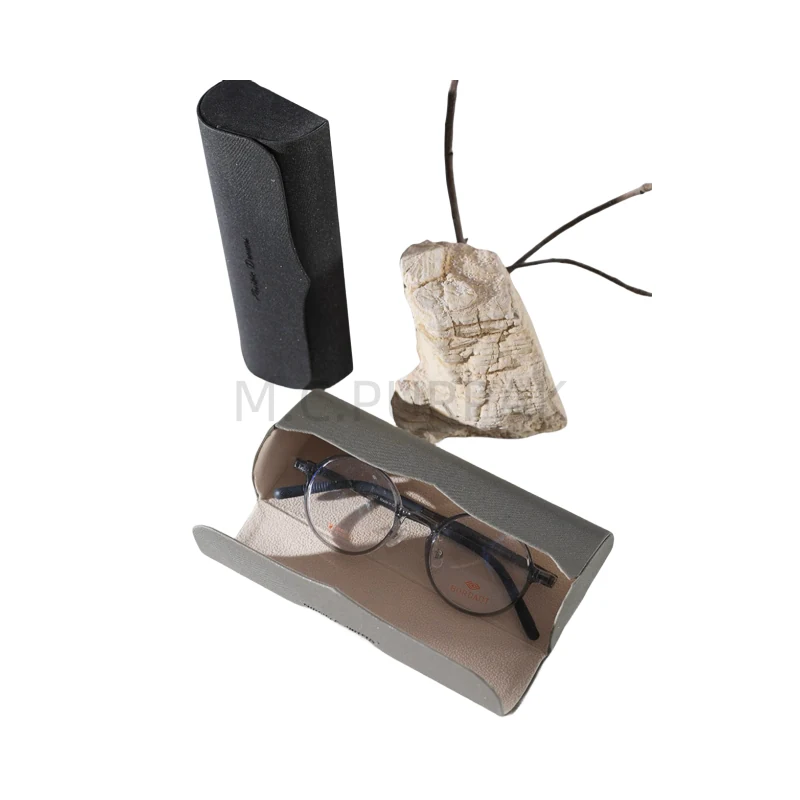
Measure The Frame Not The Lens
Case fit is decided by the folded frame, not by the lens or the marked frame size. Fold the temples, then measure overall width across the fronts, depth from the front of the lens to the back of the folded temple, and height at the tallest point of the lens. Those three numbers are what we pattern against.
The Measurement Everyone Forgets Is Depth
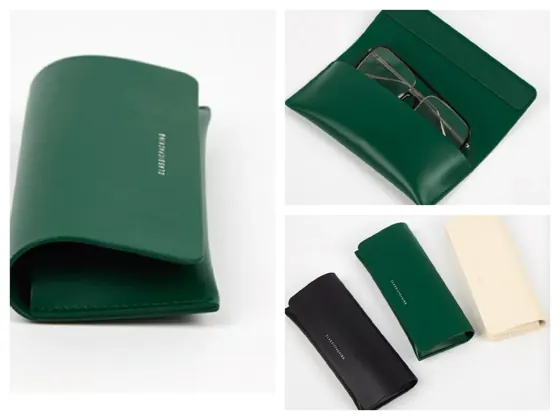
Width gets checked; depth does not. A thick acetate front or a wrap-around sunglass adds 15 to 20 mm of depth over a metal frame, and a pouch patterned flat has nowhere to put it. The seam takes the load instead, and splits. This is the most common case failure we are asked to fix, and it is why LP 2304 is specified with a 20 mm gusset.
See LP 2304 PU Leather Pouch 185 x 70 x 20 mm
Clearance Above The Lens
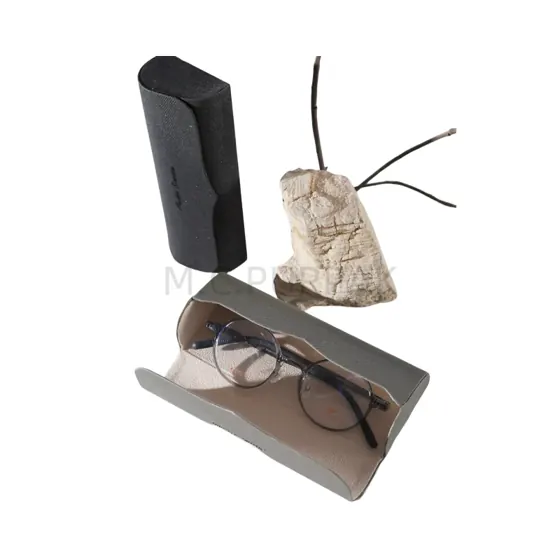
On a rigid case, the lid must close without bearing on the lens surface. Seven millimetres of extra internal width is the difference between XC 888 at 51 mm and XC 955 at 58 mm, and that is the difference between a lid that clears a full acetate front and one that rests on it.
See XC 955 Handmade Eyewear Case
Size To Your Widest Frame Not Your Average
A case sized to the average frame in a catalogue fails on the top quarter of the range. Send us the widest, deepest frame you dispense. A case slightly larger than most frames is a minor aesthetic compromise; a case too small for a quarter of your range is a returns line.
Reading Glasses And Clip-Ons Are A Separate Size
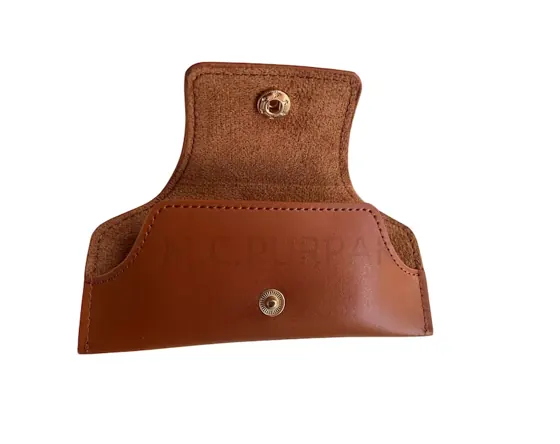
Readers are bought casually and carried constantly, so a full-size case gets left in a drawer. The practical size is around 145 x 65 mm, which fits a shirt pocket. Clip-on sunglass lenses need the same footprint with a positive closure so they cannot slide out.
See LP 2307 Small PU Leather Pouch for Reading Glasses
How We Handle A Size Change
Send the three measurements. We identify the nearest existing pattern, re-cut it to your dimensions and send a sample within 30 days. Because we are working from an existing construction there is no tooling charge for the change.
Products Mentioned In This Guide
 Eyewear Pouches
LP 2304 PU Leather Pouch 185 x 70 x 20 mm
Deeper PU leather pouch for thicker acetate frames
View Product
Eyewear Pouches
LP 2304 PU Leather Pouch 185 x 70 x 20 mm
Deeper PU leather pouch for thicker acetate frames
View Product
 Handmade Eyewear Cases
XC 955 Handmade Eyewear Case
Handmade case, 157 x 58 x 39 mm
View Product
Handmade Eyewear Cases
XC 955 Handmade Eyewear Case
Handmade case, 157 x 58 x 39 mm
View Product
 Eyewear Pouches
LP 2307 Small PU Leather Pouch for Reading Glasses
145 x 65 mm compact pouch for reading and clip-on eyewear
View Product
Eyewear Pouches
LP 2307 Small PU Leather Pouch for Reading Glasses
145 x 65 mm compact pouch for reading and clip-on eyewear
View Product
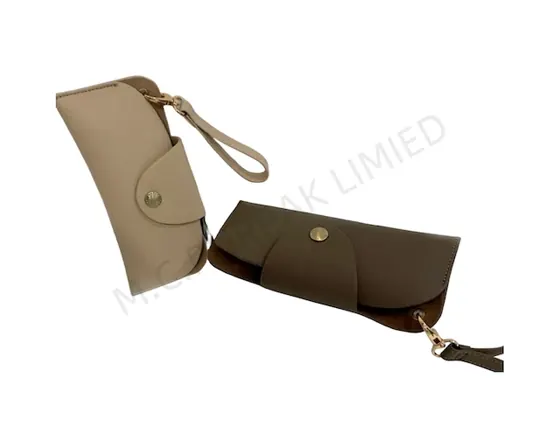 Eyewear Pouches
LP 2303 PU Leather Pouch 160 x 75 mm
PU leather pouch, colour logo and size all customisable
View Product
Eyewear Pouches
LP 2303 PU Leather Pouch 160 x 75 mm
PU leather pouch, colour logo and size all customisable
View Product
Related Categories
Other Guides
- Eyewear Case Materials Compared PU Leather Board Fabric And MDFMaterial Guide
- Eyewear Pouch Or Hard Case Which To Supply With A FrameComparison Article
- Choosing An Eyewear Display Case For Field Sales And Trade ShowsBuying Guide
- Private Label Eyewear Packaging From Brief To Shipped GoodsProduct Guide
- Microfibre And Micro Suede Cleaning Cloths For Coated LensesMaterial Guide
Questions From This Guide
What three measurements do you need?
Folded frame width, depth front to back of the folded temples, and height at the tallest point of the lens. Take them from your widest frame.
Is there a charge to change a pattern size?
Not when we re-pattern from an existing reference, which covers most requests.
How much clearance should a case have?
Enough that the lid or flap closes without contacting the lens. On rigid cases we confirm this against a physical frame before bulk.
Apply This To Your Own Range
Send the frames you sell and we will tell you which references fit, what they cost and when a sample can ship.