
Eyewear Case Materials Compared PU Leather Board Fabric And MDF
What each construction actually does for the frame inside, and where each one fails.
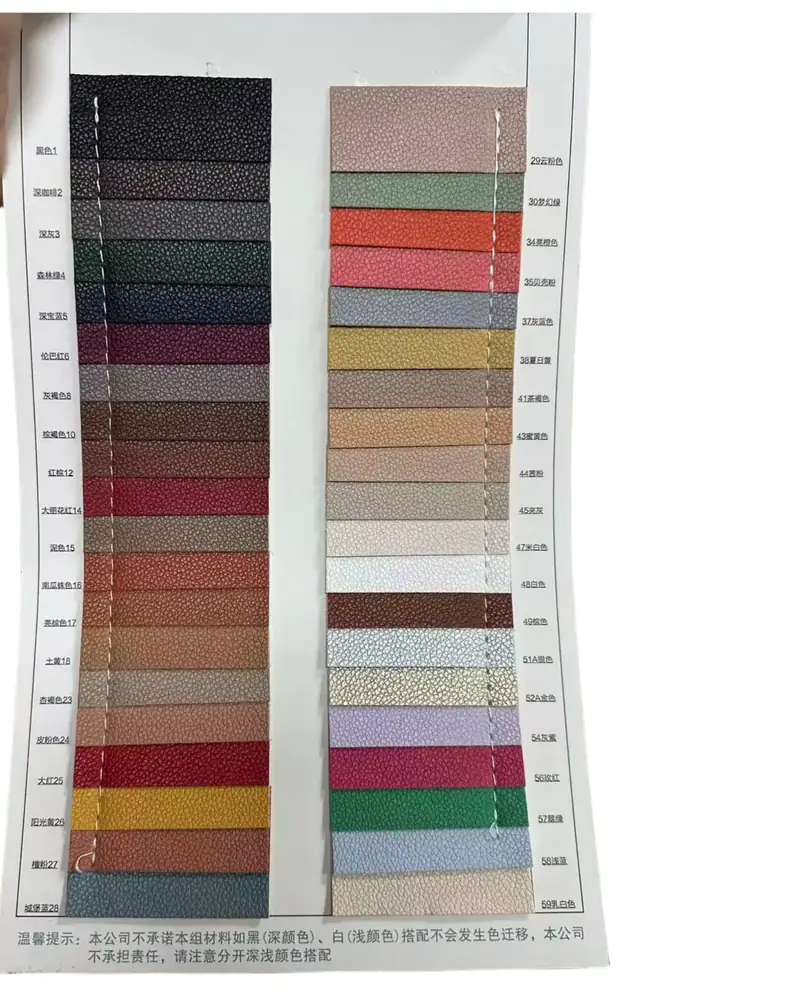
PU Leather Over A Soft Body
This is the standard pouch construction: a PU leather outer with a soft lining and no rigid core. It is the lightest and cheapest case format, which is why it is the one most customers actually carry. It resists abrasion and keeps dust off the lenses, but it transmits impact directly. Specify it where the case lives in a handbag, not in checked luggage.
See LP 2302 PU Leather Soft Pouch
PU Leather Over A Plastic Clamshell
Adding an injection moulded clamshell inside the PU outer changes the failure mode entirely. The shell takes a crushing load that would otherwise bend the frame, while the pouch silhouette and weight stay close to a soft case. The trade-off is thickness: a clamshell pouch is roughly twice the depth of a flat one, which matters in a jacket pocket.
See LP 2301 PU Leather Pouch with Plastic Clamshell
PU Leather Over MDF Frames
MDF gives a case a square edge that holds under repeated handling, which is what retail display buyers are really asking for when they say a case looks cheap. It is heavier than board and it does not tolerate moisture, so it belongs on a shelf and in a suitcase rather than in a site bag. Magnet closures suit this construction because the rigid frame keeps the lid aligned.
See TR 23104 D Large Magnet Eyewear Travel Case
Hand-Wrapped Rigid Board
Wrapped board is the traditional handmade eyewear case: covering material bonded over creased board and finished by hand at the corners. Done well the lid stays aligned with the base for years. Done badly the corners lift within weeks, which is the single clearest quality signal on this construction. The material can be printed before wrapping, which is how full-coverage artwork is produced without distortion.
See XC 888 Handmade Eyewear Case
Quilted Fabric With Down Filling
A down-filled quilted pouch absorbs impact rather than resisting it. It will not survive a direct crush the way a clamshell does, but it handles the knocks a case actually receives in a rucksack, and it packs flat when empty. It is also the format that looks least like every other eyewear case on a shelf.
See LP 2310 Padded Down Pouch for Eyewear
Choosing Between Them
Work backwards from where the case lives. Handbag and pocket: soft PU. Work bag with hard objects: clamshell. Checked luggage: hard travel case. Retail shelf: MDF or wrapped board. Rucksack and outdoor: quilted down. Long export freight on a rigid case: the foldable wrapped-board body, because it ships flat.
Products Mentioned In This Guide
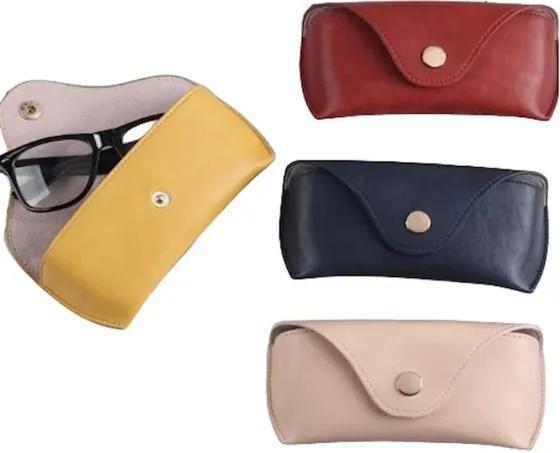 Eyewear Pouches
LP 2301 PU Leather Pouch with Plastic Clamshell
PU leather over a plastic clamshell, velvet lined, 17 x 7.5 x 4.5 cm
View Product
Eyewear Pouches
LP 2301 PU Leather Pouch with Plastic Clamshell
PU leather over a plastic clamshell, velvet lined, 17 x 7.5 x 4.5 cm
View Product
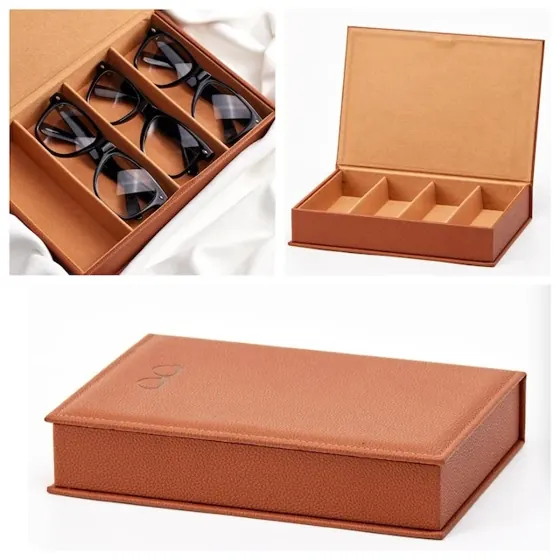 Eyewear Travel Cases
TR 23104 D Large Magnet Eyewear Travel Case
PU leather over MDF frame, velvet lined, magnet closure, large
View Product
Eyewear Travel Cases
TR 23104 D Large Magnet Eyewear Travel Case
PU leather over MDF frame, velvet lined, magnet closure, large
View Product
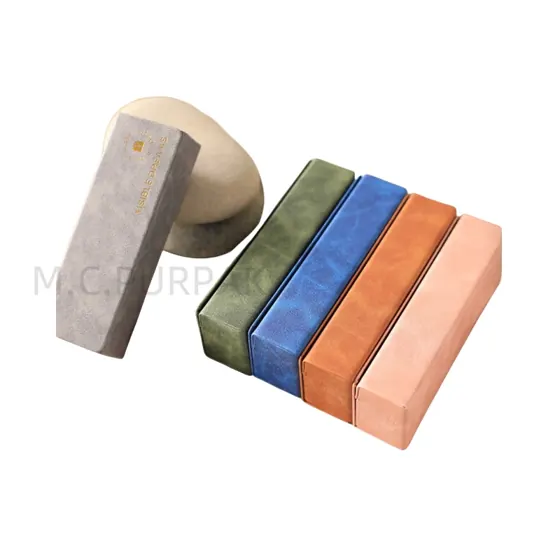 Handmade Eyewear Cases
XC 888 Handmade Eyewear Case
Handmade case, 160 x 51 x 39 mm
View Product
Handmade Eyewear Cases
XC 888 Handmade Eyewear Case
Handmade case, 160 x 51 x 39 mm
View Product
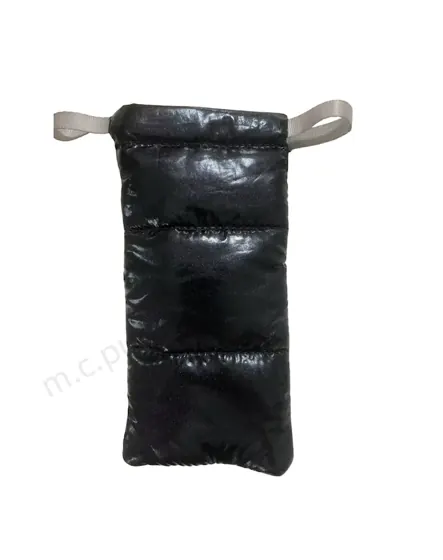 Eyewear Pouches
LP 2310 Padded Down Pouch for Eyewear
Quilted down-filled pouch, 18 x 7.5 cm, customised colour
View Product
Eyewear Pouches
LP 2310 Padded Down Pouch for Eyewear
Quilted down-filled pouch, 18 x 7.5 cm, customised colour
View Product
Related Categories
Other Guides
- How To Size An Eyewear Case To The Frames You Actually SellDesign Guide
- Eyewear Pouch Or Hard Case Which To Supply With A FrameComparison Article
- Choosing An Eyewear Display Case For Field Sales And Trade ShowsBuying Guide
- Private Label Eyewear Packaging From Brief To Shipped GoodsProduct Guide
- Microfibre And Micro Suede Cleaning Cloths For Coated LensesMaterial Guide
Questions From This Guide
Is PU leather durable enough for a premium brand?
Yes, and it is what most of the eyewear market uses. It is stable in colour, takes debossing cleanly and avoids the animal material question. Genuine leather is a different conversation and a different price.
Which construction protects a frame best?
A rigid hard travel case. A clamshell pouch is the best compromise between protection and everyday carry.
Does MDF make the case heavy?
Heavier than board, yes. The reason to accept that is the square edge it holds on a retail shelf.
Apply This To Your Own Range
Send the frames you sell and we will tell you which references fit, what they cost and when a sample can ship.