Own brand programmes rarely fail on the product. They fail on packaging, because packaging has more approval steps, more people involved and a longer lead time than anyone allows for.
Packaging Is On The Critical Path
Production cannot start until the packaging is approved, and packaging approval involves a designer, a buyer, a legal reviewer and often a retailer's own technical team. Each of them needs time, and they rarely need it at the same time.
Work backwards from the on shelf date and put the artwork deadline first, before the production slot. Ranges that miss their date usually missed it here, weeks before anyone noticed.
Get The Barcode Right Once
Barcode errors are the most common reason a delivery is rejected at a depot, and they are entirely preventable. The number has to be correct, the symbol has to be printed at the right size and contrast, and it has to be placed where a scanner will find it.
Ask for a printed proof and scan it. Not a screen render, not a PDF: a physical proof from the actual print run, scanned with an actual scanner. This check takes ten minutes and prevents the most expensive single failure in the process.
Specify The Carton As Carefully As The Product
Inner count, outer count, carton dimensions, gross and net weight, carton marks and the labelling required by the destination market. All of it in writing before production.
Carton dimensions decide how many fit on a pallet and how many pallets fit in a container. A carton two centimetres too tall can cost a whole layer per pallet, which is a real number on a full container and one nobody notices until the goods are loaded.
Print The Care Instructions Where They Will Be Read
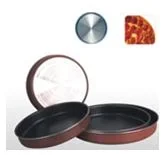
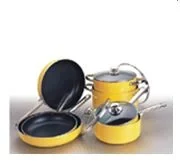
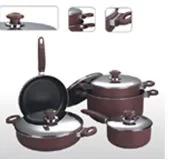
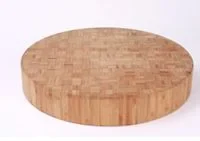
A bamboo board that goes in a dishwasher will fail, and the customer will return it as faulty. A coated pan scraped with a metal spatula will fail, and the customer will return that too.
Both are care failures rather than product failures, and both are largely preventable by printing the care rules on the packaging rather than on a swing tag that gets cut off in the shop. Returns data is usually enough to justify the ink.
The Approval Sequence Worth Insisting On
Artwork supplied by the buyer, with barcode data. A digital proof from the printer, checked for content. A physical printed proof, checked for colour and scanned for the barcode. A packed sample with the product inside it, checked for fit and protection. Then production.
The step most often skipped is the packed sample. It is also the one that catches inserts that do not hold the product, cartons that crush and windows that sit over the wrong part of the item.