
OEM And ODM Development
The old EVT company profile put it plainly: customers provide drawings and material specifications, and EVT works out what the factory needs to do with them. This is that process written out, because most of what goes wrong in an import order goes wrong before production ever starts.
Development is where an order is won or lost. Once bulk is running, nobody is renegotiating the weave.
- BriefWhat arrives is usually a drawing, a specification sheet, a competitor sample or a photograph. All four are workable. A photograph alone is the weakest starting point, because it carries no construction and no weight. We read the brief back to you as a written specification before anything is quoted. If something is missing, that is the point at which it costs nothing to fix.
- Factory SelectionThe three factory bases behind this catalogue are different businesses. A bedding mill cannot press a frypan and a cookware plant cannot weave towelling. The brief goes to the base that already makes that product, not to whichever factory is cheapest this month. The relevant question is which line has run this before.
- CostingPrice follows the specification, not the other way round. Base cloth, coating layers, base thickness and packing all move the number. You get the cost broken out far enough to see which specification decisions are driving it, so a target retail price can be built backwards rather than guessed at.
- SamplingA physical sample is produced: a strike off for a print, a handloom for a weave, a stitch out for embroidery, a full pan for cookware. You approve the physical sample, not a screen image. Two identical references are then retained, one at the factory and one with EVT.
- Specification FreezeEverything agreed goes into one document: construction, colour, sizes, packing, carton marks, barcodes and labelling. After the freeze, a change is a change order with a cost and a date attached. That is what stops quiet substitution during a production run.
- Pre Production ApprovalThe first production pieces are checked against the retained reference before the line is allowed to run on. Catching a drift on the first hundred pieces costs a morning. Catching it on the container costs the season.
Products This Applies To
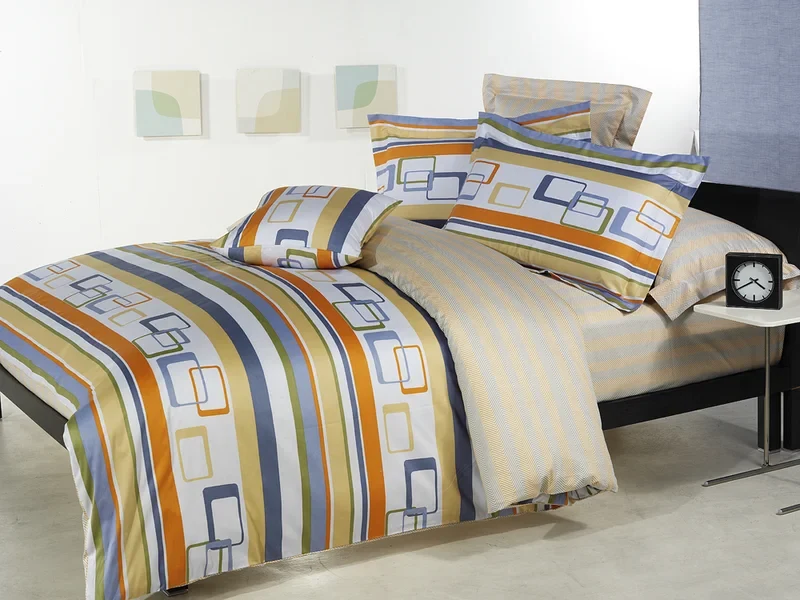
TD-548 Striped Duvet Cover Set
Horizontal banding in beige, orange, blue and grey with a geometric key motif on the pillowcases.
View product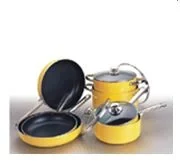
Painted Aluminium Cookware Set
A yellow painted set: frypan, casserole and stockpot, all with tempered glass lids.
View product
Three Ply Earloop Face Mask
Pleated three layer disposable mask with elastic earloops and a printed outer face.
View product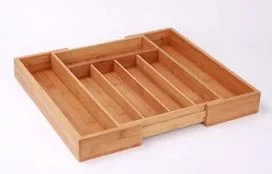
Bamboo Expandable Drawer Organiser
Six compartment bamboo drawer organiser with a sliding side section that extends to fit the drawer.
View productOEM And ODM Development Questions
We only have a photograph. Is that enough to start?
It is enough to start a conversation and not enough to quote accurately. Expect the first question back to be about construction, weight and size.
How long does sampling take?
It depends on the product and on whether a print or an embroidery has to be developed. Ask us against the specific item and we will give a working date.
Who owns the artwork and the tooling?
That is agreed in writing before development starts. Settle it at the beginning rather than when a relationship is ending.
Can we change the specification after approval?
Yes, as a change order with a cost and a revised date. What does not happen is a silent change during production.
Start With A Specification
A drawing, a spec sheet or a competitor sample is enough to begin. A photograph on its own is the weakest starting point.