Disposables look simple and are specified badly more often than almost anything else in an import catalogue. The material is the product, and the material is invisible in every photograph.
Nonwoven Is A Process Not A Fibre
A nonwoven fabric is not woven or knitted. Fibres are laid into a web and bonded together by heat, pressure, chemistry or a combination. The fibre is usually polypropylene; the process is what decides how the finished fabric behaves.
Spunbond fabrics are made from continuous filaments and are relatively strong, which makes them right for outer layers and for caps and gowns. Meltblown fabrics use very fine fibres in a dense random web, which is what gives filtration performance. They are weak on their own, which is why they are used between spunbond layers rather than alone.
What The Three Layers In A Mask Do
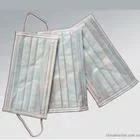
The outer layer faces the world and takes splash. The middle layer does the filtering. The inner layer sits against the face and has to stay comfortable when it is damp.
This is why a mask cannot be specified by its layer count alone. Three layers of the wrong material filter nothing. The fabric weight and construction of each layer, particularly the middle one, is what the specification has to name.
Fabric Weight Is The Number To Fix On Caps And Gowns
For head coverings, the specification that matters is fabric weight in grams per square metre, along with the elastic. Too light and the cap tears when it is pulled on. Too heavy and it becomes uncomfortable over a full shift and gets taken off, which defeats the point.
Elastic is the other half. Elastic that cuts into the forehead after four hours is the most common reason head coverings get removed in the middle of a shift.

Barrier Products And Handling Products Are Not The Same Category
Lightweight inspection gloves and latex finger cots are often listed alongside masks and caps, and they solve the opposite problem. A barrier glove protects the wearer from the product. A handling glove protects the product from the wearer.
Confusing the two is a real risk, because a handling glove is not a substitute for an examination glove in a clinical setting. If the use is clinical, say so at the enquiry stage and specify accordingly.
What To Fix Before Ordering
The destination market and the standard the product must be documented against. The construction and weight of every layer. The fitting, meaning earloop or tie, and the elastic. Sizes and the size split. Inner and outer pack counts, because store rooms are smaller than warehouses.
Write all of it down once, and reuse the same document for every repeat order. Specification drift between repeat orders is the single biggest risk in this category, and a written specification is what prevents it.