
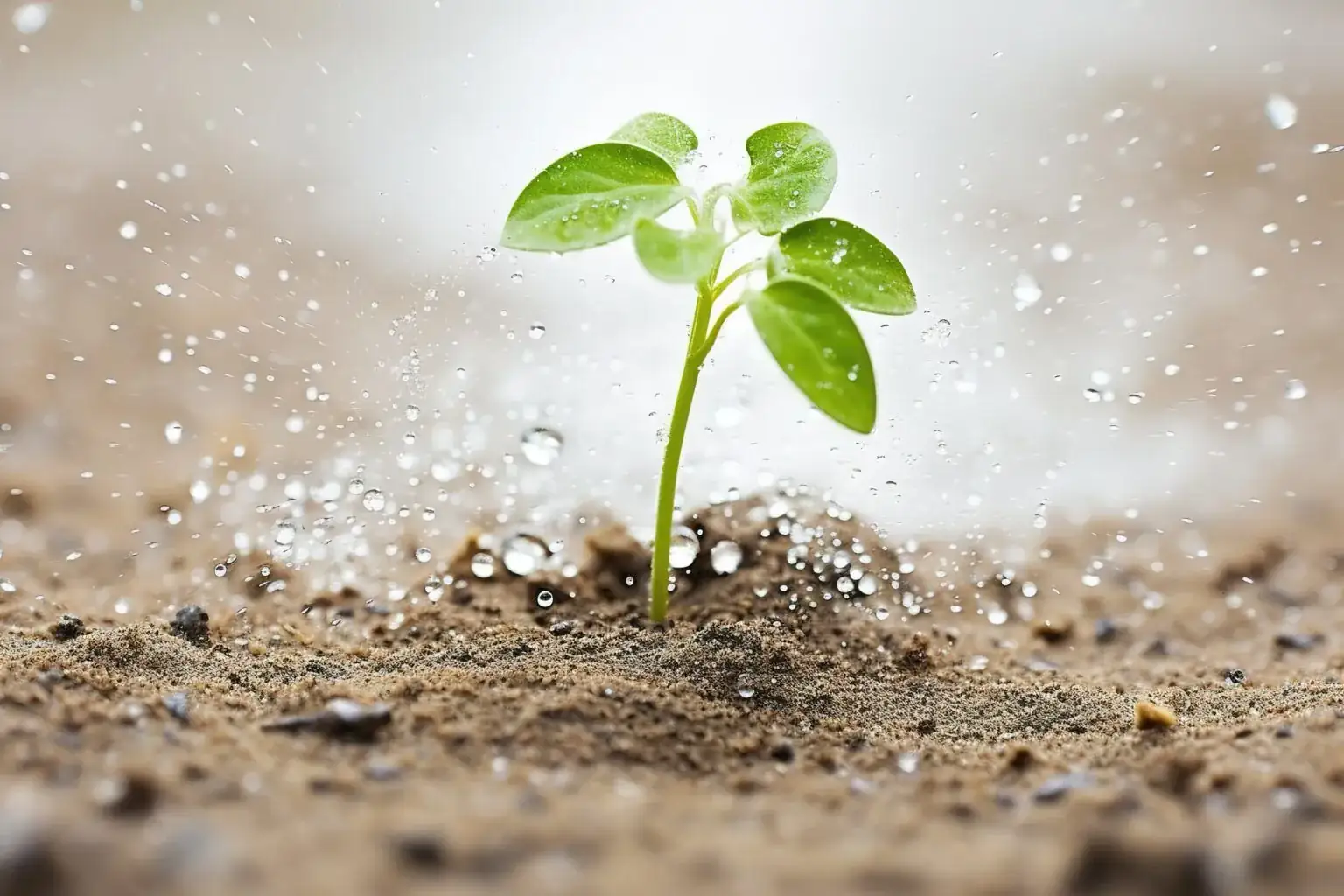
Environmental Considerations for Amino Acid Powder Use
Protein-hydrolysate and amino-acid-based inputs are commonly made from agricultural or food-industry by-products, which supports resource recovery but does not make any given product or application environmentally neutral. This note sets out the factors that actually decide environmental performance, so you can budget the nitrogen you are adding, reduce runoff risk and judge which sustainability claims your documentation will support.
What Environmental Performance Actually Depends On
Environmental performance is not a property of a product category. It is the combined result of the raw material, the manufacturing process, energy and water use, the composition of the finished product, the application rate, crop uptake, packaging and the waste-management systems available where the material is used.
That list matters because each item is measurable and each sits with a different party. A supplier can document source material and process inputs; the formulator controls composition and packaging; the grower controls rate, timing and equipment. An environmental claim that skips any of them is a claim without a method behind it.
Raw-Material Origin and Traceability
Animal- and plant-derived raw materials carry different supply chains and different risks, and the documentation needed differs accordingly. Using a by-product can reduce waste, but sustainability should not be asserted without information on sourcing and processing.
Everwell Bio manufactures its water-soluble compound amino acid powders from hydrolyzed duck feather protein, and its hydrolyzed protein powder from cattle bone, which places both in the animal by-product category for documentation purposes.
- The exact source material
- Supplier and batch traceability
- Relevant animal-by-product or phytosanitary documentation
- Contaminant and microbiological controls where required
- Consistency between the product page, TDS, SDS and shipping documents
Nitrogen Loading and the Nutrient Budget
Amino acid powders can contain a substantial share of nitrogen. Amino Acids 35 declares at least 17% total nitrogen, Amino Acids 45 at least 16% and Amino Acids 80 at least 12%, which means a routine application rate can contribute a meaningful part of a crop's nitrogen supply.
Over-application increases the quantity of nitrogen that the crop does not take up. Depending on soil type, irrigation and weather, that surplus may be lost through leaching, runoff or gaseous pathways. Calculate the nitrogen contribution from the verified nitrogen content on the batch COA and the actual application rate, then fold that figure into the farm's nutrient budget rather than treating the input as something outside fertilizer planning.
Runoff and Water Quality
Water solubility is a handling property, not an environmental one. Everwell Bio's amino acid grades are 100% soluble and the cattle bone protein powder is 99% soluble, and that solubility is exactly why soluble nitrogen and organic matter can move with runoff or drainage when application exceeds what the crop and soil can absorb.
The practical controls are ordinary agronomic discipline rather than anything product-specific.
- Avoid application before heavy rainfall or excessive irrigation
- Use calibrated equipment so the applied rate matches the planned rate
- Maintain buffer zones where they are required locally
- Prevent spills near drains and surface water
- Follow local nutrient-management rules
Biodegradability and Oxygen Demand
Protein-derived organic material may be biodegradable, but biodegradability is not the same as harmlessness in water. A large release into a watercourse can still create significant biological or chemical oxygen demand, which is a distinct effect from nutrient enrichment and can act faster.
For that reason, avoid stating that a product does not pollute water. Spill response and disposal should follow the SDS for the actual product and the requirements that apply locally.
Salts and Formulation Components
Hydrolysis and neutralization can introduce chloride, sodium, potassium or other salts into the finished powder. Whether that matters environmentally or agronomically depends on concentration and on cumulative loading over a season rather than on a single application.
Buyers formulating for saline soils, protected cultivation or recirculating systems should request the relevant salt data and evaluate the complete formulation, not the amino acid component in isolation. The same applies where an amino acid powder is combined with fulvic acid, seaweed extract or a lignosulphonate in a blended product.
Manufacturing Footprint, Packaging and Transport
Assessment should extend past the raw material. Hydrolysis, concentration and drying all require energy and water, and Everwell Bio's process runs controlled hydrolysis, purification, concentration and spray drying in sequence at a 20,000 m2 facility. A credible sustainability statement needs figures for energy source and consumption, water use and wastewater treatment, emissions and odor control, process yield and waste, and packaging and logistics. Avoid claiming a lower carbon footprint without a defined comparison and a stated calculation method.
Packaging protects the product but generates material waste. Buyers can evaluate bag construction, pallet use, recyclable components and whether larger or consolidated shipments are feasible. Mixed-SKU consolidation can cut duplicate freight movements in some supply chains, though the real benefit depends on loading efficiency and on the origin and destination involved.
- Include the product's nitrogen in the nutrient budget.
- Use a locally appropriate application rate.
- Do not apply before runoff-prone weather.
- Store bags dry and protect damaged packaging.
- Follow SDS guidance for spills and disposal.
- Verify source and contaminant documentation.
- Avoid absolute pollution-free or zero-residue claims.
- Review destination-market rules for animal-derived inputs.
Conclusion
Compound amino acid powder can form part of a resource-efficient fertilizer programme, particularly where it valorizes controlled by-products, but responsible use still rests on traceability, nutrient accounting, spill prevention and evidence-based claims. Start by calculating the nitrogen your planned rate actually adds, using the total nitrogen figure on the batch COA. For source, process and contaminant documentation on a specific grade, email [email protected] and state the destination market so the animal by-product requirements can be checked.
Products Discussed In This Article
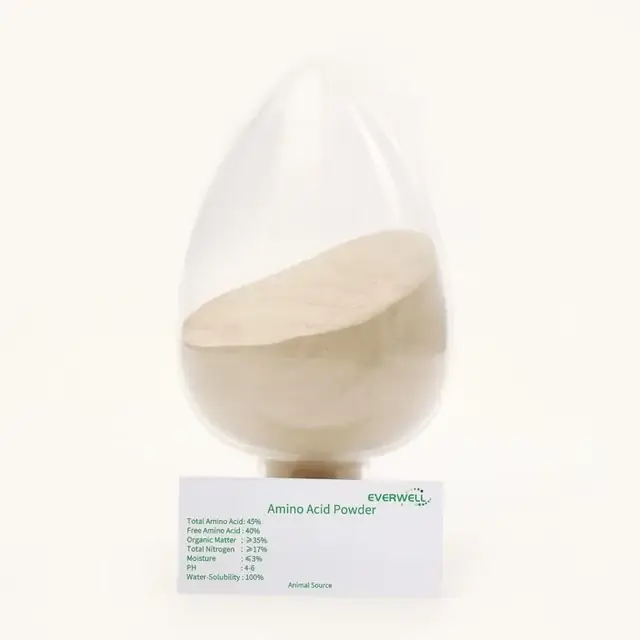
Amino Acids 45
The benchmark grade: ≥ 45% total amino acids, ≥ 60% organic matter, and 41.93% free amino acids measured by Eurofins under GB/T 18246-2019. The grade
View specification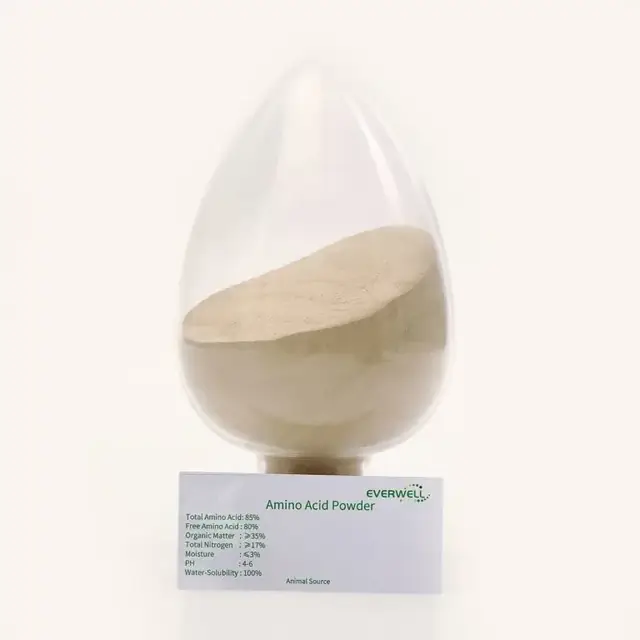
Amino Acids 80
The density grade: ≥ 80% total amino acids, ≥ 80% organic matter, and 75.37% free amino acids measured by Eurofins. Glycine and proline rich, for conc
View specification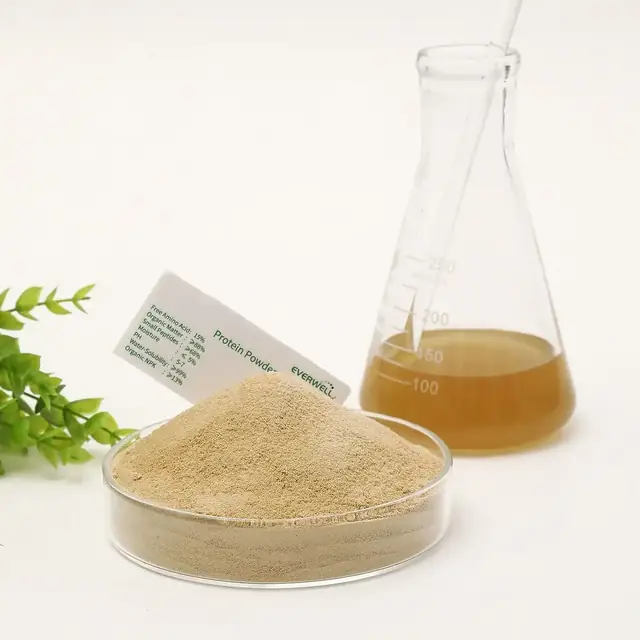
Protein Powder
A collagen-derived protein input at ≥ 90% crude protein and ≥ 80% total amino acids, glycine and proline rich, dissolving at 99% for animal feed, pet
View specificationRelated Articles
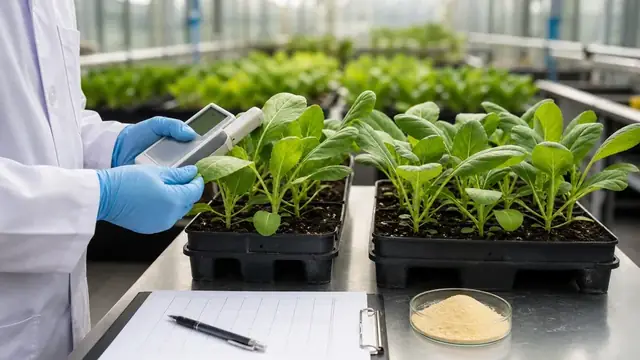
How Long Does Amino Acid Fertilizer Take to Work?
A staged monitoring timeline for judging whether an amino acid fertilizer has delivered a useful response, from application day to harvest.
Read more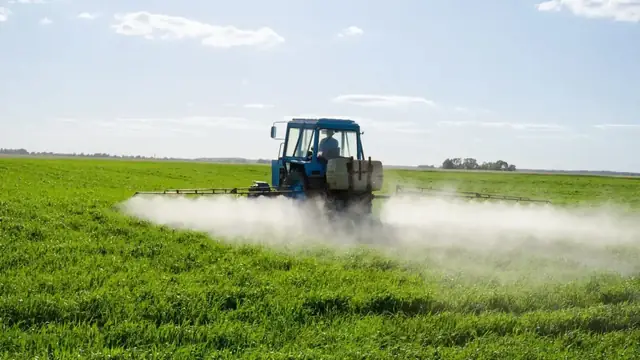
How to Apply Compound Amino Acid Powder Safely
A trial-based framework for foliar, fertigation and root-zone use, including jar testing, crop safety checks and dosage priority.
Read more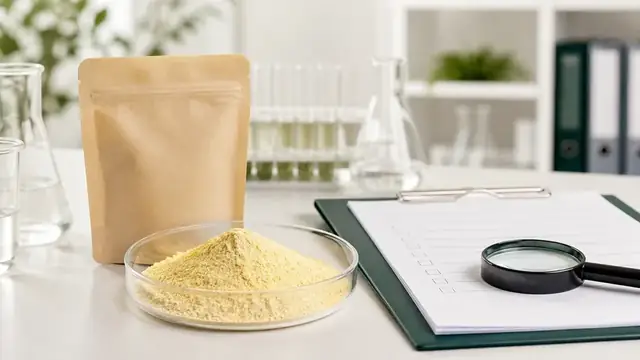
Is Amino Acid Powder Allowed in Organic Farming?
How NOP, OMRI, EU organic rules and JAS treat amino acid and protein-hydrolysate inputs, and which documents a buyer must request.
Read moreQuestions On This Topic
Does using a by-product raw material make the product sustainable?
Not on its own. By-product use can reduce waste, but a sustainability statement needs information on sourcing, processing, energy and water use, and packaging before it can be supported.
How much nitrogen am I adding with an amino acid powder?
Calculate it from the verified nitrogen content and the actual application rate. Amino Acids 35 declares at least 17% total nitrogen, Amino Acids 45 at least 16% and Amino Acids 80 at least 12%.
Is a fully soluble product safer for water quality?
No. Solubility describes handling, not environmental behaviour. Soluble nitrogen and organic matter can move with runoff or drainage if application exceeds crop and soil capacity.
Can I state that the product is biodegradable and therefore harmless in water?
No. Protein-derived material may biodegrade, but a large release can still create biological or chemical oxygen demand. Follow the SDS and local rules for spills.
Which documents should I request for an animal-derived input?
The exact source material, supplier and batch traceability, relevant animal-by-product or phytosanitary documentation, and contaminant or microbiological controls where the destination market requires them.
Can I claim a lower carbon footprint for a consolidated shipment?
Only with a defined comparison and calculation method. Consolidation can reduce duplicate freight movements, but the actual benefit depends on loading efficiency, origin and destination.
Ask Us About This Directly
Technical questions are answered by the export and production team, normally within 24 hours.